


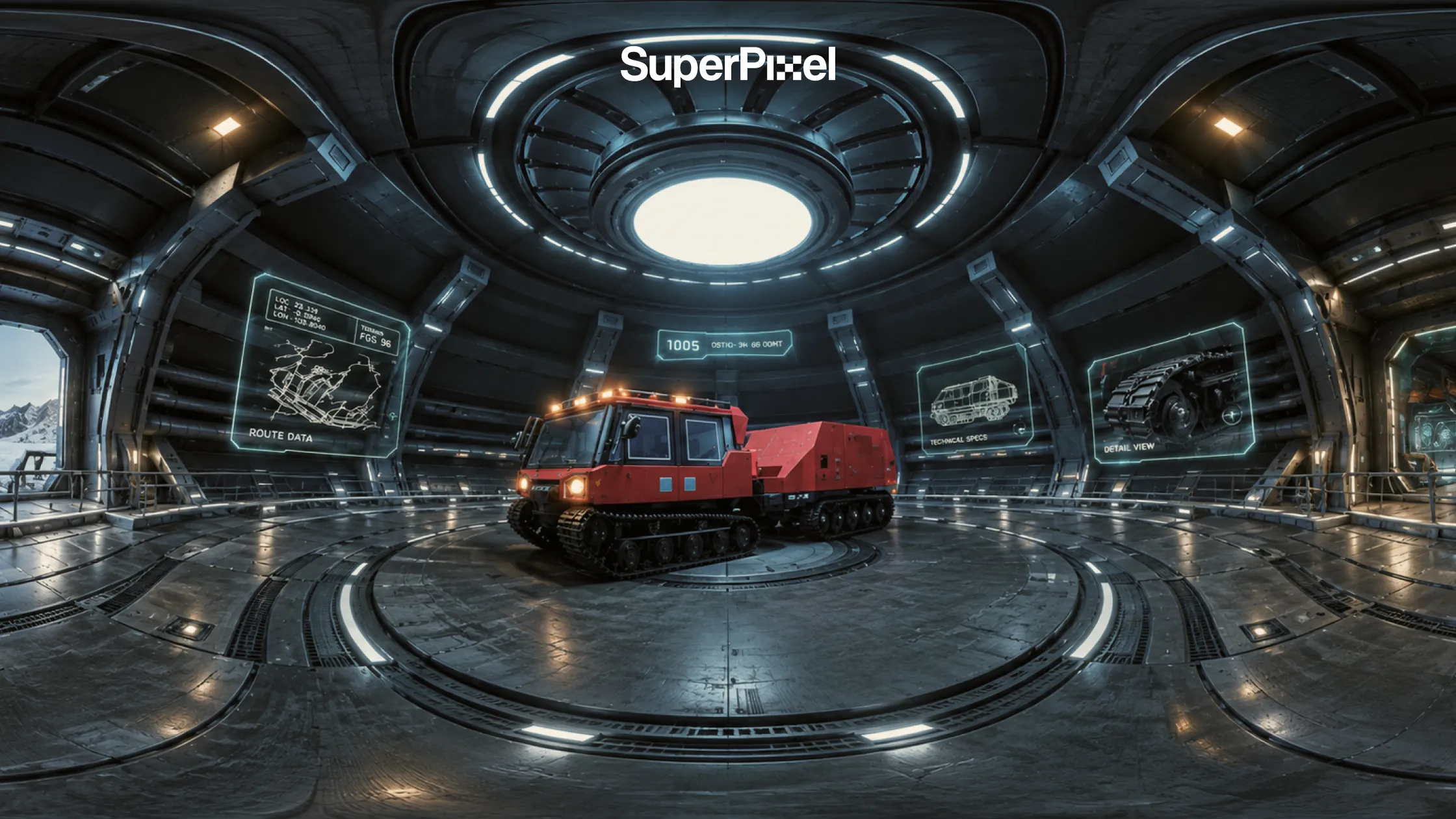
Traditional video gives the director one powerful advantage: control of the frame. Through video storytelling, you decide what the viewer sees, what stays outside the shot, and exactly when attention moves from one subject to another.
That control is also shaped by familiar shot types: a close-up can isolate a detail, a wide shot can establish context, and a cut can redirect attention almost instantly.
A 360 video gives some of that control back to the viewer. They can turn around, look up, miss the action behind them, or spend ten seconds studying something you expected them to notice for two.
That freedom is what makes the format immersive. It is also what makes producing it different from simply placing a 360 camera in a room. If you are looking for a video production team for a 360 brief, the useful question is not who owns the equipment. It is whether the team knows how to tell a story when there is no fixed frame.
If you are still deciding whether spherical video is the right format at all, it helps to understand how 360 virtual reality changes the viewing experience before production decisions begin. A broader immersive experience may give the audience even more freedom when the brief extends beyond simply looking around.
What Changes When the Frame Disappears?
In conventional production, the camera tells people where to look. A close-up isolates a feature, a cut changes location, and an establishing shot explains the setting.
In 360 video, the environment becomes the frame.
That changes the production logic. Camera placement affects where the viewer feels they are standing. Performers work across a wider field of view, while lights, crew, monitors, and reflections become harder to hide.
Attention has to be guided rather than forced. Sound can pull someone towards action behind them, while movement or a presenter’s gaze can lead viewers towards the next point of interest.
This makes 360 production as much a problem of visual communication as camera technique. Every movement, sound cue, and point of contrast has to help viewers understand where their attention could go next.
And when the audience can do more than look around for example, trigger content, choose a path, or respond to what they see, the brief begins to overlap with interactive media rather than remaining a purely passive 360 video.
Good 360 storytelling gives people freedom without leaving them wondering where the story went.
When Does 360 Video Earn Its Place?
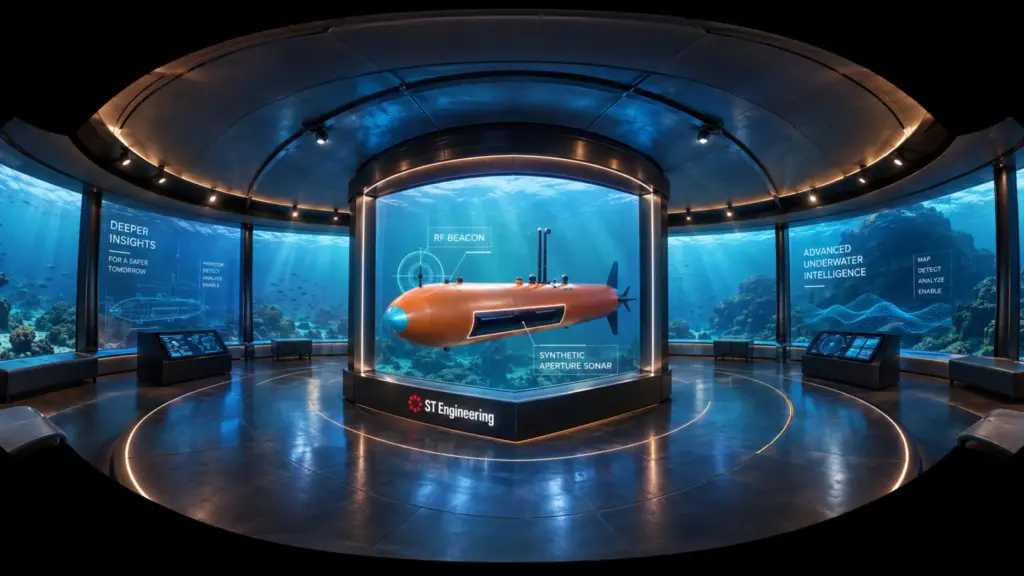
360 video earns its place when spatial context adds information, presence, or access that a fixed frame cannot provide as clearly.
That may be a factory where viewers need to understand how the environment connects, or a hotel, property, attraction, exhibition, or campus where being inside the space is part of the value. Training can also benefit when learners need to observe surroundings or recognise hazards.
The same applies to places most people cannot easily enter. The value comes from feeling closer to where the story is happening.
A production partner should challenge the brief rather than automatically approve the format. If looking around adds little information or presence, conventional video production may tell the story more clearly.
360 Video, Virtual Tours, and VR Are Not the Same Thing
| Format | What the viewer can do | Typical strength |
|---|---|---|
| 360 video | Look around within recorded or rendered spherical footage | Presence and spatial observation |
| Virtual tour | Move between locations or fixed viewpoints | Self-guided exploration |
| VR experience | Look, move, and potentially interact or make choices | Participation and simulation |
Before choosing a format, ask what control the audience actually needs: look around, explore, interact, or simply watch. That usually clarifies the technology choice faster than starting with a headset or software list.
If the brief is really about letting people move through a property or environment at their own pace, a 3D virtual tour may be closer to the communication job than a linear 360 video.
If participation matters more than observation, the project may be moving towards a broader immersive experience instead.
How to Evaluate a 360 Video Production Company
The showreel matters, but the harder questions sit behind it. A strong partner should explain how the experience guides attention, where the camera belongs, what happens in post, and how the final piece will be delivered.
Can they direct attention without relying on cuts?
A 360 scene needs hierarchy, movement, sound, and pacing strong enough to guide the viewer. If several important actions happen at once, there is no guarantee the audience sees the one that matters most.
Ask the team what viewers are likely to notice first, what might be missed, and how each scene leads to the next point of interest.
Do they plan camera position before production day?
Moving a 360 camera by a metre can change the experience. Too close and the viewer may feel crowded; too far away and the connection weakens. An unnatural position can make the audience feel like a floating observer instead of someone standing in the scene.
For exhibition halls, showrooms, offices, attractions, campuses, and event venues in Singapore, a site recce is part of the storytelling. Ask where the camera will stand before approving the storyboard.
Can they handle the post-production properly?
360 production does not end when filming stops. Multi-lens footage must become one continuous environment, so stitching errors, seams, unwanted crew, and awkward transitions need careful cleanup.
Graphics also behave differently. Titles, labels, directional cues, animation, and VFX need to remain readable within a spherical environment rather than being treated like conventional overlays.
When the experience requires substantial cleanup, compositing, or visual effects, the production begins to overlap with a broader VFX workflow. Those requirements are worth identifying before the shoot rather than treating them as fixes at the end.
Do they design for the final viewing platform?
A headset experience and a browser-based 360 video create different delivery problems. Headsets offer more playback control; browser experiences must account for loading, interaction, interface behaviour, and first-time users.
Ask where the audience will actually watch the piece before production begins. Platform choice affects resolution, graphics, testing, and sometimes the story itself.

Where SuperPixel Fits Into 360 and Immersive Production
360 production sits between filmmaking and spatial experience design. SuperPixel works across both.
On the production side, our video production workflow covers creative development, filming, animation, compositing, editing, and post-production. On the immersive side, our work regularly asks how digital content behaves once the audience is no longer watching from one fixed viewpoint.
A recent example is Pokémon Happy Holidays at Suntec City. The audience did not simply watch a finished film. The installation combined digital storytelling, a physical environment, and real-time interaction, so audience behaviour and visual response had to be considered together.
The project is not presented as a 360 video case study. Its relevance is the production principle: when people can choose where to look, move through an environment, or trigger what happens next, the story has to work beyond one rectangular frame.
That is also the territory of interactive media, where audience behaviour becomes part of how the content itself works rather than something considered only after the visuals are finished.
The same spatial thinking appears in projects such as Mount Elizabeth Hospital’s LizGallery, where digital content was created for a physical lobby environment rather than an isolated screen. That combination of filmmaking, animation, and immersive design is where SuperPixel is most useful when a 360 brief grows into a broader experience question.
Explore more selected SuperPixel projects.
What Actually Changes the Production Scope?
The camera is only one part of a 360 production budget. The scope usually changes with four things.
Location control: Almost everything around the camera can be visible. Crew, lights, reflections, monitors, and equipment may need to be hidden, staged differently, or removed in post.
Movement and blocking: Fast camera moves can feel uncomfortable when the viewer is surrounded by the scene. Performers and action also need to work across more than one possible viewing direction.
Audio: Sound can do more than create atmosphere. Directional or spatial cues can help draw attention towards something the viewer cannot currently see.
Testing and delivery: A scene that feels clear on an editor’s monitor may behave differently in a headset or interactive player. Testing in the delivery platform is part of directing, not just QA.
The same principle applies to other forms of immersive production: the visible asset is only part of the scope. Platform behaviour, audience interaction, and technical testing can add work that does not appear in the first storyboard.
Frequently Asked Questions
Can 360 video be watched without a VR headset?
Yes. It can also be viewed through compatible browsers, mobile devices, and 360 video platforms.
How long should a 360 video be?
There is no universal ideal length. Give viewers enough time to explore without making the experience tiring or unfocused.
Can animation and motion graphics be added to 360 footage?
Yes. Graphics, labels, VFX, and animation can be added, but they need to be positioned and tested for spherical viewing.
If motion graphics will carry instructions, labels, or directional cues, think about them as part of the viewing system rather than decoration. Our motion graphics service covers the broader role animation can play in communicating information clearly through movement.
Does 360 video require spatial audio?
Not always. It is most useful when sound needs to guide attention towards something the viewer may not currently see.
Can one 360 video work for headset, web, and social use?
Often, but each platform changes the experience. Plan versions early so framing, graphics, resolution, and interaction are not last-minute exports.
Have a Place People Need to Experience?
Send us the location, audience, intended platform, and what people need to notice. SuperPixel can help determine whether 360 video, VR, interactive media, or conventional film gives the idea the clearest form.
Start with the place and the communication job. Contact the team to discuss the brief before the format starts making decisions for you.