


3D virtual tour services become useful when a space has more to say than a photo can show.
I’ve seen this happen with showrooms, hotel rooms, property launches, and event venues. The visuals look good, but customers still ask, “Can I feel the space before I visit?” That’s the gap we help brands close at SuperPixel.
We create immersive virtual tour experiences that let people explore the flow, scale, and small details that make a place memorable. Not just a digital walk-through, but a clearer way to help potential clients understand, trust, and imagine themselves inside the story.
Key Takeaways
- 3D virtual tour services help brands present spaces beyond static photos or videos.
- Virtual tours make it easier for potential clients to explore before they visit.
- A 3D virtual tour can add depth, interaction, and storytelling to the experience.
- Businesses can use virtual tours for property, hospitality, retail, events, and more.
- SuperPixel turns virtual spaces into immersive brand experiences, not just walkthroughs.
Why 3D Virtual Tour Services Matter for Brands
A lot of businesses have beautiful spaces, but still struggle to present them online.
Photos, videos, and maps can help, but they do not always give customers the feeling of actually being there. That is where 3d virtual tour services become useful.
These tours allow users to remotely navigate through a property or venue in high-definition, 360-degree detail from any device.
With a 3d virtual tour, potential clients, buyers, guests, and visitors can explore the space in their own time, notice key features, and feel more confident before making a decision.
Virtual tours can increase user engagement by keeping them on your website 5 to 10 times longer.
Visual transparency provided by virtual tours builds faster consumer trust and can lead to increased conversions.
And honestly, that makes sense. When people can see more, they usually trust more.
Virtual Tour Experiences Are Not Only for Real Estate Agents
When people hear virtual tour, they usually think of property.
Fair enough. Real estate agents and real estate developers use it because buyers can explore spaces before arranging a physical visit. It helps them understand the layout, flow, and feeling of a location earlier.
But I don’t think we should stop at real estate.
| Industry | How Virtual Tours Can Help |
|---|---|
| Real estate | Help potential buyers explore properties anytime, from anywhere, while improving accessibility and convenience. |
| Hospitality | Showcase hotel rooms, event venues, and amenities before guests make a booking. |
| Retail | Create shoppable virtual storefronts linked to e-commerce through 3D tours. |
| Restaurants | Show the ambiance online and help customers decide before they visit. |
| Healthcare | Help patients understand the hospital environment before admission, reducing anxiety. |
| Tourism & education | Let visitors or students explore locations virtually before making travel or learning decisions. |
So yes, a virtual tour can support property marketing.
But it can also help hotels, hospitals, schools, restaurants, tourism boards, retailers, and event spaces tell their story before people physically arrive.
That’s the magic of it.
A space does not have to wait for people to visit before it starts creating interest.
360 Virtual Tours vs 3D Virtual Tour: What Is the Difference?
This part can be confusing, so let’s keep it simple.
Both formats help people explore spaces online, but they do not work in the same way. A 360 virtual tour is usually built from panoramic images, while a 3D virtual tour can capture more depth, structure, and movement inside the space.
| Comparison Point | 360 Virtual Tours | 3D Virtual Tour |
|---|---|---|
| How it looks | Uses stitched panoramic images to let users look around a space. | Creates a more dimensional view with height, width, and depth. |
| Navigation | Users can move from one panoramic point to another. | Users can experience a more natural virtual walk with fuller navigation. |
| Depth and scale | Shows the space visually, but often feels flatter. | Captures depth more accurately, making the space feel more realistic. |
| Technology | Usually relies on basic 360 cameras and photography. | Can use infrared cameras, laser scanning, spatial capture, or AI photogrammetry. |
| Floor plans and measurements | Limited when it comes to accurate measurements or layout data. | Can support interactive floor plans, precise measurements, and better spatial data. |
| Best use case | Good for quick, accessible previews of real spaces. | Better for immersive experience, property planning, digital twin creation, and complex spaces. |
| Storytelling potential | Useful, but often more visual than interactive. | Can include hotspots, guided movement, videos, object views, and more interactive features. |
A digital twin can also become part of the conversation here. It is not just a nice picture of a space. It is a digital model that carries depth, structure, and data.
For developers, architects, engineers, and project teams, this can be very useful. 3D virtual tours can document construction progress, capture as-built data, and help teams present a project more clearly.
And honestly, that is where the difference becomes interesting.
A 360 tour shows people what a space looks like. A 3D virtual tour helps them understand how the space feels, works, and moves.
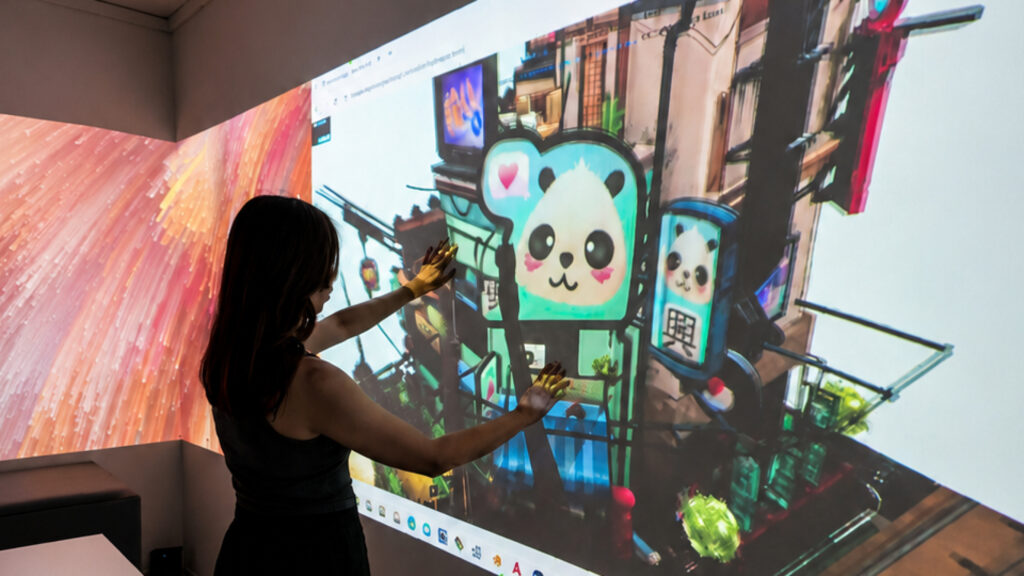
Virtual Environments Can Make the Experience More Engaging
At SuperPixel, we usually start with one simple question:
How do we make people care about the space?
Because a virtual tour should not only let people look around. It should help them understand what matters, where to focus, and why the space is worth remembering.
Step 1: Start with the story
Before adding features, we map the audience journey first. What should visitors notice, feel, or understand when they explore the virtual environments?
Step 2: Add interactive touchpoints
Interactive virtual tours can include photos, text, audio, and videos to make the experience more useful. This helps turn a simple walkthrough into a more guided and engaging story.
Step 3: Highlight the important details
Features like interactive waypoints, information boxes, guided audio, and object views can help users discover what makes the space special. Sometimes, the smallest detail is what makes people remember.
Step 4: Make the tour easy to access
Not every business needs a full VR setup. Sometimes, the better option is a smooth 3d virtual experience that works on a website, presentation, or mobile devices.
Step 5: Choose the right level of immersion
For deeper experiences, the project can be designed for virtual reality headsets or simple tools like Google Cardboard. But the goal is never just to look futuristic; the goal is to make the experience feel clear, useful, and memorable.
That’s where virtual environments become more than a walkthrough.
They become a way for hotels, showrooms, event venues, and retail spaces to help people explore, understand, and imagine the space before they arrive.
What to Consider Before Choosing Virtual Tours Services
Not all virtual tours services are built the same. Some are photography-led, some focus on interactive virtual tours, and others combine 3D modelling, animation, and immersive storytelling.
Step 1: Define the business goal
Start with what you want people to do after the virtual tour. Should they book a visit, contact sales teams, explore a property, or feel more confident before deciding?
Step 2: Check the technology quality
A high quality virtual tour should feel smooth, clear, and easy to explore. The right provider should know whether your project needs 360 cameras, spatial capture, 3D modelling, or a more interactive setup.
Step 3: Understand the deliverables
Ask what assets you will receive, from interactive floor plans and website embeds to videos, 3D files, or a digital twin. This helps you know if the tour can support your wider marketing needs.
Step 4: Clarify hosting and access
Before starting, check hosting duration, subscription fees, file ownership, and future update options. Pretty visuals are great, but long-term access matters too.
Step 5: Choose a team that understands the story
A strong virtual tour should not only show the space, but help people understand why it matters. That is where storytelling, flow, and audience experience make the biggest difference.
Where SuperPixel Fits In
SuperPixel may not be a pure 3D virtual tour services company, and we have not focused heavily on this type of project so far.
But we have worked on something close.
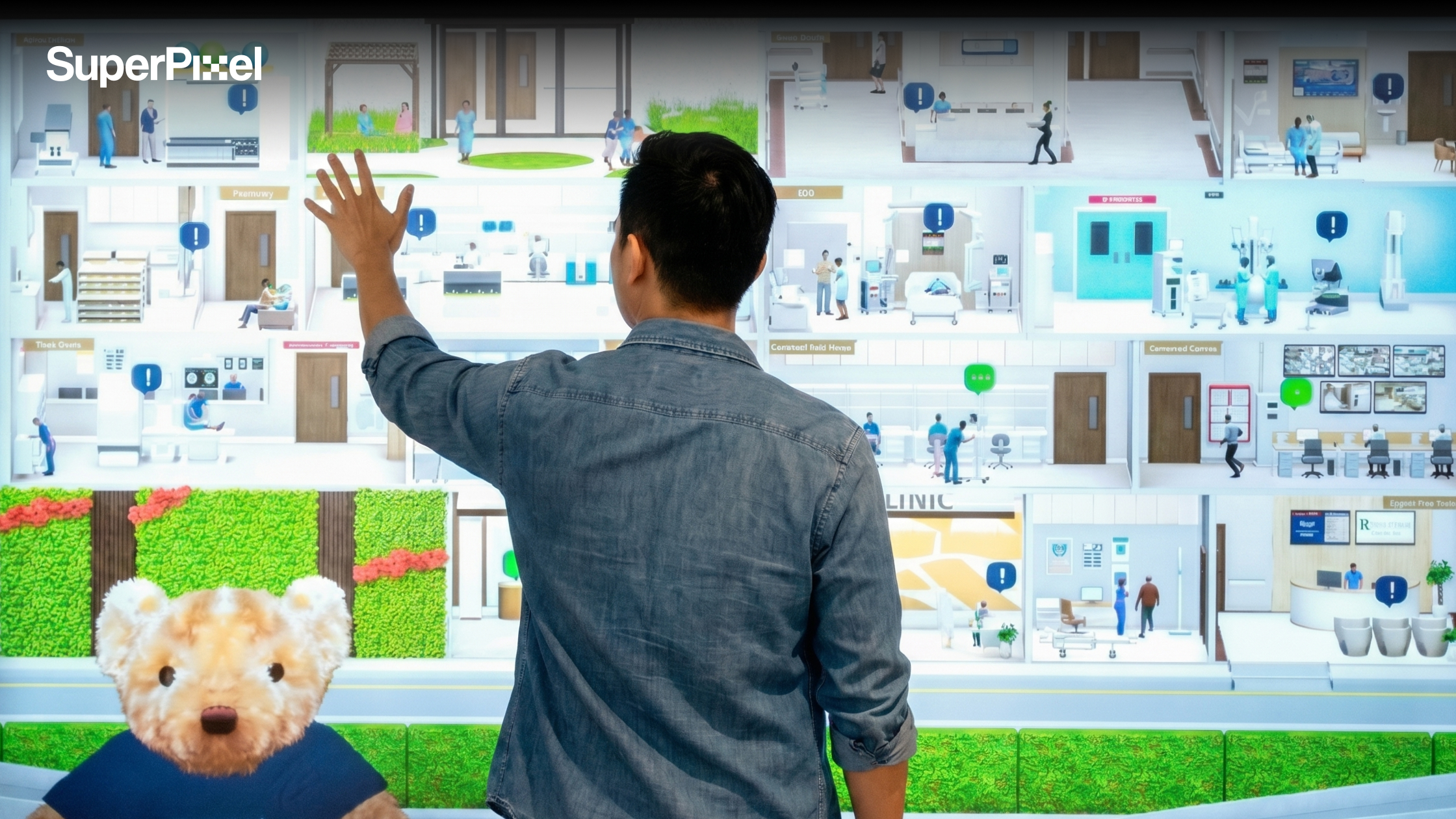
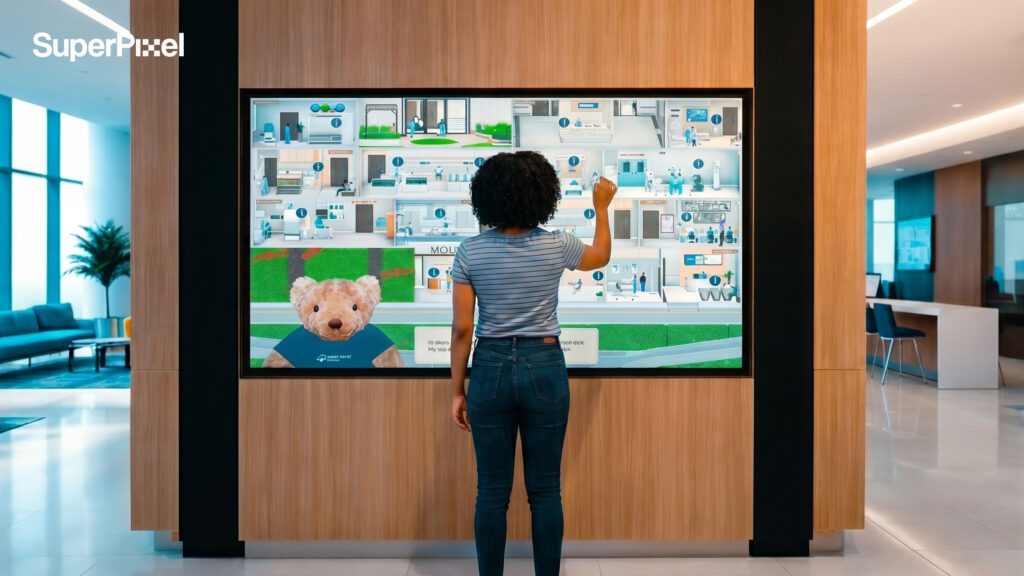
For Mount Elizabeth, we created a dynamic virtual walkthrough to turn complex hospital upgrades into a clearer visual story. The project used custom camera paths, landscape animation, high quality rendering, material textures, and architectural details to make the space feel more immersive and easier to understand.
That is where SuperPixel can bring value.
Not just showing a space, but helping people feel the story inside it.
Virtual Environments Can Make the Experience More Engaging
At SuperPixel, we see virtual environments as more than a digital walk. The goal is to help people care about the space.
A strong virtual tour can include photos, text, audio, videos, interactive waypoints, information boxes, guided audio, measurement tools, day/night transitions, and object views. These features help visitors understand the space, not just look around.
Sometimes, the best experience is not full VR. It can simply be an accessible 3d virtual experience that works beautifully on a website, presentation, or mobile device.
FAQs
1. How long does it take to create a virtual reality tour?
It depends on the size of the space, level of detail, and features needed. A simple tour can be faster, while a custom vr experience may need more time and resources.
2. How much does a professional 3D virtual tour cost?
The cost depends on the scope, technology, and production quality. The main benefit is that it enables your business to display a space more clearly for potential clients.
3. Do we need professional photographers for the project?
Sometimes, yes, especially if the tour is based on a real-world location. But for a more animated or 3D-built experience, SuperPixel can bring the space to life through visual storytelling and 3D expertise.
4. Can a 3D virtual tour help generate more leads?
Yes, because it helps people explore the space before they visit. When customers understand the experience better, they are more likely to enquire, book, or take the next step.
5. Can SuperPixel create 3D virtual tour services in Singapore?
Yes. As an animation studio in Singapore, SuperPixel can help brands create exciting spatial experiences, from virtual walkthroughs to immersive brand stories that feel more memorable.