


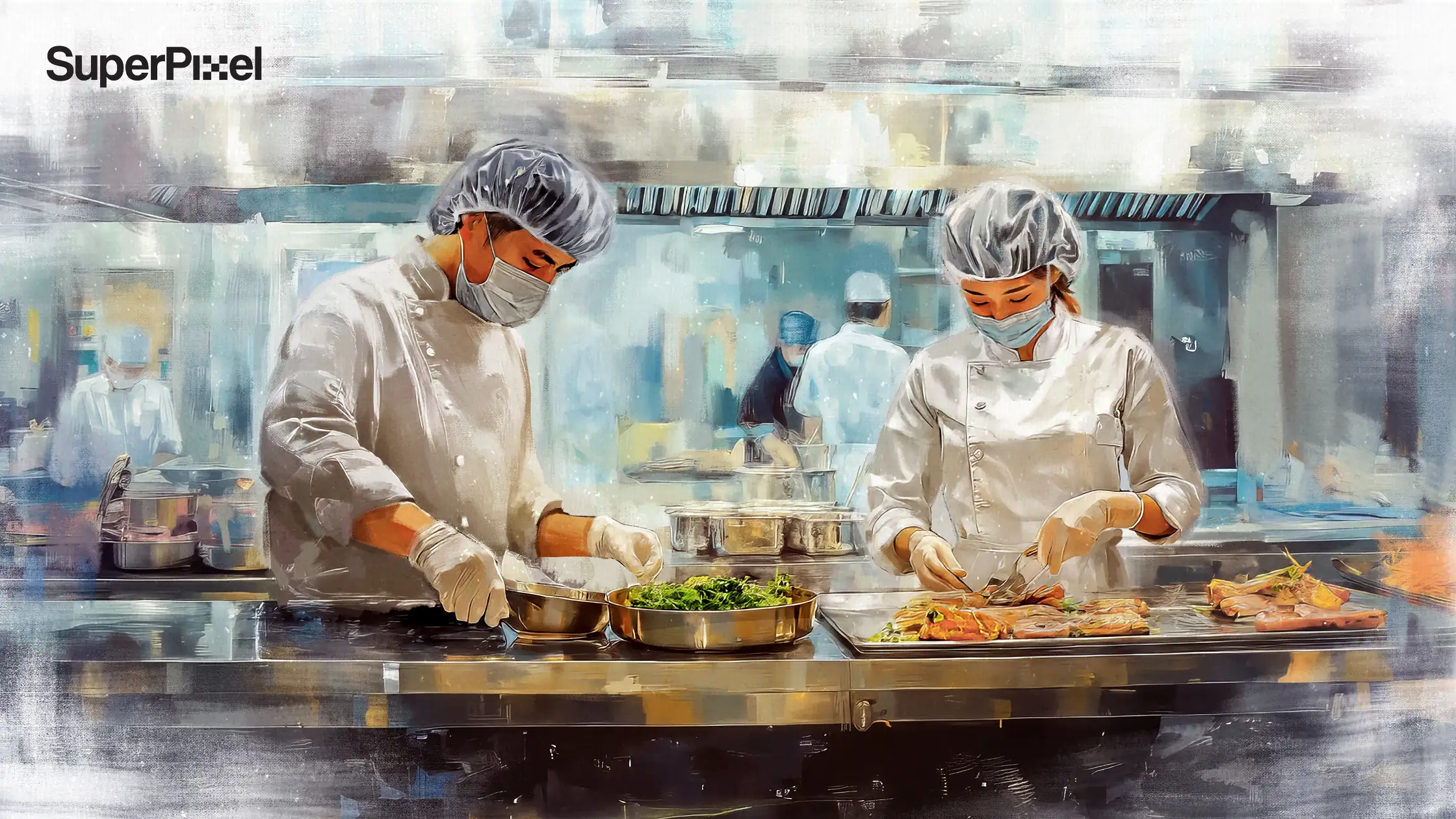
There is always a sense of excitement when a new visual direction appears on screen much faster than expected. In just a short time, our team may have several frames to compare, discuss, and develop further.
But that first result is only the beginning. We still need to ask whether it feels right for the brand, whether the story is becoming clearer, and whether the visual can remain consistent once it moves across a full animation. A quick image can start the conversation, but it does not always make the decisions that follow any easier.
From what we have seen in our animation studio, the real value of AI is not simply how quickly it creates something. It is whether that early output helps the project move in the right direction.
According to Stanford HAI’s 2026 AI Index, 88 percent of surveyed organisations used AI in 2025, while 70 percent used generative AI in at least one business function. More businesses in Singapore and the wider region are now asking how AI may affect animation schedules, budgets, creative possibilities, and content output.
Before looking at the production process in more detail, here are the main points businesses should keep in mind.
Key Takeaways
- AI can make visual exploration, storyboarding, motion testing, versioning, and localisation more efficient.
- Its strongest value often appears during early development, before full animation production begins.
- AI does not automatically make every project cheaper, as cost still depends on duration, complexity, revisions, style, and delivery requirements.
- Brand consistency, technical accuracy, confidentiality, ownership, and revision control still require careful human review.
- SuperPixel combines AI assisted tools with traditional animation methods based on what best supports the message, audience, timeline, and final output.
What Does AI for 2D Animation Mean?
When people talk about AI for 2D animation, they may be describing two very different ways of working. One begins with a prompt and produces a visual result almost immediately. The other uses AI within a wider production process shaped around a brief.
In an AI-assisted workflow, SuperPixel use generated references during early development, while our artists continue to guide the other idea of design, storytelling, animation, and final delivery. The work can move through feedback, revisions, and approval without losing sight of the original direction.
This difference matters because a quick output is not the same as a production-ready animation. For clients, the real distinction lies in how much control remains after the first image appears.
Where AI Can Support 2D Animation
AI can assist at several stages, but its value is often strongest before the team begins full animation.
Faster Visual Exploration
Before clients see a frame, visual discussions often stay in words. A direction may be described as warm, playful, premium, or bold, but each person may imagine something slightly different.
Once several visual directions appear on screen, the conversation becomes much clearer. Clients can point to the colours that feel right, the character style that feels too young, or the composition that does not match the brand. Feedback becomes more specific because everyone is responding to the same image.
This is where early visual exploration becomes valuable. It helps the team understand what the client means before one direction is developed too far, reducing the chance of major visual changes later in production.
Once a direction has been selected, artists still need to build the design system that keeps every scene consistent. This includes character proportions, colour references, expressions, lighting, perspective, and brand elements.
Storyboards and Motion Tests
A script can feel perfectly clear while it is made of words. The problem often appears when each idea is arranged into storyboard frames: one scene carries too much information, while another moves too quickly for the message to land.
Early motion tests reveal another layer. A transition that looked simple on paper may feel abrupt once the elements begin to move. McKinsey found producers using AI for visualisation, storyboarding, script breakdowns, shot planning, and A/B testing, with 5 to 10 percent productivity improvements in selected pre-production uses. This reflects what we often see: AI is most useful when it helps us test an idea before production begins.
At this stage, frames remain easy to rearrange. Finished animation is not.
Versioning and Localisation
A translated voice-over can add only a few seconds, yet those seconds may change the whole sequence. A product demonstration needs more room, a subtitle stays on screen longer, and the end card begins later than planned.
The same happens when one animation moves from landscape to vertical. A composition that worked clearly in a wide frame may suddenly crop out the product, squeeze the text, or push an important action too close to the edge. Each version needs to be reviewed as a new viewing experience, not simply exported in another size.
Versioning and localisation are therefore not only delivery tasks. Every adaptation must protect the timing, hierarchy, and meaning that made the original animation work.
What Can AI Actually Save?
When we start shaping a new story, those first few weeks are all about trying a few early ideas and seeing which direction feels right. We usually test a handful of visual styles side by side so our team can figure out the best look before diving into heavy production.
That early help also gives our artists a nice head start on repetitive tasks. Instead of staring at a completely blank screen, they get a solid baseline to build on. That means we can spend our energy where it actually counts: shaping the character, tightening up the story, and perfecting the little details that make the final animation click for the audience. We are never handing the creative process over to a tool, we are just clearing away the routine steps so we can focus on the craft.
Most importantly, working this way lets us make changes before animation begins, while the project is still flexible. If something feels off, we can shift gears easily without having to tear down everything we have built. Over the years, we have learned that AI is at its best when it helps us settle on the right path early on, leaving us completely free to guide the rest of the journey.
Where AI Still Has Limitations
AI can produce strong visual results, but professional animation often requires consistency and control across many scenes and rounds of feedback.
Brand and Character Consistency
For any brand commissioning character animation in Singapore, that repeatability is the whole asset, a mascot that shifts between shots stops feeling like the brand. Model sheets, approved poses, expression guides, colour references, and regular art direction are what keep it stable.
Precise Revisions
Business animation projects often involve several rounds of feedback. With AI generated footage, changing one detail can affect several others. Adjusting a character’s hand may also change the face, clothing, or background.
A structured animation pipeline gives artists more control. When scenes are built using layered files, individual elements can be updated without rebuilding the entire shot. Beyond revision control, certain industries also need every visual detail to be accurate.
Product and Technical Accuracy
AI can create visuals that look convincing while containing incorrect details. A product feature may change between shots. A button may appear in the wrong place. A diagram may look realistic without being accurate.
For product explainers, healthcare communication, financial services, software demonstrations, and technical animation, controlled design remain important. The production method should also be considered from a data and rights perspective, especially when confidential brand materials are involved.
Confidentiality and Ownership
Animation projects may involve unreleased campaigns, scripts, product information, customer data, or brand assets.
Before AI is used, businesses should understand which tools will be involved, what materials will be uploaded, how files are stored, and whether the data may be retained.
Ownership should also be discussed clearly. Clients should understand who owns the final artwork, whether editable files are included, and how generated materials are reviewed for copyright concerns.

How SuperPixel Approaches AI Animation
At SuperPixel, we begin with the message, audience, and intended use of the animation, not the AI tool.
From there, we recommend the most suitable approach. This may be AI assisted, traditional, or a combination of both.
AI may support concept development, storyboards, animatics, versioning, and localisation. Our team continues to lead the strategy, storytelling, animation, and final review.
Our role is to help clients decide where AI can save time, where greater control is needed, and how the production process should be shaped around the brand, timeline, and final deliverables. Ultimately, the right workflow depends on what the animation needs to achieve.
Plan Your 2D Animation Project
Not every animation project needs the same production approach. Our team can help you decide where AI makes sense, where a traditional process gives you more control, and how each stage should support your timeline, brand, and final deliverables.
Share your brief with our animation studio, and we’ll help map out the right way forward.
Frequently Asked Questions
Can AI create a complete 2D animation?
Yes, it can handle simple shorts with few revisions, but it struggles when videos need to follow strict brand rules or keep a character looking the same across scenes.
Is AI animation cheaper than traditional animation?
It can save money during early testing, but costs often rise if generated scenes need heavy corrections or have to be rebuilt from scratch.
Can AI keep a brand character consistent?
AI can keep a character broadly similar, but it often slips on small details across different poses, which matters when your mascot needs to return for future campaigns.
Is AI suitable for corporate and technical animation?
Yes, as long as you double-check product features and diagrams against approved source material before final delivery.
How does SuperPixel decide whether to use AI?
Our animation studio always looks at what the project needs first, choosing tools based on your brief rather than following tech trends.