


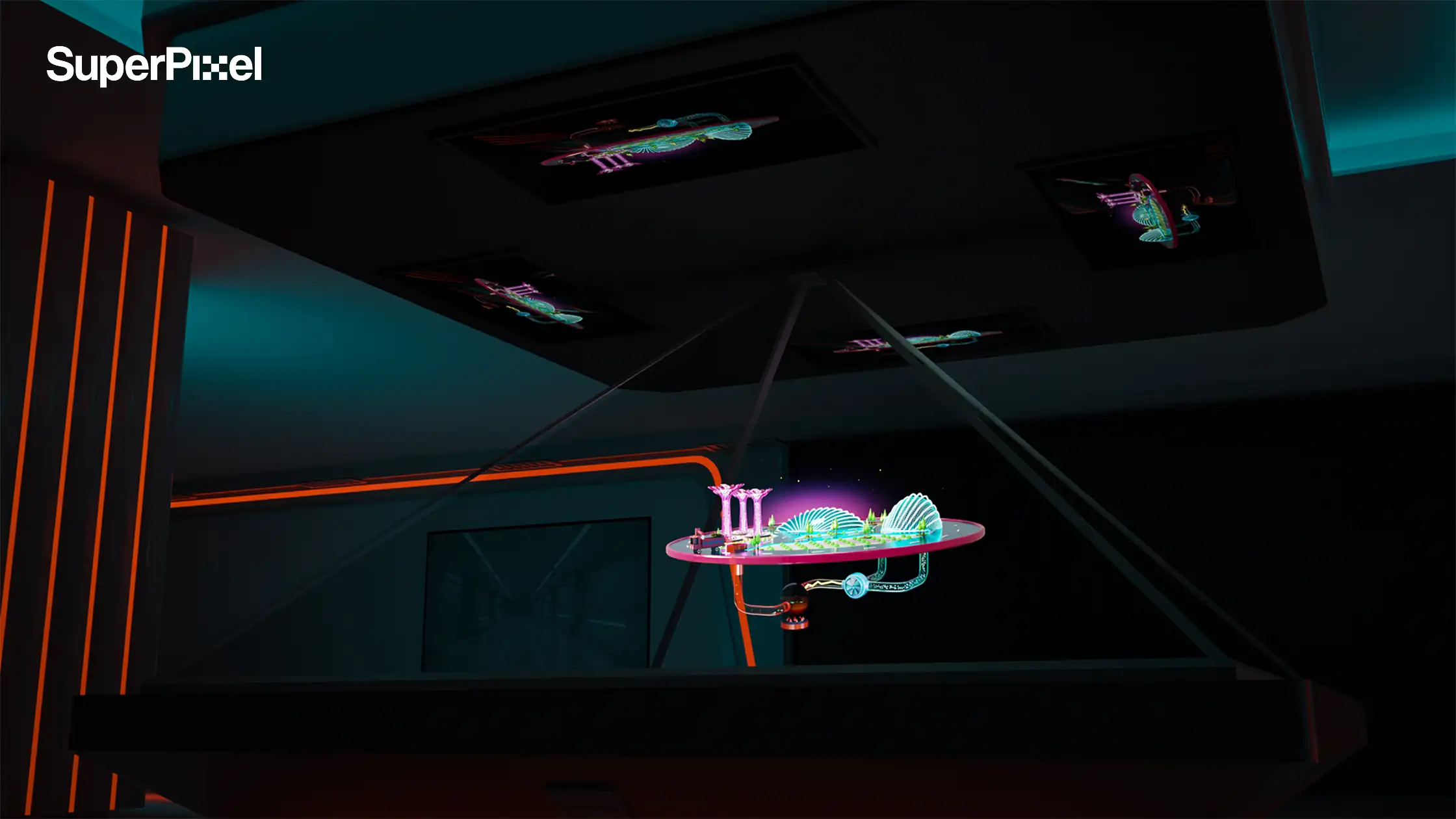
3D video hologram might be a term that gets thrown around a lot these days in brand, event, and campaign meetings. But it often means different things to different people.
Sometimes, it describes a product appearing to float off the screen. Other times, it’s a performer that feels truly present on stage, or simply clever LED illusions that add depth to a flat display.
Most of these aren’t “true” holograms in the sci-fi sense. They’re usually a sophisticated blend of 3D animation, forced perspective, projection mapping, and clever screen design. It’s essentially the same toolkit an animation studio uses to build immersive experiences, we’re just using it in more creative, spatial ways.
If we label every immersive visual a “hologram,” we risk skipping the most important questions of the creative process: What does the audience actually need to see, where will they be standing, and how real should the moment feel?
The Real Question Is Not “Can We Make a Hologram?”
A hologram-like visual can be impressive, but the strongest projects do not begin with the effect. They begin with the purpose of the content.
For some brands, the goal is to introduce a speaker, performer, or ambassador with a stronger sense of presence. For others, it may be to show a product from angles that are hard to capture in a live shoot, or to visualise something that cannot be filmed at all.
The setting also changes everything. A public LED wall does not work the same way as a ballroom, retail installation, stage environment, or mobile campaign. A visual illusion designed for one strong viewing angle may look brilliant on a large outdoor screen, but it may not suit an audience moving freely through a space.
That is why it helps to define the role of the visual before choosing the technique. Is it meant to explain something complex, create a strong entrance, transform a venue, or invite people to interact? Once that is clear, decisions around camera movement, screen format, animation style, and production timeline become much easier to make.
Not Just One Technique: Choosing the Right Visual Method
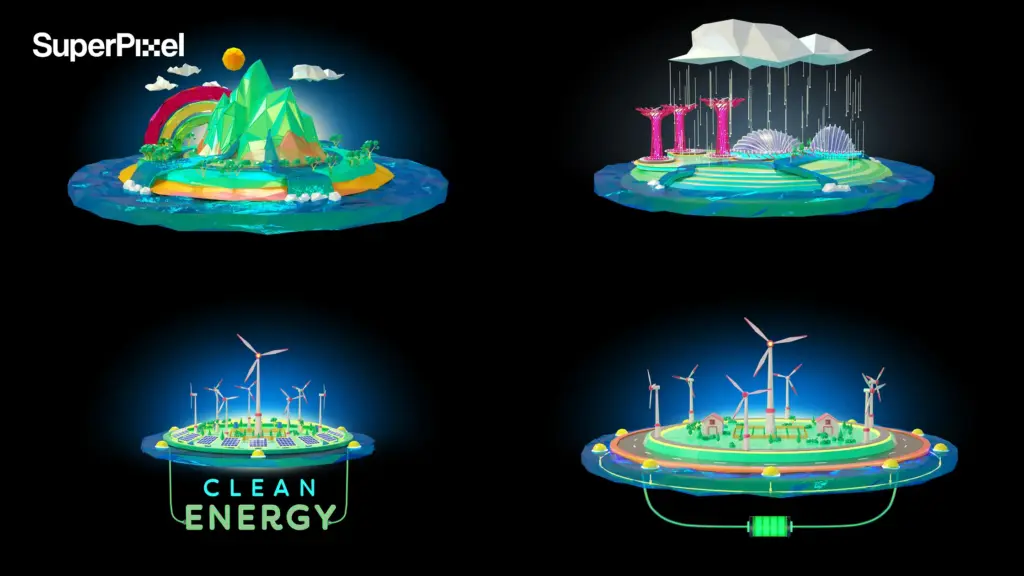
There are many ways to create a visual that feels dimensional, immersive, or hologram-like. The right choice depends on what the audience needs to see, where the content will appear, and how much control the project needs over motion, space, and realism.
- 3D animation works well for products, characters, or visual worlds that do not need to be filmed in real life. It gives the team control over camera angles, lighting, materials, timing, and movement. This makes it useful for product reveals, event visuals, social cut-downs, or screen content that needs to be adapted into different formats.
- Volumetric-style capture or directed filmed content is more suitable when a real person’s presence is central to the idea, such as a founder, artist, spokesperson, or ambassador. This route can feel more human and recognisable, but it also depends on performance direction, lighting, wardrobe, and display context. It may be less flexible once the footage has been captured.
- AR is useful when the audience needs to experience the visual through their own device or interact with it in a specific location. It works well for characters, products, or campaign objects that people can discover through their phone. The interaction should feel simple, clear, and easy to enjoy.
- Projection mapping uses physical surfaces such as buildings, stages, walls, or sculptures as part of the visual experience. Instead of treating the space as a flat screen, it responds to the shape and scale of the environment. SuperPixel’s Prudential Star Club Gala projection mapping is one example where the venue itself became part of the visual story.
- 3D anamorphic LED creates the illusion of depth from a specific viewing angle. For CIMB Singapore’s festive LED campaign, SuperPixel created anamorphic animations that appeared to extend beyond the screen in a public display setting.
- Motion graphics can also create depth through layering, parallax, compositing, and spatial design. For Bintang x Haluu’s installation, SuperPixel used 2D animation, depth layering, and projection mapping to turn a room into an immersive environment without relying on realistic 3D objects.
What Brands Should Prepare Before Creating a 3D Video Immersive
A clear brief helps the team choose the right production route before the work begins. Before creating a 3D video hologram or hologram-like visual, brands should prepare a few key details:
- Project objective
Is the visual for a product launch, speaker introduction, venue transformation, event opening, or campaign moment? The purpose should guide the method, not the other way around. - Screen or venue setup
Share the screen size, ratio, pixel pitch, venue photos, stage layout, or projection surface. These details affect how the animation should be designed. - Audience viewing distance
A detail that looks good up close may not read clearly from the back of a venue or across a public space. - Viewing angle
This is especially important for anamorphic LED, projection mapping, and screen-based illusions. The team needs to know where the audience will mainly watch from. - Visual references and tone
References help when they explain the mood, style, or level of realism you want. It is also useful to share what the brand wants to avoid. - Brand, product, or character assets
Provide logos, product files, campaign guidelines, character designs, or existing brand materials early so the visuals can be built around them. - Technical requirements
Does the content need to loop, run with sound, follow live cues, appear on multiple screens, or be adapted into other formats?
These details may seem small, but they help make sure the final visual is not only impressive, but also properly built for the screen, space, and audience.
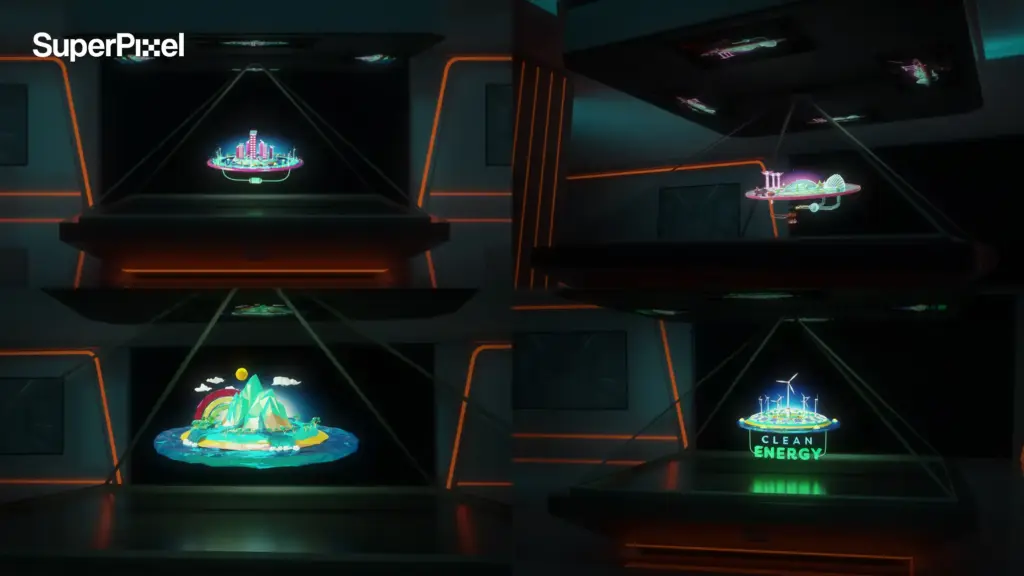
Planning a 3D Hologram-Style Video or Immersive Visual?
A 3D video hologram-style project works best when the visual method is chosen around the experience itself, not around a label.
The strongest starting point is to define what the audience should see, where they will see it, and what role the content needs to play. From there, the project may lead towards 3D animation, projection mapping, anamorphic LED, AR, real human capture, or a hybrid motion-design approach.
SuperPixel can help brands and agencies shape that direction before production begins, from early visual thinking and motion design through to 3D animation, immersive screen content, projection mapping, and format-ready delivery.
The goal is to create an experience that feels suited to the message, the location, and the people it is made for.