


If you are looking for a slide deck animation service, the biggest mistake is judging it by how lively the slides look. Corporate presentations rarely fail because nothing moves.
They fail because the message is too dense, the hierarchy is unclear, and animation is added too late as decoration.
For corporate teams, good presentation motion should make the deck easier to follow, not busier. It should guide attention, protect the brand system, and help the audience understand what matters first.
At SuperPixel, an animation studio in Singapore, we have worked across storyboard, 2D animation, 3D animation, and visual effects since 2016. Across corporate animation projects, one thing is clear: the best motion often feels subtle, but the message feels sharper.
Key Takeaways
- Good presentation motion is not about adding more effects. It is about making hierarchy easier to read.
- A strong slide deck animation service should protect your brand system before adding visual flair.
- The most important question is: what should the audience understand first?
- Subtle motion usually works better for executive, internal, and corporate presentations.
- Animation can improve flow and recall, but it cannot fix a confused message on its own.
Why most corporate deck animation feels busy
Many corporate decks become overloaded before animation even begins. By the time a deck reaches production, multiple stakeholders may have added their own priorities.
Marketing wants the story. Sales wants the proof points. Leadership wants the strategic message. Legal may need disclaimers. The result is a slide that tries to say three things at once.
When animation is added on top of that, the problem often becomes more visible. A headline fades in, a chart zooms forward, three callouts appear, and icons move across the screen. Everything is animated, but the audience still does not know where to look.
This is why slide deck animation requires judgement. Motion should create order, not perform busyness.
A good provider should be willing to challenge the clutter. Sometimes the right production decision is not to animate more, but to cut one message, split one slide into two, shorten the copy, or move detail into speaker notes.
Brand-safe motion is more than using the right colours
Corporate animation needs to feel consistent with the brand. That does not only mean using the correct logo, fonts, or colour palette. Brand-safe motion is also about how movement behaves.
- How does typography enter the slide?
- How quickly do elements settle?
- Do icons move consistently?
- Does the pacing feel calm and confident?
- Do transitions support the message or distract from it?
Motion has a tone, just like copy and design do. If a brand identity is clean and professional, but the deck uses bouncy transitions or overly dramatic text reveals, the presentation can feel off-brand even if the visual guidelines are technically followed.
This matters especially in executive settings. In a boardroom, town hall, investor meeting, or client presentation, the audience is listening, reading, and making decisions. They do not need spectacle on every slide. They need clear visual cues.
That is why subtle motion often works best. A simple fade, measured wipe, or clean chart build can guide attention without competing with the presenter.
A good slide deck animation service should protect brand logic
Once you understand that the goal is clarity, the way you evaluate a provider changes. You are no longer asking, “Who can make this look exciting?” then You are asking, “Who can make this easier to understand while keeping it on-brand?”
A good slide deck animation service should be able to explain how motion works inside your existing visual system. For example, headline text may enter with a small rise while body copy appears faster and with less movement. Icons may follow a consistent direction. Chart builds should respect the deck grid. Transitions should help the audience understand whether the next slide is a continuation, contrast, zoom-in, or reset.
These details may seem small, but they shape whether a deck feels polished or distracting. Clean motion is not just about looking smooth. It helps the audience understand sequence, relationship, and emphasis.
What in-style motion looks like in practice
In-style motion becomes most important when the brand system already exists. The goal is not to invent a new visual language. The goal is to animate the one the brand already owns.
A useful example is SuperPixel’s work on Hero RLB 2D Animation, referenced in the vendor draft as a corporate brand values animation. The piece used RLB’s existing brand values and visual style, then brought them to life through clean, restrained movement. Instead of adding unnecessary spectacle, the animation used simple transitions and clear visual flow to support the message.
The lesson applies directly to corporate presentation animation: if a brand system already has equity, motion should strengthen it, not compete with it.
For buyers evaluating a presentation animation partner, this raises three useful questions:
- Can the provider explain what parts of the brand system should stay fixed?
- Can they show how motion will guide attention?
- Do they know when to leave a slide almost untouched?
If a provider talks mostly about effects and not about hierarchy, they may be solving the wrong problem.
How presentation-style motion works across different formats
Slide deck animation does not always have to live inside a traditional presentation file. The same principles can also appear in animated business videos and large-format event visuals: clear hierarchy, readable typography, focused transitions, and one key message at a time.
1. LLevel Up: presentation flow for business storytelling
This project shows how a corporate message can be structured like a modern animated presentation.
The animated bar chart helps compare information in a clearer and more memorable way, while the zoom-in transition guides the audience from a broad idea into specific details. The use of kinetic typography for terms like VUCA also shows how text-heavy content can feel more dynamic without becoming distracting.
2. MotorOne 50th Anniversary Motion Graphics
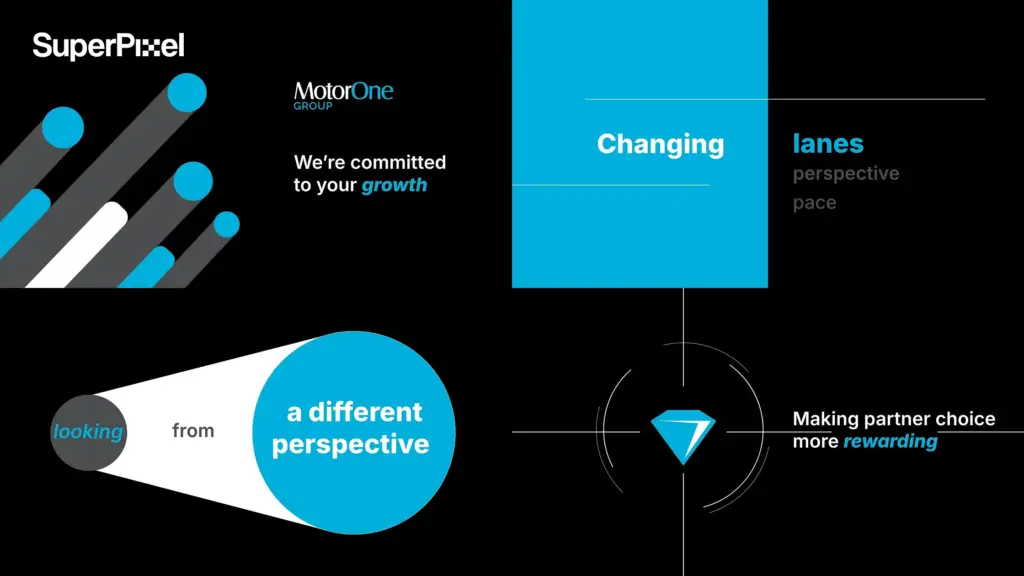
This project shows how presentation-style motion can work on a larger scale, such as LED displays or conference screens. Large typography, strong contrast, and generous negative space make the message easy to read from a distance. Split-screen transitions help separate ideas clearly, while animated milestone numbers make company achievements feel more impactful.
Together, these projects show that the value of slide deck animation is not just movement. It is the ability to adapt a message to the right viewing context, whether it is a corporate learning video, an executive presentation, or a large event screen.
How to brief a provider when stakeholders need sign-off
Many presentation animation projects do not stall during animation. They stall before animation, when different stakeholders are reacting to different parts of the message.
A clearer brief helps reduce late-stage changes. Start by defining the audience. Is the deck for executives, clients, employees, investors, or regional teams? Each audience needs a different level of detail and pacing.
Next, define the presentation context. Will it be shown live by a presenter? Sent as a standalone deck? Used at an event booth? Shared after a webinar? A speaker-led presentation can rely on the presenter for context. A standalone deck needs to explain more on its own.
Then, map the approval process. Who approves the message? Who approves the design? Who signs off on brand, legal, or regional details? If those roles are unclear, feedback can become messy.
Finally, ask about the pre-animation checkpoint. A disciplined process should include storyboard or keyframe approval before full animation begins. This protects the timeline because it locks the structure before motion work becomes expensive to change.
Studio, freelancer, or internal team?
Not every corporate deck needs an external studio. An internal team can often manage simple presentation motion, especially when the deck already follows a clear template and only needs light polish.
A freelancer can be a good fit for a small, clearly defined task with limited stakeholders and a motion style that has already been decided.
A studio becomes more valuable when the job is not just “make these slides move.” It is useful when the deck needs message simplification, brand-system judgement, stakeholder management, and a more structured production process.
This is where SuperPixel, as an animation studio in Singapore, can support corporate teams with more than animation execution. The value is in combining creative direction, storyboard thinking, design discipline, and motion craft so the final deck feels clearer, more polished, and easier to approve.
Choose clarity over movement
A good slide deck animation service should leave your presentation with fewer distractions, clearer emphasis, and stronger brand consistency.
Animation alone will not fix a weak strategy, a confused presenter, or an unresolved internal disagreement. But when the message is ready, motion can make the argument easier to follow and remember.
The goal is not to animate every slide. The goal is to help the audience understand the story faster.
If your team is weighing a slide deck animation service against a simple internal build, SuperPixel can help turn dense corporate presentations into clear, brand-safe animated stories that stay polished, professional, and easy to approve.
Frequently Asked Questions
What should I ask for in a slide deck animation service proposal?
Ask for the motion approach, approval process, editable deliverables, and handover plan. A strong proposal should explain how the provider will protect typography, grid alignment, brand behaviour, and message hierarchy. It should also explain what may need to be simplified before animation starts.
Can an animated corporate presentation still be edited by our internal team later?
Yes, but this needs to be discussed early. Some teams need editable presentation files, while others only need final video exports or motion assets. If reuse matters, clarify source files, fonts, ownership, and update rules before production begins.
How long does branded presentation animation usually take?
Timelines depend on deck length, stakeholder count, and approval complexity. What matters most is having storyboard or keyframe approval before full animation starts. Without that checkpoint, late changes can slow down the process and create unnecessary rework.