


When teams try to figure out if a mixed reality experience is the right fit for a lobby or public activation, we often see the same mistake: asking for immersion first and trying to define the message later once screens, sensors, and effects are already on the table. In a public setting, that order usually creates hesitation, not engagement.
In this article, mixed reality refers to public installations that use screens, sensors, and responsive digital content inside a physical venue.
The better question to start with is simpler: what should a visitor understand, do, or feel in the first few seconds of the experience?
Key Takeaways:
- Visitors need to recognise the first action immediately without wading through text instructions.
- The physical venue and its surrounding environment affect whether the audience even notices the interaction.
- Public installations must work reliably between uses and during edge cases, not only during ideal demonstrations.
- Privacy, maintenance, and site conditions belong in the concept stage, not as late-stage footnotes.
Why the First Few Seconds Decide Everything
Public mixed reality briefs often lose clarity not because the technology is weak, but because the first user decision has not been shaped clearly enough.
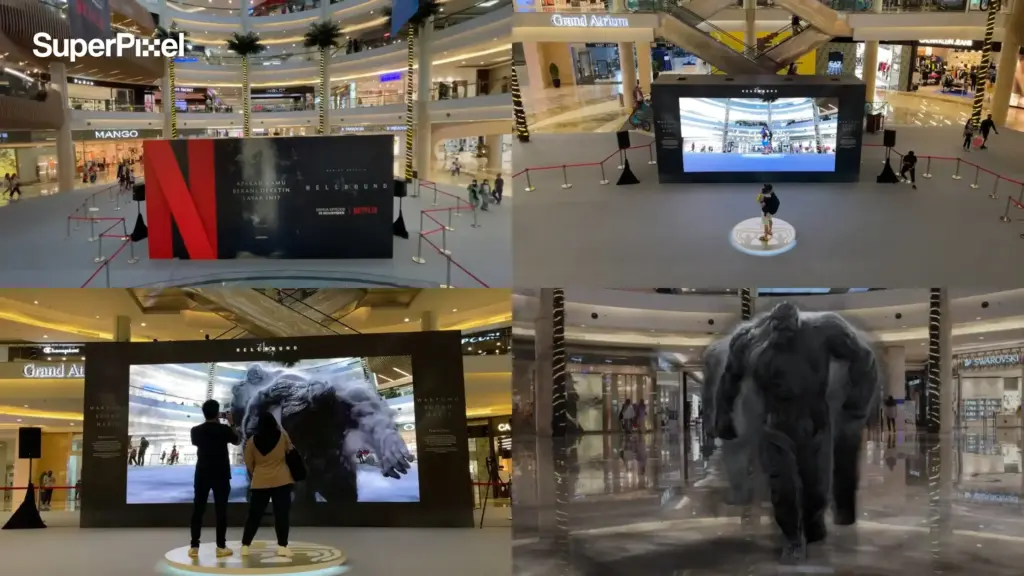
People do not begin by reading an idea; they scan the room. Sightlines, screen placement, queue flow, glare, ambient noise, and the movement of other people decide whether an installation registers at all.
In a lobby, the physical world is part of the interface, not a backdrop. If a digital moment only works from one perfect spot, the format is already asking too much. We have seen polished visuals lose impact because the room was doing more talking than the screen.
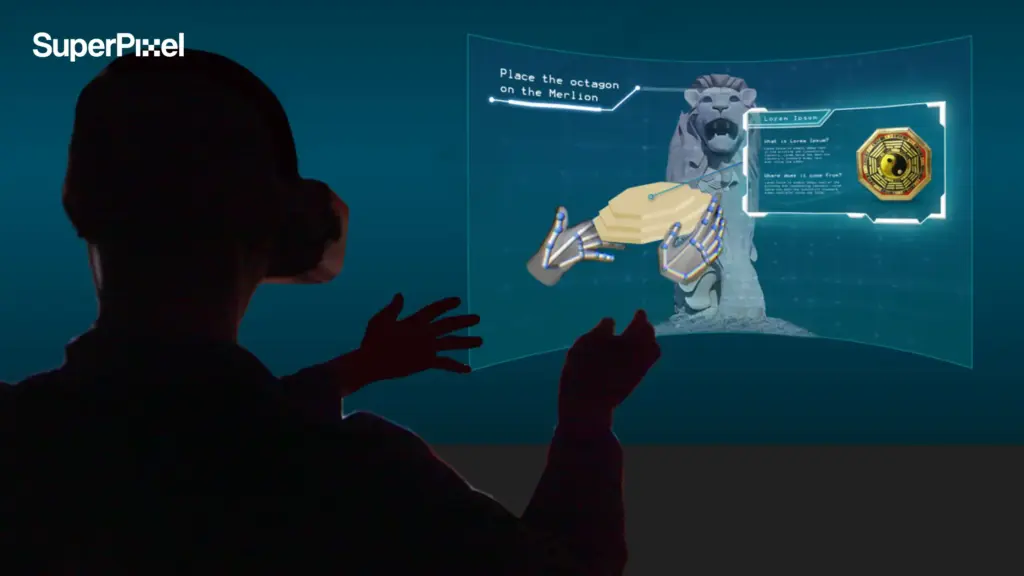
If the first action needs a block of text, the concept is carrying friction that should have been solved earlier. A user should not need a tutorial before feeling safe enough to try something. The cue should confirm what the body already wants to do such as a pulsing hand icon, a character glance, or a short motion cue near the active zone. More explanation may calm a client in review, but it rarely calms the user on site.
A lobby is not a trade show booth or a private headset demo. People are waiting, passing through, or watching someone else go first. Public experiences need to work for the person taking part and the person watching from a few metres away.
How an Experience Becomes Easy to Enter
Once you stop judging public installations by novelty alone, the quality test changes. Good public design feels obvious in motion: one moving element attracts attention, the screen pauses, the visitor moves, and the response arrives immediately.
We treat timing like signage. One movement draws attention, a short pause shows where to act, and an immediate response confirms that the system has noticed the visitor.
A large screen can still feel difficult to enter when everything moves at once. If too much motion happens simultaneously, if audio fires too often, or if response delays break the connection with the user’s action, presence starts to feel noisy. The system may respond exactly as planned, but visitors will notice first whether the experience feels clear, comfortable, and easy to follow.
A child and an adult will not approach the sensor at the same height. Someone carrying a bag may not have both hands free. These differences affect where the active zone sits, how far people need to reach, and how large the text needs to appear.
If you ask venue staff who stand near the installation all day, they will tell you what clients often forget: repeated sound can become fatigue for staff before it becomes delight for visitors. The most useful audio in public work is brief, calm, and supportive of the visual hierarchy rather than competing with it.

What Walk-Up Clarity Looked Like at Mount Elizabeth Hospital
The theory gets easier to judge once you place it in a real venue. At Mount Elizabeth Hospital, part of IHH Healthcare Singapore, the brief was not simply to add digital effects to a hospital wall.
The LizGallery Interactive Hospital Experience needed to show how teams work together behind the scenes in a way that felt inviting rather than institutional.
When a lobby installation has only a few seconds to earn trust, the first action has to be visible before it is explained. For Mount Elizabeth, a simple wave triggered animations of different healthcare roles across the building. We didn’t open with menus, options, or choice overload: the audience could act first and understand second.
Once the system became self-starting, explanation unfolded as discovery. Each wave revealed another part of the story, helping visitors discover how different healthcare roles support the hospital together.
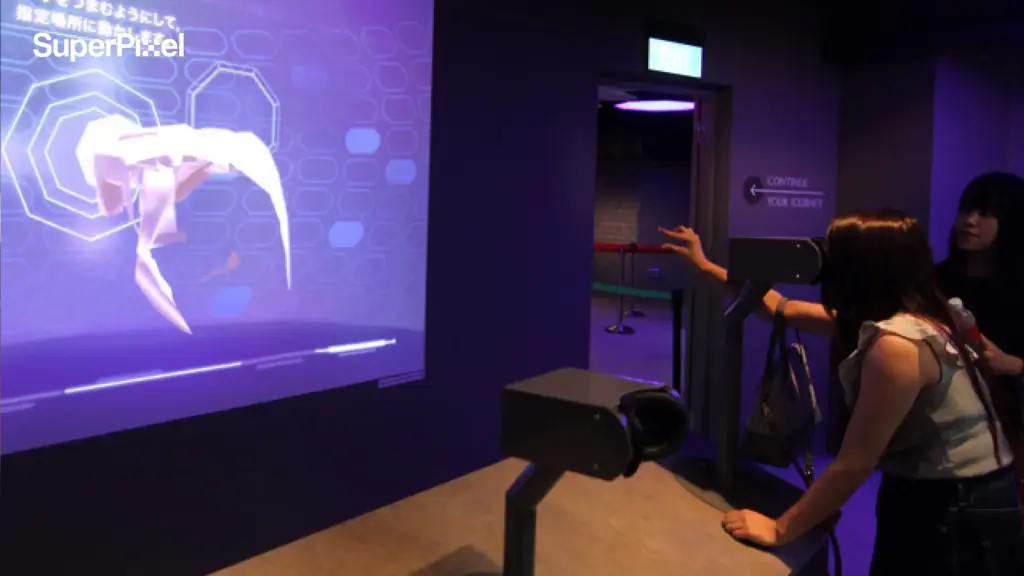
Across the public installations we have built, this principle holds true. At the Singapore City Gallery, our interactive systems were designed to help visitors intuitively understand urban planning through visual elements that blend seamlessly with the exhibition space.
Meanwhile, in our large-scale architectural projection for the MCI Prudential Star Club Gala at the Çırağan Palace Kempinski, we transformed historical architecture into a digital canvas that respects and responds directly to the physical venue itself.
What We Solve Before Production Begins
A fair buyer concern usually becomes clear: will the studio simplify the message, or simply make it look good?
Yes, a concept should make sense as a storyboard before any build begins. Once those moments are clear, we decide how motion, framing, lighting, or physical markers will guide visitors towards the same simple action.
Public installations live in the messy version of reality.
No one uses it. Too many people use it. Someone blocks the sensor zone. A child runs up halfway through. Staff still need the piece to stay calm on a busy day. That means planning for what happens between uses: does the idle loop communicate from a distance, and does the screen reset cleanly?
Finally, for sensor-led work, privacy cannot be a late-stage line item. To keep things clear for non-technical stakeholders, you only need to answer three practical questions early on:
- What does the sensor actually detect?
- Does it record, store, or transmit anything?
- Who needs to approve that setup?
What to Include in the Brief
To give our team what we need for a useful proposal, a strong brief should answer a few straightforward operational questions:
- Who will use it? Who visits the venue, and how long are they likely to stay?
- What should they do? Should they notice the screen, try a gesture, or understand one idea?
- Where will it sit? Share the floor plan, screen dimensions, lighting, traffic flow, and venue rules.
- Who will look after it? Consider cleaning, daily checks, and whether staff need to guide visitors.
- Who needs to approve it? Include the teams responsible for the concept, privacy, technology, and venue.
- When does it need to launch? Add the target date and any fixed review milestones.
Plan the Right Public Experience
If you are weighing whether a public interactive experience belongs in your venue, bring your floor plan, audience profile, and communication goals to the table. Our team can help determine whether a sensor-based installation is the right fit to turn your space into part of the message. Get in touch with SuperPixel to start the conversation.
Frequently Asked Questions
Is mixed reality the same as augmented reality?
Not always. While augmented reality typically overlays digital objects onto the physical world, our mixed reality installations blend spatial cues, screen content, and sensor input directly within a shared physical venue.
How much space do you need for a lobby mixed reality experience?
You don’t need a massive footprint, but you do need enough physical room to account for the approach path, active zone, comfortable viewing distance, and whether observers can watch without blocking participants.
Does the public installation discussed here need a headset?
No. The type of public installations we focus on rely on sensor-led gestures and screens rather than isolating visitors inside virtual reality headsets.
Can a sensor-based installation work without storing user data?
Yes. Installations can be designed to react entirely in real time to presence and gestures without recording, storing, or transmitting personal user data.
What happens when several people interact at once?
A well-designed system manages multi-user presence by focusing on clear response zones such as selecting one primary active area or grouping nearby movement into a single readable reaction to prevent visual clutter.
Can the experience still communicate when no one participates?
Yes. Through a calm idle loop, the screen continues to communicate your core premise and invite interaction from a distance even when empty.