


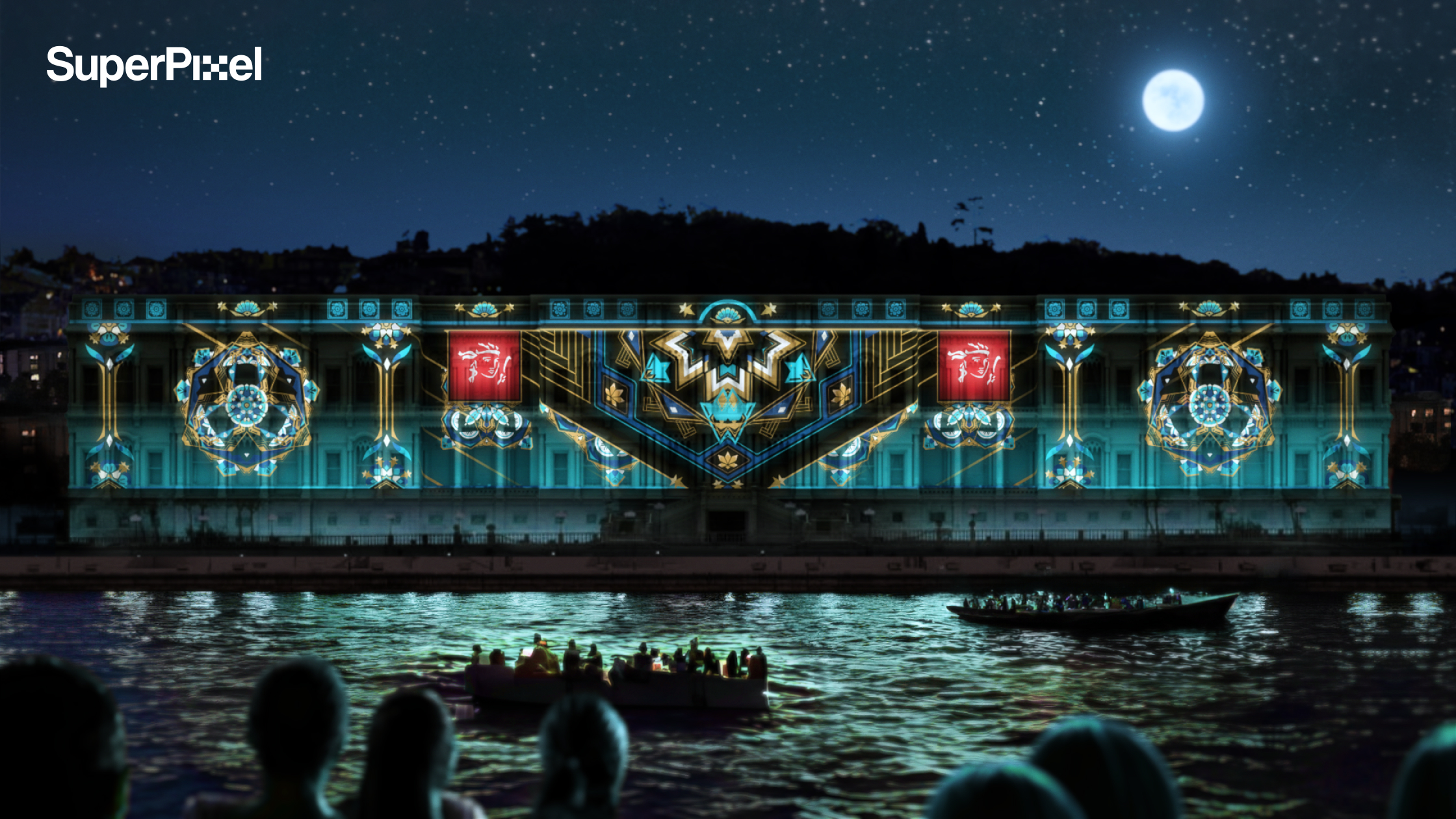
Projection mapping company shortlisting often starts with spectacle. But the real risk starts much earlier.
It starts when nobody has clearly defined what the surface should say, who approves the story, or what the audience should notice first.
Across the immersive work we have delivered since 2016, we have seen the same pattern. A stronger projection mapping process creates a better event experience because the message and production reality stop drifting apart.
Key Takeaways:
- Projection mapping works best when the architecture needs to carry meaning, not just hold content.
- Your safest shortlist starts with survey, sightlines, playback system, approvals, and show-day ownership.
- Ask one question first: what should this transformed surface create that a normal screen cannot?
- A better system reduces late surprises because creative, technical, and venue decisions stay connected.
- Strong visuals can heighten an event moment, but they cannot rescue a vague message.
When a projection mapping company is the right fit for your event
A lot of teams choose projection mapping because it looks powerful online. The better filter is simpler: should the architecture itself do narrative work?
Use projection when the architecture should become part of the story
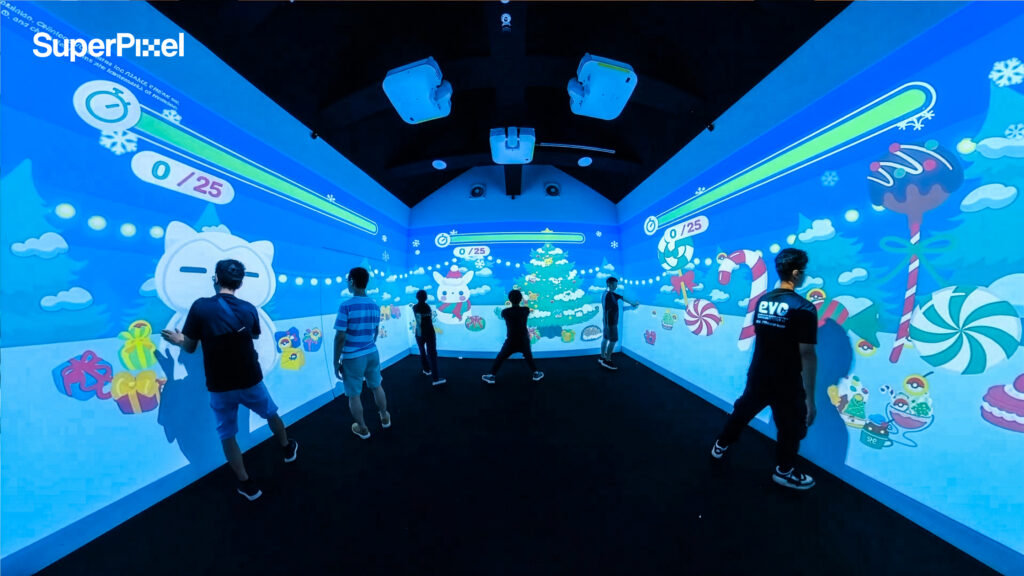
Projection is strongest when columns, arches, edges, and relief are part of the timing. This mapping technique can create illusion, depth, and rhythm that a flat video on a screen cannot. That is what makes the room feel transformed, not merely decorated.
Choose another format when brightness, flexible viewing angles, or repeat-use screens matter more
Sometimes another display is the smarter choice. In bright conditions, wide audience spread, or repeat-use touring setups, video projection can lose impact fast. A projector needs controlled light, stable positions, and realistic expectations about how the technology will read in the real environment.
The one buyer question to settle before you brief any supplier
Ask this first: what should your audience feel or understand that only this kind of projection can deliver? If the answer is unclear, you may need a simpler content system instead.
What a projection mapping company should handle before you sign
The real challenge rarely sits in the final render. It usually sits in blurred ownership, missing checks, and a live event plan that sounded tidy on paper but not on site.
When the brief starts as a vague event ambition
We often hear: “make it unforgettable”. In that situation, Brief Translation is where we turn the mood into decisions: who is in the room, what the first ten seconds must communicate, and what role the mapping company actually plays inside the wider event system. The shift is from ambition to a buildable brief.
Technical survey, surface measurements, and sightline testing
Before you sign, you should know who measures the surface, checks throw distance, tests the main viewpoint, and flags every object that may affect a mask. Venue drawings help, but they do not replace a site visit, and mapping software should not pretend otherwise. This is also where a projection plan can ensure fewer surprises later.
Content development, playback planning, and show-day coordination
On show night, content, cueing, and playback behave like one system. Ask who owns the align checks, who updates the mask, and what happens if the show needs real time changes. If the setup uses projection mapping software or tools such as TouchDesigner, that should be explained in plain language. Good video mapping only feels seamless when those handoffs are clear.
Venue approvals, access windows, and rehearsal ownership
You also need clarity on approvals, installation windows, and who is present during rehearsal. If access is tight, your team needs a plan that can still ensure the key moment lands cleanly. Calm process beats last-minute drama every time.
Why premium projection mapping is won or lost before animation starts
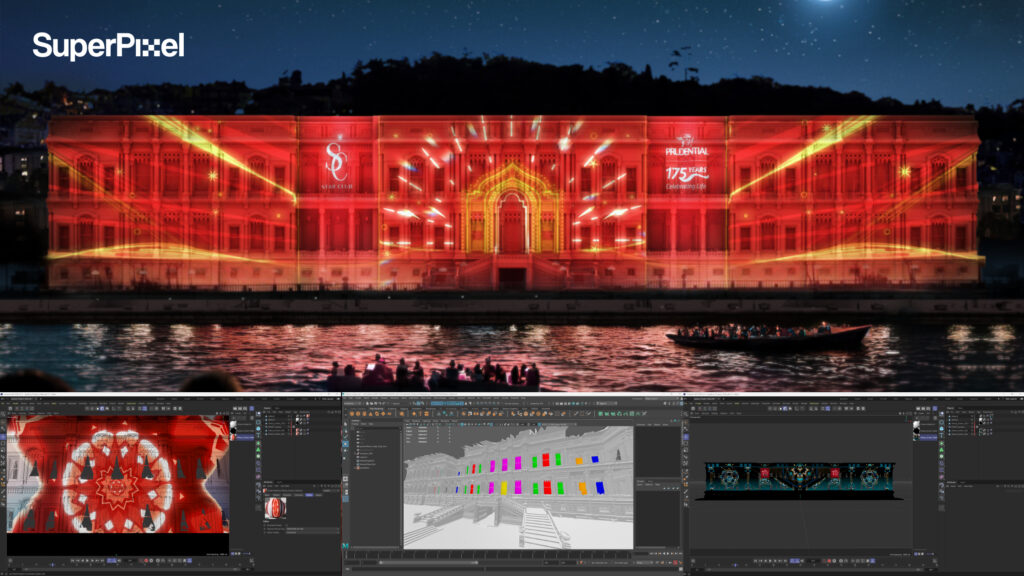
On Prudential’s Star Club Gala Projection Mapping at Çırağan Palace Kempinski, the project was a four-minute projection mapping show built around mosaic motifs and geometric motion. The point was not to overpower the venue, but to let the facade change state without losing its own identity.
A palace facade changes the job from screen content to architectural storytelling
Once a building has ornament, repeated frames, and visible history, pacing changes. Light has to follow the structure or break from it on purpose. Slower reveals, stronger contrast, and clearer framing usually read better because people need time to see where the illusion starts.
Why mosaic motifs and geometric motion worked for this event setting
That visual language balanced detail with control. Mosaic patterns gave texture; geometric motion gave direction. Together, they create a richer visual experience without crowding the eye. This is what makes premium work feel considered rather than simply busy.
What this case tells you about choosing a company that thinks in surfaces not just clips
If a supplier talks only about style frames, ask how the actual structure shapes the mapping project. Good answers mention audience angle, pacing, and which parts of the architecture must stay legible. A projection video pasted onto a wall is not the same as a mapped story.
Questions that reveal whether a projection mapping company can actually de-risk your event
Most showreels prove taste. Very few prove operational experience. If you are building a shortlist, ask what happens when reality changes under pressure.
Ask how they handle surface tests and alignment changes
You want process, not just specs. Ask when they re-align, how they rebuild a mask if trim reads differently on site, and whether they have allowed real time adjustment before doors open.
Ask who leads content changes when the brief tightens
Late change is normal. The bigger risk is losing one clear decision-maker who can protect the message while revisions move quickly. Without that judgement, expensive work can start saying three things at once.
Ask what happens if weather, rigging, or venue access shifts
This question reveals whether you are buying an effect or a production service. Good answers mention fallback options, time priorities, and how the system changes if access shrinks. That is where practical experience matters most.
Ask to see work that matches your surface and audience context
Relevant proof is better than spectacular proof. According to Nielsen Norman Group (2020), people respond faster to what they recognise immediately than to what they must decode. The same logic applies here.
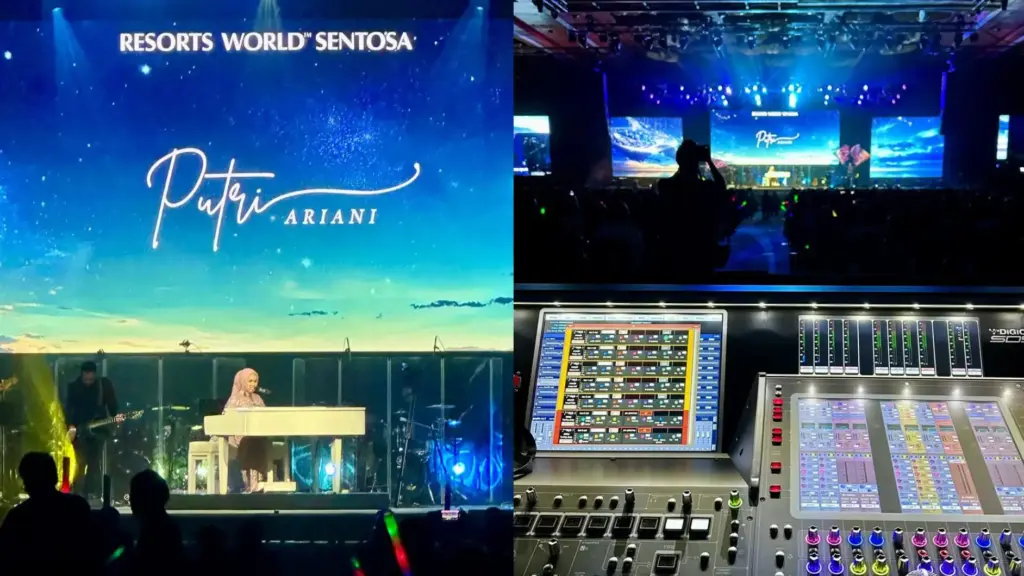
How much process you really need before show night
This is the concern many buyers are quietly carrying: will a projection mapping company simplify your message, or just make it look good? That fear is fair, and it should be addressed directly.
Why beautiful visuals do not fix a vague message
They do not. Visual quality cannot rescue a message that has not yet been decided. According to Event Marketer (2024), memorable live storytelling works when environment and message reinforce each other. That is why process matters more than visual escalation.
The riskiest shortcut is skipping the briefing conversation
Skipping the early conversation feels efficient, but it usually moves confusion further down the schedule where the cost is higher. Most briefs arrive with too many points. The first useful decision is usually subtraction, not addition.
What a realistic approval path looks like for agencies and brand teams
A workable approval system is simple: one brand lead, one agency or event lead, and clear sign-off points on concept, storyboard, copy, and show build. In most projects, two to three focused review rounds are enough to keep quality high and people aligned.
What to prepare before you approach a projection mapping company
A first conversation should reduce unknowns, not bury you in jargon. Bring enough information for a projection mapping specialist to judge fit honestly.
The five inputs that speed up quoting and creative direction
- recent venue photos from the main audience angle
- basic dimensions of the projection surface and nearby obstacles
- whether people watch from one angle or across a large space
- the event purpose: launch, gala, activation, or brand story
- date, access windows, rehearsal time, and approval deadlines
When to bring SuperPixel in before the venue is fully locked
If you are still comparing venues, bringing in a projection mapping specialist early can help your team understand which surface has stronger storytelling potential and which one may create production risks later.
That is especially useful in Singapore and across Southeast Asia, where venue conditions, audience flow, projector placement, and installation access can vary from one site to another.
For early budget planning, SuperPixel’s animation cost calculator can also help your team estimate a more realistic project range before production goes too far: https://offer.superpixel.studio/calculator/
It will not replace a proper quote, but it gives everyone a clearer starting point for discussing scope, content needs, timeline, and cost.
What a good first conversation should leave you with
You should leave with three things: whether projection mapping is the right fit, what the main risks are, and what decision comes next. If your team is weighing whether the venue itself should carry the story, SuperPixel can offer a grounded view of the surface, the process, and the production path before show night.
Frequently Asked Questions
How far in advance should I hire a projection mapping company for a live event?
Earlier than most teams expect. A projection mapping company often needs time for survey work, content development, approvals, and playback planning. If the venue is still being shortlisted, that is often the right moment to start the conversation.
Can a projection mapping company work alongside my event agency or AV team?
Yes. The key is deciding who owns creative direction, survey inputs, cueing, and on-site calls before production gets busy. A good mapping company should make that shared system clearer, not more crowded.
Is projection mapping suitable for outdoor daytime events?
Often not as a first choice. Daylight can wash out the image and weaken the effect, especially if the audience is spread widely. If brightness matters more than transformation at scale, another format may create a more reliable result.