


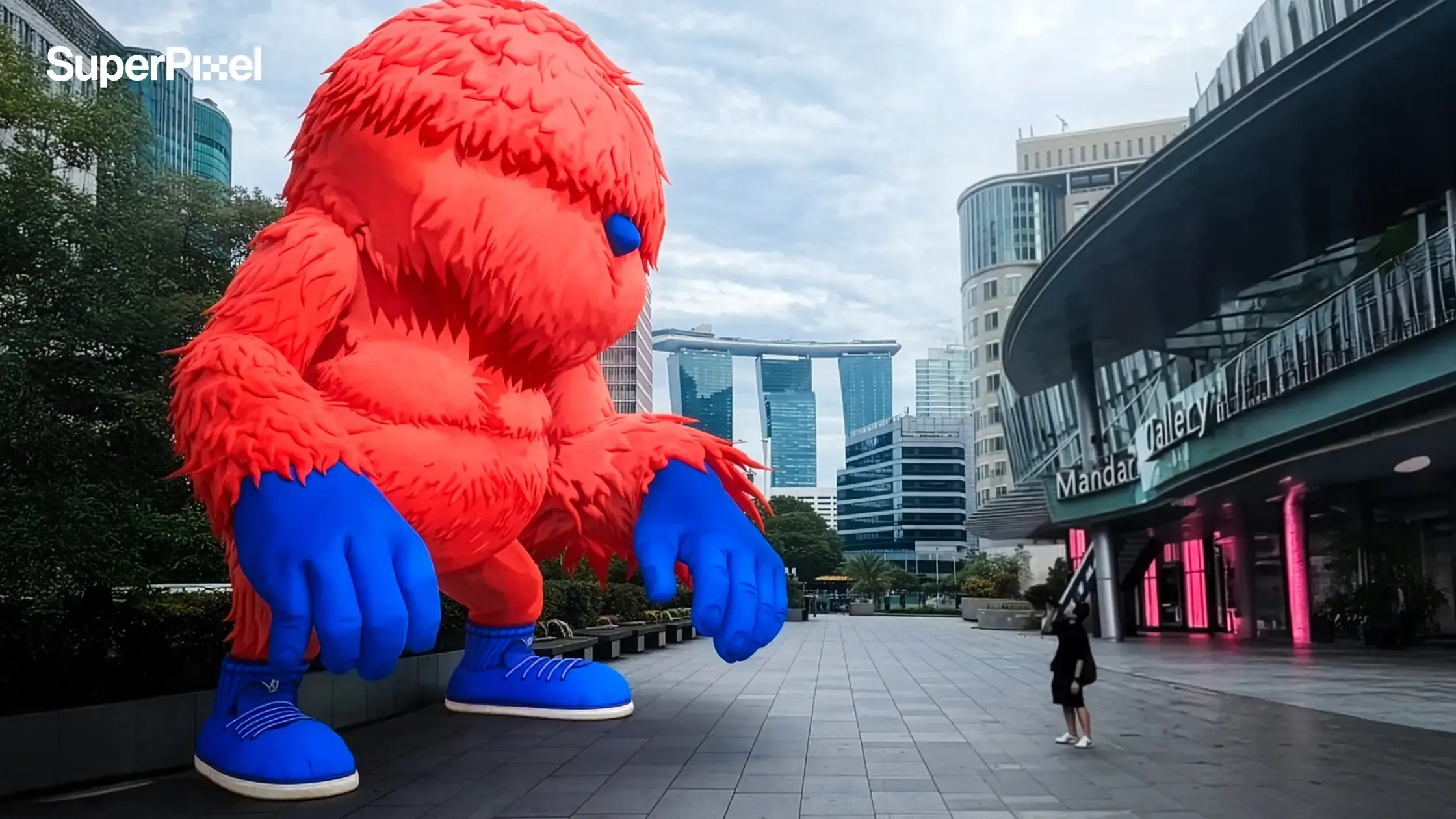
Augmented reality price can vary depending on the type of experience, features, and level of interaction your business needs. From AR filters and product visualization to immersive training tools, AR helps brands create more engaging ways to connect with their audience and enhance user experiences.
For business owners and marketers, understanding augmented reality cost is an important first step before starting a project.
The final price is usually influenced by the complexity of the app, 3D content, tech stack, development time, software licenses, and whether the experience is built for mobile devices, headsets, interactive installations, or web ar.
As an animation and immersive media studio in Singapore, SuperPixel helps businesses bring AR ideas to life through creative concept development, design, and interactive production.
In this guide, we’ll break down what AR is, the types of AR, and the key factors that affect ar development costs and the total augmented reality cost.
What is Augmented Reality?
Augmented Reality (AR) is a technology that blends digital elements with the physical world. Instead of replacing reality, AR adds digital information, animated images, graphics, ar visualizations, or 3D objects into the user’s environment.
This makes augmented reality experiences useful for many industries, from retail and advertising to education, training, and manufacturing.
Businesses can use AR to show realistic models, support virtual try ons, let users try makeup virtually, or make product information more visual and easier to understand.
Augmented Reality vs Virtual Reality
Augmented reality is different from virtual reality (VR). VR creates a completely artificial environment that replaces the real world, usually through a headset.
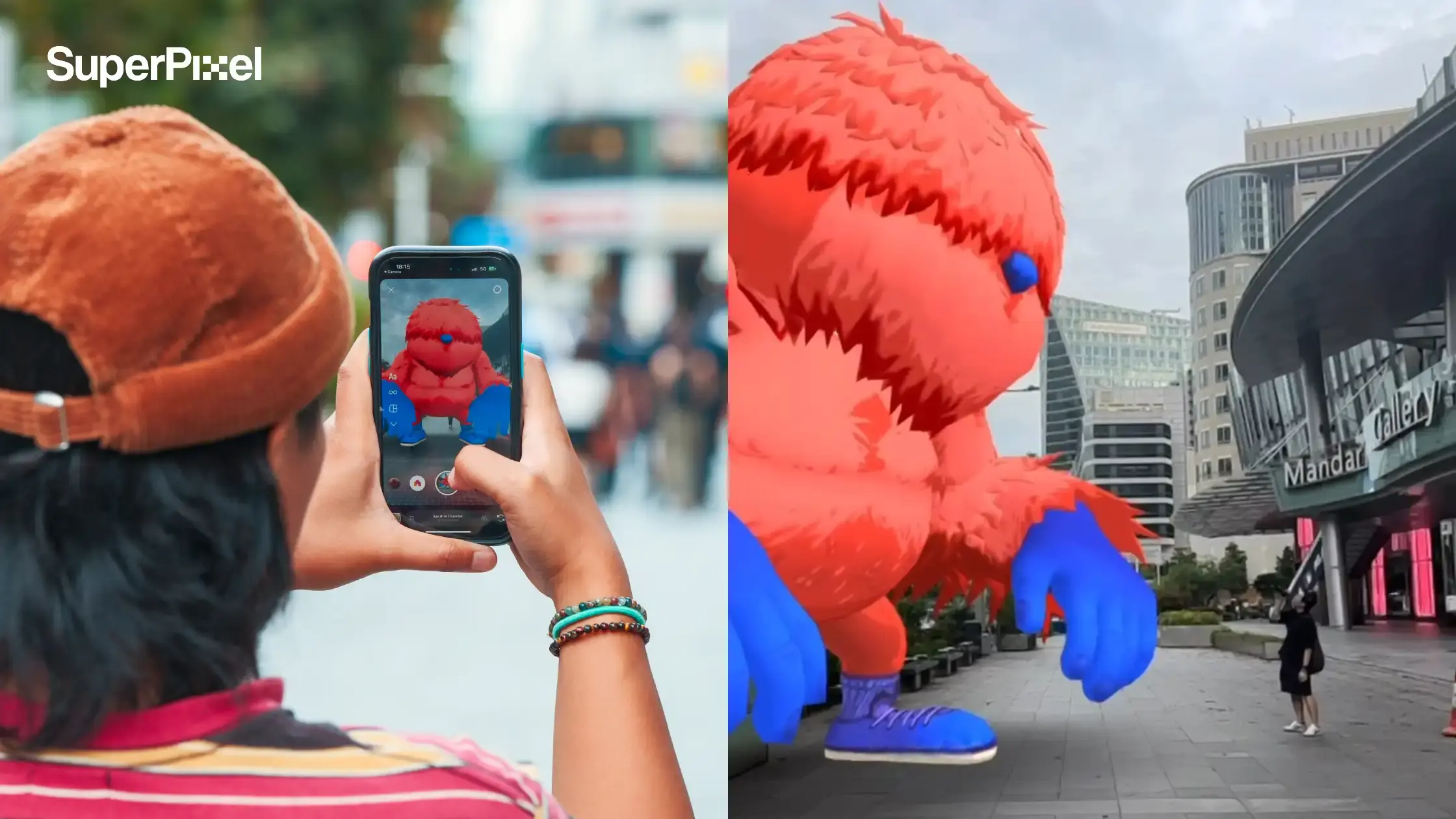
AR, on the other hand, enhances the real-world environment. Users can still see their actual surroundings, but with added digital content that appears through a smartphone, tablet, or AR device. In many cases, AR uses visual data, object recognition, and motion tracking to make the digital elements respond naturally to the real world.

How AR Development Works
Behind every AR project is a software development process handled by ar developers and ar experts. The team usually works on the user interface, tracking system, 3D assets, device compatibility, and the key features that make the experience functional.
The augmented reality development process can also change depending on the platform. A basic app may only need simple image tracking, while more complex applications may require advanced features, multi user experiences, cloud services, or advanced capabilities built with tools such as Unreal Engine.
Each project has its own set of requirements, which is why the cost of augmented reality can vary from a few thousand dollars to a much higher initial investment. The main key challenge is balancing creative ambition, technical needs, and the total cost required to build a stable experience.
Augmented Reality Price
The price for augmented reality can vary widely depending on the type of experience, device, and level of interaction needed. In general, AR costs are influenced by hardware, content quality, project complexity, and the technology stack used.
| Cost Factor | What Affects the Price |
|---|---|
| Project Complexity | A simple AR filter or basic app may cost less, while complex applications with advanced tracking or multi-user interaction require more development time. |
| 3D Content | High-quality 3D modeling, animation, and realistic models can significantly increase the budget, especially for detailed product or character-based AR. |
| Technology Stack | The chosen tech stack has a significant influence on cost. Some tools offer a free version with limited features, while others require a premium plan or paid software licenses. |
| Platform & Devices | AR built for different mobile operating systems, headsets, smart glasses, or web ar may require different development approaches. |
| Specialized Expertise | Projects that need advanced tracking, object recognition, or real-time interaction often require specialized expertise from experienced ar developers. Costs may also vary by team location, including regions such as Eastern Europe. |
| Ongoing Maintenance | After launch, ongoing maintenance may be needed to update the app, improve performance, fix bugs, or support new devices. |
At SuperPixel, AR pricing can also be estimated based on animation type, duration, complexity, and selected project add-ons.
| SuperPixel Calculator Estimate | Setup | Estimated Total |
|---|---|---|
| 2D Animation + AR Add-On | 1-minute animation, simple complexity, with Augmented Reality add-on | Around $12,600 |
| 3D Animation + AR Add-On | 1-minute animation, simple complexity, with Augmented Reality add-on | Around $20,400 |
These prices are only estimates, but they can help businesses understand the starting point before planning a full AR campaign or immersive experience.
Want to estimate your own AR project? Try the SuperPixel Calculator here:
Calculate your AR project estimate
| Cost Factor | What Affects the Price | Estimated Cost / Notes |
|---|---|---|
| Project Complexity | Simple AR filters, product previews, or enterprise-level AR solutions | Simple projects can start around $5,000, while complex enterprise solutions can cost $100,000 or more |
| 3D Modeling & Animation | Product models, characters, environments, motion, and visual detail | High-quality 3D modeling and animation can cost between $5,000–$30,000 |
| AR Content Creation | Detailed 3D graphics, interactive elements, and immersive visuals | Can account for more than two-thirds of the total project budget |
| Technology Stack / SDK | Free SDKs vs commercial tools with advanced support and features | SDKs can range from free to around $1,990 per month |
| Hardware Type | Mobile devices, smart glasses, or spatial computing headsets | Consumer-grade devices are usually more accessible, while specialized AR headsets can increase costs |
At SuperPixel, AR pricing can also be estimated based on animation type, duration, complexity, and selected project add-ons.
| Superpixel Calculator Estimate | Setup | Estimated Total |
|---|---|---|
| 2D Animation + AR Add-On | 1-minute animation, simple complexity, with Augmented Reality add-on | Around $12,600 |
| 3D Animation + AR Add-On | 1-minute animation, simple complexity, with Augmented Reality add-on | Around $20,400 |
These prices are only estimates, but they can help businesses understand the starting point before planning a full AR campaign or immersive experience.
Want to estimate your own AR project? Try the SuperPixel Calculator here:
Calculate your AR project estimate
Examples of Augmented Reality Apps
The growing popularity of AR has made it a valuable tool for businesses that want to create more interactive customer experiences.
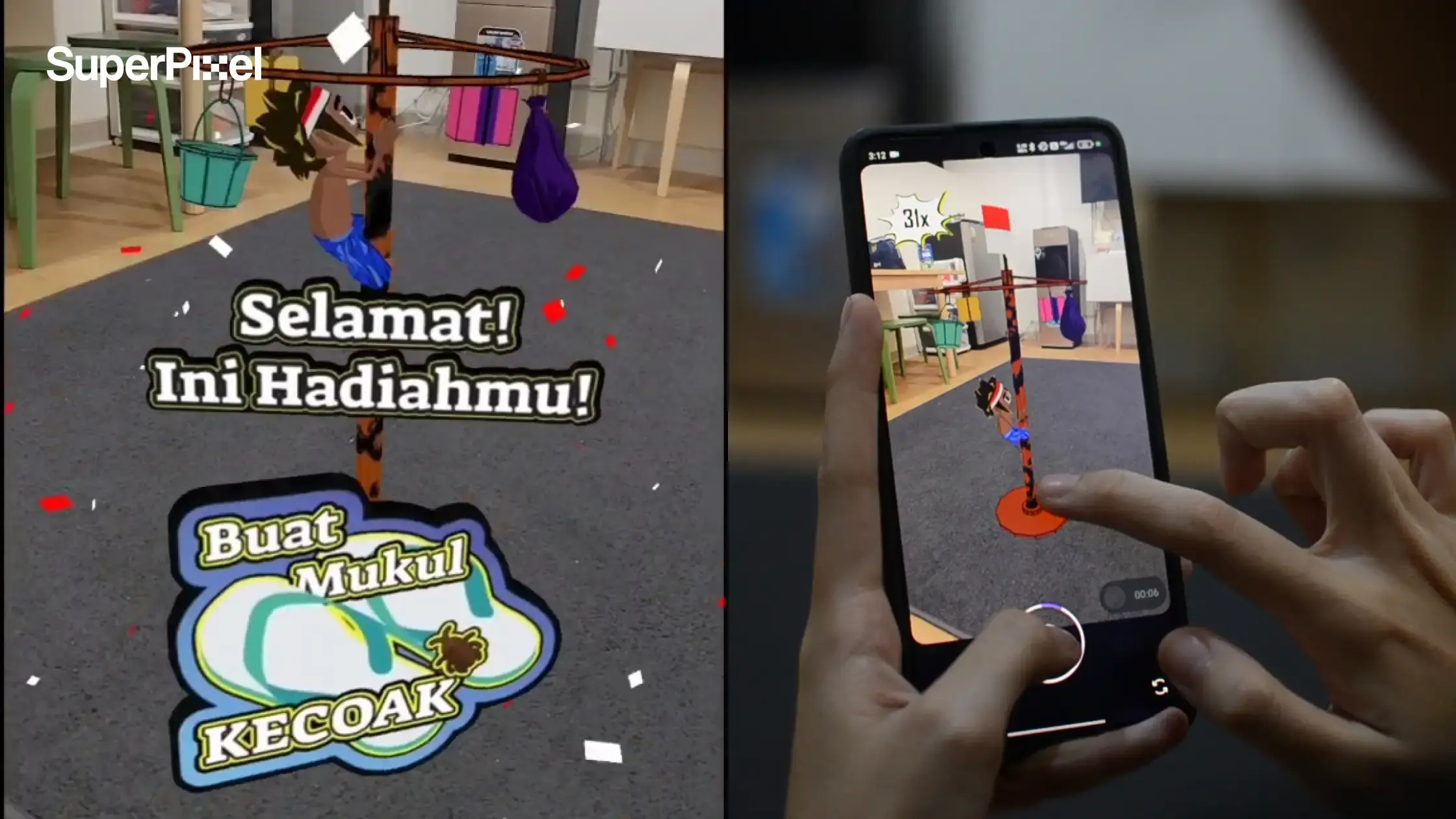
For example, SuperPixel’s Panjat Pinang AR filter turned an iconic Indonesian tradition into a fun gamification experience. Through simple triggers like “Wave to Activate” or climbing gestures, the filter invited audiences to join the experience instead of just watching it.
This is where AR becomes powerful for brands: it makes interaction feel simple, memorable, and culturally relevant. Whether customers are trying on products, exploring a digital game, or interacting with a branded filter, the experience feels more personal than traditional content.
However, the cost of an AR app depends heavily on its complexity and features. Advanced tracking, payment gateways, and high-quality 3D content can significantly increase development costs, especially for more detailed and immersive applications.
Types of Augmented Reality
There are several types of augmented reality, each with its unique features and applications. In this section, we’ll discuss some of the most commonly used AR technologies and how they can benefit businesses and brands.
The total market for AR is expanding rapidly, with consumer mobile AR dominating in volume and dedicated headsets leading in specialized industrial applications.
For businesses, this means AR is no longer limited to experimental campaigns or futuristic product showcases. It is becoming a practical technology that can support marketing, sales, training, retail experiences, exhibitions, and even internal operations.
1. Marker-based AR
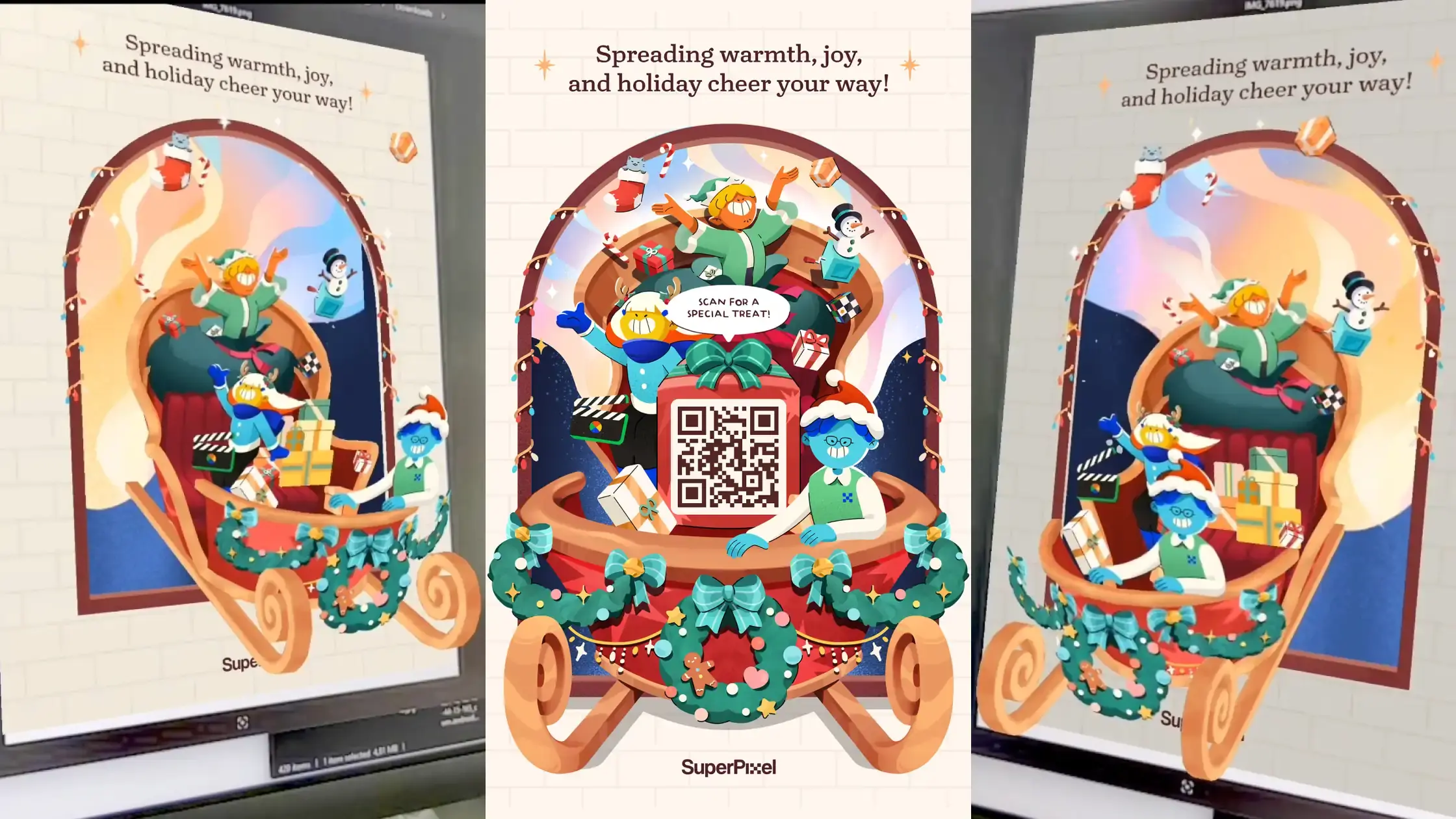
This type of augmented reality uses a specific image or object as a trigger to display digital content. For example, a customer could scan a product’s barcode with their smartphone screen, and the AR mobile app would display additional features about the product, such as its price or a promotional offer.
Marker-based AR apps require a physical marker, such as an image or QR code, to trigger the augmented content, and they can be relatively simple to develop, typically costing between $2,600 and $15,600.
This makes marker-based AR a practical starting point for businesses that want to explore AR without developing a highly complex experience from the beginning.
Examples of marker-based AR are:
- QR code scanning in retail stores to see product details and reviews
- An augmented reality app that provides all the details about exhibits
- An augmented reality game that brings the game characters or pieces to life
2. Markerless AR
This type of augmented reality uses the camera and sensors on mobile devices that would often need a Wi-Fi connection to recognize and track the environment, and display digital content without the need for a specific image or object.
Markerless AR applications utilize technologies like SLAM (Simultaneous Localization and Mapping) to overlay digital content without the need for physical markers, allowing for more flexible and immersive experiences.
Markerless AR is often used in advertising, where digital content is overlaid in real-world environments, such as city streets, billboards, product displays, or branded spaces. Because it does not rely on a fixed marker, this type of AR can feel more seamless and natural for users.
Examples of markerless AR are:
- Augmented reality filters for social media apps such as Snapchat and Instagram
- Augmented reality ads that appear in real-world environments when viewed through a smartphone camera
- Augmented reality navigation systems that provide directions and information about surrounding buildings and landmarks
3. Location-based AR
Location-based AR uses the user’s real-world location to deliver digital content that is relevant to where they are. This type of AR is especially useful for outdoor campaigns, tourism, retail activations, exhibitions, and branded city experiences.
Location-based AR apps use GPS and other sensors to provide context-aware experiences, allowing users to interact with digital content that is relevant to their physical location.
For brands, this opens up opportunities to create experiences that feel more personal and timely. Instead of asking users to visit a website or download static information, businesses can bring digital content into the places where customers are already moving, exploring, or making decisions.
Examples of location-based AR are:
- AR city tours that reveal information about landmarks or historical sites
- Retail campaigns that unlock exclusive content when customers enter a specific area
- Event-based AR experiences that guide visitors through booths, stages, or installations
4. Projection AR
This type of AR projects digital content onto real-world surfaces, such as walls or floors with physical objects in them. It is commonly used in events, trade shows, and retail environments to create immersive and interactive experiences for the target audience.
Projection-based AR displays digital content onto physical surfaces, allowing users to interact with 3D objects projected in their environment, often used in exhibitions and presentations.
This type of augmented reality can help businesses create memorable physical experiences without requiring every visitor to use their own device. For brands that often appear in exhibitions, launches, pop-ups, or trade shows, projection AR can turn a simple space into a more interactive storytelling environment.
This type of augmented reality can be seen as:
- Interactive displays in shopping centres and trade shows with the help of an augmented reality app
- Augmented reality apps as seen in concerts and events that add special effects and graphics to the stage
- Augmented reality app for product demonstrations in retail stores
5. Spatial AR
This type of augmented reality blends digital content with the physical environment in real-time, creating a seamless integration of the virtual and real worlds. Spatial AR is typically used in industrial settings, such as manufacturing and engineering, to improve workflow and increase productivity.
Spatial AR can be especially valuable for companies that need to explain complex processes, visualize technical products, or support teams with more interactive training. Instead of relying only on manuals, slides, or static 3D renders, businesses can use AR to make information easier to understand in context.
Here are some of the uses of this type of augmented reality:
- Augmented reality app that is used for industrial training and simulations
- AR app that is used in maintenance and repair in manufacturing and engineering
- An AR app used to enhance collaboration and design review in architecture and construction
Each of these AR technologies has its unique benefits and limitations, but what they all have in common is the ability to create innovative, engaging, and memorable experiences for customers.
As businesses, marketers, and advertisers look for new and innovative ways to reach and engage with their target audience, AR technology provides a rich opportunity to create powerful and impactful experiences.
In the next section, we’ll delve into the various ways that Augmented Reality (AR) can bring value to businesses, from enhancing customer experiences to improving operational efficiency.
Benefits of Augmented Reality for Businesses
Augmented Reality (AR) technology has the potential to transform the way businesses operate and engage with customers. Here are some key benefits of AR for businesses:
1. Improved Customer Engagement
AR allows businesses to create interactive and engaging experiences for customers, improving their overall engagement and loyalty.
AR can be used in advertising, marketing, and sales to showcase products and services in a new and innovative way, helping to differentiate a business from its competitors.
Here are some potential uses of an AR app for businesses:
- A furniture retailer using an AR mobile app to let customers see how furniture would look in their home before making a purchase
- A cosmetics brand using an AR app to let customers try on different shades and products virtually before buying
- A car manufacturer using custom AR app to give customers an interactive and immersive tour of their cars
2. Increased Sales and Revenue
An AR app can help businesses drive sales and revenue by providing customers with new and innovative ways to engage with products and services. For example, AR-powered product visualisation and customisation can help customers make more informed buying decisions, leading to increased sales and revenue.
Here are some potential uses of an AR app for businesses:
- An electronics retailer using an AR app to showcase products to engage and drive customers’ interest and sales
- A real estate company using an AR app to give virtual tours of properties, making the sales process more efficient and increasing revenue
- A fashion retailer using an AR app to let customers customise and purchase clothing and accessories in real-time
3. Enhanced Marketing Efforts
AR apps provide businesses with new and innovative marketing opportunities, helping to reach and engage with customers uniquely and memorably. AR applications can drive awareness and interest in a business and its products and services.
Here are some potential uses of AR apps for businesses:
- A beverage company using an AR app in their print advertisements to bring their products to life and drive customer engagement
- An event promoter using an AR app to create an immersive experience for attendees, promoting future events and increasing brand awareness
- A beauty brand using AR apps to create an interactive and educational experience for customers, promoting brand awareness and driving sales
4. Improved Workflow and Productivity
An AR app can also be used to improve workflow and productivity in various industries, such as manufacturing, engineering, and construction. For example, augmented reality app development used for training and simulations can help employees learn and retain information faster while using AR apps that can help maintenance and repair to improve efficiency and reduce downtime.
Here are some potential uses of AR apps for businesses:
- A construction company that would employ augmented reality app development to enhance collaboration and design review, improving efficiency and reducing the need for physical mock-ups
- A manufacturing company using AR apps to provide employees with hands-on training and simulations, reducing training time and improving employee retention
- A repair and maintenance company may work in an augmented reality app development to assist in the diagnosis and repair process, reducing downtime and improving efficiency
5. Cost Saving
Augmented reality app development may also be cost-efficient in the long run as it can reduce the need for physical prototypes, samples, and mock-ups. An AR app that is used for product visualisation and customisation may help to reduce the cost of product returns and exchanges, as customers can see and try products before they buy.
Here are some potential uses of AR app development that businesses may want to explore for their products or services:
- An automotive company may work on designing an AR app development to visualise and customise car parts and accessories, reducing the cost of physical prototypes and samples
- An architectural firm may design an AR app development to create virtual buildings and design mock-ups, reducing the cost of physical prototypes and materials
- A product design company may use an augmented reality application to let customers customise products virtually, reducing the cost of product returns and exchanges.
How Much Does AR Cost?
As a business owner, you may ask, “so, how much does augmented reality app development cost?” When answering this question, there is no guaranteed one-size-fits-all formula that would exactly provide you with the exact price.
The reason for this is that the cost of implementing AR technology varies widely. When determining the cost of AR app development, there are three key factors to consider: scope of work, timeline, and development team.
1. Scope of work
The scope of work encompasses the features, complexity of the app logic, and all necessary tasks involved in developing and launching the app, such as quality assurance, project management, and post-launch support and maintenance.
2. Timeline
The timeline factor can impact the cost, as rush projects often result in higher expenses. Exceptions to this rule may apply to prototypes and minimum viable products.
3. Development Team
The development team’s hourly rate, which is influenced by experience and location, is a crucial factor in determining the overall cost and is calculated by multiplying the timeline by the team’s hourly rate.
It is important to keep in mind that AR is an investment in the future of a business, and the benefits can far outweigh the costs. AR technology can help businesses improve customer engagement, increase sales and revenue, enhance marketing efforts, improve workflow and productivity, and save costs in the long run.
Also read: Virtual Reality Costs: A Guide for Businesses
What’s Involved in AR Development?
Once a deadline and cost have been established through planning and estimation, developers must use their technical expertise and skills to create a functional augmented reality app.
The price for augmented reality (AR) technology in 2026 varies significantly between consumer hardware and custom application development.
The cost of developing an augmented reality app can range from $5,000 to over $300,000, depending on the complexity and features of the app.
On average, the cost to develop a simple marker-based AR app is between $5,000 and $15,000, while complex markerless AR apps can cost $50,000 to over $250,000.
This wide range is why businesses should not look at AR pricing as a fixed package. The final cost depends on what the app needs to do, how users will interact with it, what platform it will run on, and how detailed the visual experience should be.
1. Coding and Programming
A dedicated team is required to integrate various programming elements and features into an AR app, which can be costly. This includes setting up the app logic, connecting the AR features with the device camera or sensors, and making sure the digital content appears accurately in the real-world environment.
For simpler AR experiences, such as a marker-based app that uses an image or QR code as a trigger, the development process can be more straightforward.
However, for more complex markerless AR apps, the coding requirements are usually more advanced because the app needs to understand and respond to the user’s physical surroundings without relying on a fixed marker.
On average, coding and programming expenses for AR range from $37,000 to $90,000, depending on the complexity of the features and the development team involved.
2. Design
Design also plays an important role in AR development because users are not only looking at flat screens. They are interacting with digital objects, animations, interfaces, and visual cues that appear within their physical environment.
An example of design in AR can be seen in games such as Angry Birds, where detailed designs and bold colours are incorporated into menu pages and digital art.
The cost of design may increase depending on how customised the experience needs to be. A simple AR product preview may require fewer visual assets, while a more immersive branded experience may need detailed 3D modelling, animation, UI design, and art direction.
Design expenses typically fall between $30,000 and $40,000.
3. Testing
Proper testing of an augmented reality app requires a significant amount of time to ensure that all elements are functioning as intended. AR testing is especially important because the experience depends on different devices, camera quality, lighting conditions, physical spaces, and user movement.
If errors are found during the testing process, such as mistyped code, inaccurate tracking, unstable digital objects, or interface issues, additional costs may be incurred to correct them.
Testing expenses can average between $12,000 and $18,000.

How Does Project Type Impact AR App Cost?
The cost of an AR application development is affected by the type of project. These include:
- Simple demo or minimum viable product (MVP) app
- Advanced app with custom features
- Complex, enterprise-level app utilizing specialized algorithms
The augmented reality app development cost for each project will vary based on its level of complexity, features, and required expertise.
A precise cost estimate for AR application development is not possible without considering the visual aspect of the app. The visual design plays a crucial role in determining a reliable cost estimate.
Let’s examine these three project types.
1. Basic or MVP AR App Development Cost
Minimal Viable Product (MVP) is a term used to describe a demo version of an app that tests the most important features before investing in the full product.
An MVP allows developers to present a demo using AR, providing clients with a more interactive experience compared to traditional presentations. The cost of an MVP is typically lower since it includes pre-installed controls and coding, saving both time and money.
2. Customized AR App Development Costs
An app with added features and customisation requires a branded logo to make it official. For instance, a car design app offers various options and categories to give customers a realistic experience in selecting the best model and colour in real-time.
These types of apps tend to cost more due to the hourly rate involved in creating features such as sign-in, checkout, sharing, catalogue, API integration, and back-end development.
3. Enterprise AR App Development Costs
Augmented Reality can serve as a tool for interaction with work environments and products, as well as improving training for staff, presentations, and knowledge distribution.
For example, some AR apps have been designed to make grocery shopping easier by providing stock locations, food product recommendations and reviews, reminders to restock groceries and nutrition information.
These types of AR apps require more advanced technology and programming, which increases both time and cost to include these features.
Bringing Your AR Vision to Life with SuperPixel
Augmented reality can help businesses create more engaging, interactive, and memorable customer experiences. But to make it work, the idea needs to be supported by the right concept, design, and development approach.
At SuperPixel, we help businesses turn AR ideas into practical experiences, from concept development to visual design and interactive production. Whether you want to create an AR campaign, product experience, or immersive brand activation, our team can help bring your vision to life.
Ready to explore AR for your business? Contact SuperPixel and let’s build an experience your audience will remember.