Learn from this product demo video guide to create clearer, more engaging videos that help your audience quickly understand your product.
At SuperPixel, our 20+ person in-house team across storyboard, illustration, 2D, 3D, and visual effects has seen this happen again and again: the brief tries to show everything, so the viewer leaves with almost nothing.
If your team needs more than a screen recording with a voiceover, the real job is not to add polish at the end. It is to decide what the viewer should understand, feel, and do before a single frame is built.
This blog post is an ultimate guide for teams that want to create engaging product demo videos that explain the product clearly, speak to the right target audience, and support sales, product launch, website, YouTube, and other platforms.
Key Takeaways
- A strong product demo video is not a feature tour. It is a clear argument built around one buyer question.
- The first production decision is usually subtraction, not addition.
- Before scripting, ask: what should the viewer be able to decide by the end of this video?
- Distribution, measurement, product updates, and post-launch edits change how the video should be planned from day one.
- A polished cut can improve clarity, but it cannot rescue a message that was never clear in the first place.
What Is a Product Demo Video?
A product demo video is a short video that shows how a product works, what problem it solves, and why it matters to the viewer.
But a good demo should not feel like a full product tour. It should guide people through the most important parts of the product, so they can understand the value quickly and clearly.
At SuperPixel, we see product demo videos as a way to turn features and benefits into a story people can follow. The goal is simple: help viewers move from “What does this do?” to “I can see how this works for us.”
For a software product, new product, augmented reality app, or platform with new features, the best demos do not simply show how the app works. They walk viewers through the problem, the solution, and the benefits in a way that feels clear, useful, and easy to remember.
Read more How to Create Product Videos in Singapore That Sell Better
Types of Product Demos
At SuperPixel, we usually start by asking what the audience needs to understand first, then shape the demo format around that.
There are three commonly used types of product demo videos: narrated product demos, screen capture product demos, and live-action product demos. Here is the explanation.
Narrated Product Demos
Narrated product demos work well when we need to guide viewers through the product with a clear voice and structure. This format helps explain the problem, introduce the solution, and highlight key features without making the message feel too heavy.
Screen Capture Product Demos
Screen capture product demos are useful when the actual product journey needs to be shown clearly. For software, platforms, dashboards, or apps, this format helps viewers see how the product works step by step.
Read more Production Design: Definition, Importance, and Process
Animated UI Demo Videos
Animated UI demo videos showcase a product’s interface and functionality using motion graphics, making them ideal for evolving products that require quick demonstrations.
This format can be an effective way to explain product updates or new features without overwhelming viewers. We can simplify the interface, direct attention to one action at a time, and help users understand the flow more quickly.
Live-Action Product Demos
Live-action demo videos feature real people using the product in real-time, providing a relatable and dynamic viewing experience that can enhance product communication.
This is a great example of how a demo can add a personal touch. When viewers see a product being used in real life, the message can feel warmer, more practical, and easier for new customers to imagine in their own world.
Read more 3D Product Animation Services: What Brands Should Expect
Interactive Demo
An interactive demo can work well when users need to explore the product at their own pace. It gives the audience more control and can be useful for complex platforms, apps, or tools where different users care about different features.

Marketing with Demos
A product demo is not only useful for explaining how a product works. When done well, it can also support the whole marketing journey, from building trust on a landing page to helping potential customers feel more confident before they speak to sales.
It can also boost brand awareness across social media platforms, YouTube, a website, and other platforms, especially when the story is clear enough to be cut into shorter content pieces.
Building Purchase Confidence
Customers state that seeing product videos during the sales process builds confidence in their purchase. At SuperPixel, we see this as one of the biggest strengths of demo videos: they help people understand the product faster, see the value more clearly, and feel more certain about the decision they are about to make.
Turning Product Value into Proof
Videos provide authentic proof that a product delivers on its promises, helping overcome consumer skepticism. Instead of asking customers to only read about the product, a demo lets them see how it works, what problem it solves, and why it matters in a more practical and believable way.
This is where social proof can also support the message. A short customer quote, use case, result, or adoption story can help the video sell the product without sounding like a hard sales pitch.
Improving Landing Page Performance
Effective product demo videos can reduce friction on landing pages by replacing long walls of text with engaging visual content, which helps to quickly convey the product’s value. This is especially useful when a product has complex features, because the video can guide viewers through the message before they lose interest.
Supporting Conversions and Sales
Research shows that 84% of consumers have made a purchase after watching a product video, while approximately 87% of people have been convinced to buy a product or service after watching a brand’s video.
Well-crafted product demo videos can also shorten sales cycles by quickly answering potential customers’ questions about the product, shifting their focus from “What does this do?” to “How would this work for us?”
For a sales rep, this means the first conversation can start from a more informed place. The buyer already understands the product better, so the sales discussion can move closer to fit, use case, and next steps.

Case Study: Rapidz Card Product Showcase
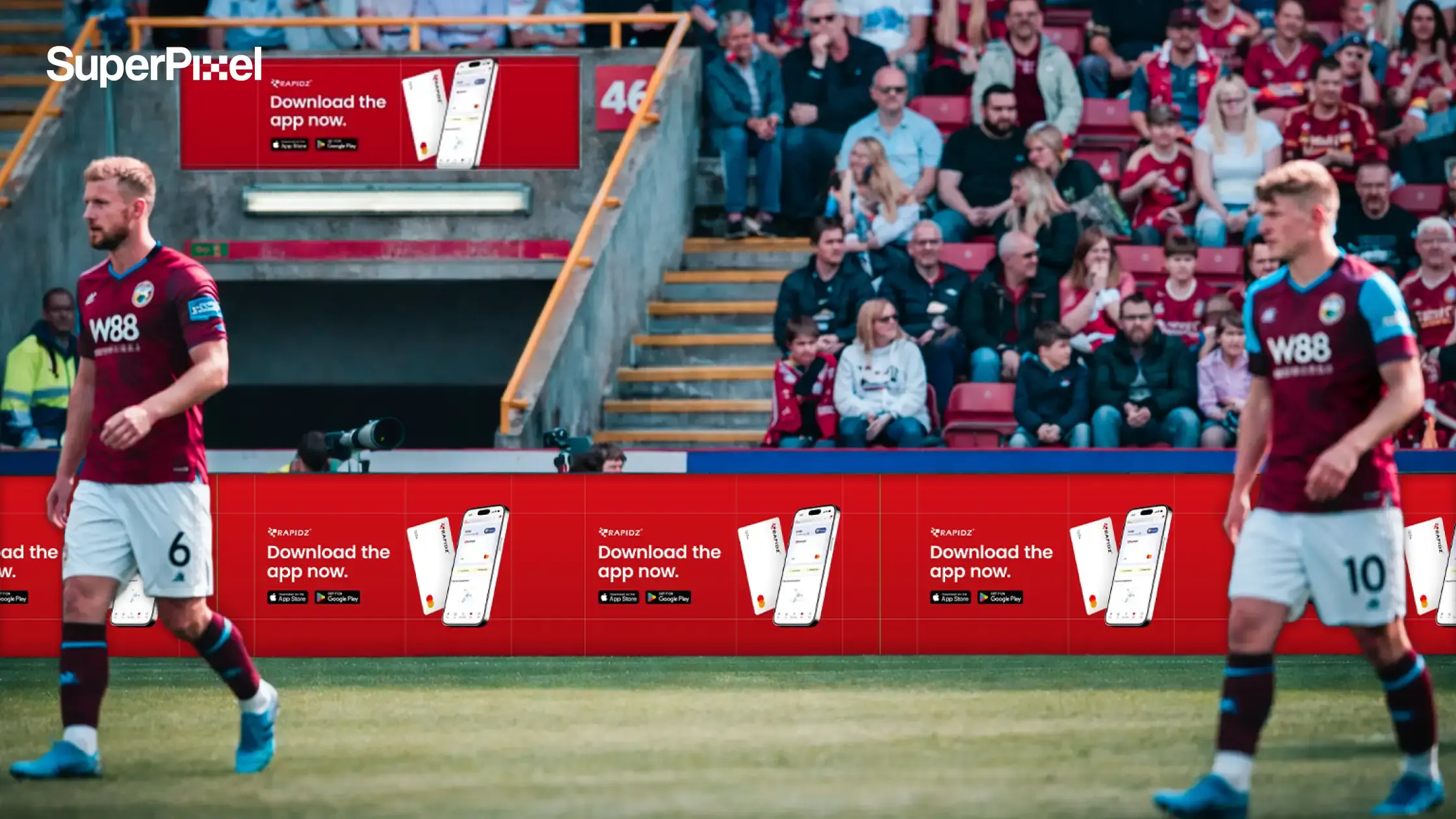
For Rapidz, we created a 15-second product demo video for LED stadium screens, where attention is limited and every second has to work harder. In that kind of environment, the demo could not rely on long explanations.
It needed to make the product feel clear, bold, and instantly recognisable through 3D motion graphics, strong typography, close-up product visuals, and Rapidz’s striking red brand colour.
What made this project interesting was the balance between product clarity and brand energy. We were not just showing a card and an app. We were helping the audience quickly understand the product, remember the brand, and take action through a clear App Store, Google Play, and QR code CTA.
For us, this is a good example of how a product demo video can support both brand awareness and conversion, even in just a few seconds.
Common Demo Mistakes
A strong product demo should help people understand why a product matters, not simply show everything it can do. Many demos fail by leading with features instead of establishing the problems they solve, making the features feel irrelevant to viewers.
Pacing also plays a big role. Poor or inconsistent pacing in demo videos can be a deal breaker; rushed demos can be stressful, while slow demos may feel patronizing.
Another mistake is trying to explain too much at once. One common mistake in product demo videos is trying to show the entire product, which can overwhelm viewers instead of persuading them.
For us, effective demos are not about showing more. They are about guiding the viewer through the right problem, the right feature, and the right moment of clarity. That is what makes the product easier to understand, easier to remember, and easier to trust.
How to Script a Product Demo Video People Can Follow
A script is where clarity starts. Before styleframes, animation, background music, or editing, the script decides whether your product demo video feels easy to follow or just becomes a long tour through software.
Effective product demo videos should focus on the viewer’s pain points before introducing the product. That way, the audience understands why the solution matters before they are asked to care about the features.
Open with the Friction the Product Removes
Your opening should not begin with company history or interface details. It should begin with the blocked task, delay, confusion, or manual work your viewer already recognises.
This is especially important in B2B product communication, where the subject can feel technical. A good script does not make the message shallow. It separates what the buyer needs to understand from what the expert wants to explain.
Show One Job to Be Done Per Sequence
A product demo video is easier to follow when each sequence carries one idea, one task, and one payoff.
If one scene asks viewers to read a dashboard, notice a menu change, hear a feature claim, and understand the result, the message becomes overloaded. The better approach is to slow the beat, highlight one action, and let the viewer understand the value clearly.
This also helps keep the video focused. The ideal length for a product demo video is around two minutes, with a maximum of five minutes for more detailed demonstrations, to maintain viewer engagement.
Add Proof Before the Call to Action
Many demo videos move too quickly from features to “book a demo” or “start now.” But before the ask, viewers need reassurance.
A stronger structure is feature, outcome, proof, then a clear call to action. Proof can be simple: who the product is built for, what changes after adoption, or how it reduces risk for the buyer.
This matters because demos educate potential buyers before they reach a sales representative, allowing deals to close up to 23% faster. A polished video can make the product look good, but a clear script helps people believe it.
Frequently Asked Questions
How long should a product video or product explainer be?
The ideal length for a product demo video is around two minutes, with a maximum of five minutes for more detailed demonstrations. Concise videos between 1–3 minutes usually work best because they keep the message focused on the most impactful features.
Should we show every feature in our own product demo videos?
No. The strongest product demo videos do not try to show everything. They focus on the features that support one clear message, one audience need, and one stage of the funnel. Extra details can be saved for onboarding, sales decks, live demos, or more tips in supporting content.
What makes an effective product demo video?
An effective product demo video should work almost like a digital salesman. It needs to explain what the product does, why it matters, and how it helps the viewer make a clearer decision. The goal is not just to show the product, but to make its value easier to understand.
Can product demo video examples help with a product launch?
Yes. Looking at strong product demo video examples can help teams understand what kind of story, pacing, and structure works best for a product launch. A clear demo can introduce the product faster, reduce confusion, and help potential buyers understand the value before they speak to sales.
How are explainer videos different from videos that only rely on editing skills?
Editing skills are important, but they are not enough on their own. Explainer videos need structure, clarity, pacing, and visual storytelling. At SuperPixel, we look at the message first, then use animation, design, and editing to make the product easier to follow and easier to trust.
In other words, the editing skills required are not only technical. They also need to support the story, the audience, and the decision we want viewers to make.