People walk past screens every day.
They glance for two seconds. If nothing interesting happens, they keep walking.
Flat graphics struggle in that moment. A static banner shows a product. A logo sits on a plain background. The viewer moves on.
Now imagine something different.
A glowing digital city rises behind the product. Light spills through windows. The camera glides through the space. Characters move across the scene. Suddenly the viewer pauses.
That is the power of 3d environment design.
Instead of placing a product inside empty space, brands build a world around it. A world with light, texture, scale, and movement.
That is what makes the scene feel richer. More believable. More alive.
For marketers trying to stand out, 3d environment design helps turn simple visuals into immersive worlds. And when those worlds feel carefully built, they can significantly enhance the way audiences see, feel, and remember a campaign.
Key Takeaways
- 3d environment design adds context so audiences instantly understand what they see.
- It supports storytelling across marketing, films, games, and brand campaigns.
- Environment design guides attention through layout, lighting, and camera movement.
- Visual consistency in textures, materials, and scale strengthens brand credibility.
- Businesses increasingly use 3D environments to create memorable visual experiences.

3D Environment Design: A Complete Guide for Brands
So what exactly is 3d environment design?
In simple terms, it means creating digital spaces where visual stories happen.
These spaces can include:
- virtual landscapes
- branded cities
- product environments
- animated backdrops
- interior scenes
- retail display worlds
For brands, this is not only about making something look impressive.
It is about creating virtual spaces that make an idea easier to understand.
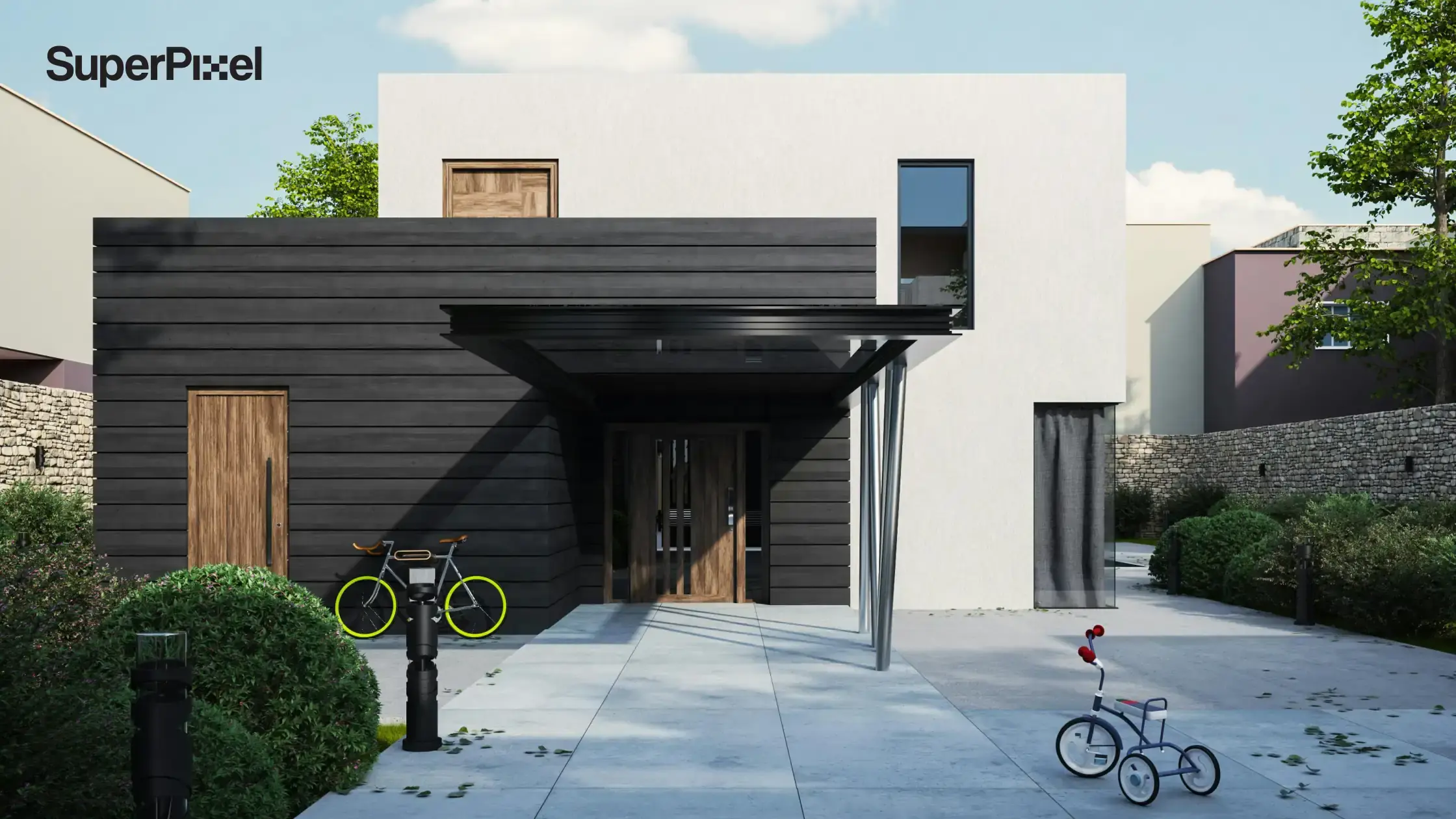
A product feels different when it appears inside a glowing lab, a quiet interior, or a dreamlike landscape. The setting adds meaning. It adds mood. It gives the audience a stronger sense of what the brand is trying to say.
That is why 3d environment design is now used across marketing, game development, architectural visualization, and virtual reality.
Building Blocks of 3D Environment Design
A compelling digital environment does not appear randomly. Designers combine several building blocks to shape how the audience experiences a scene.
A strong environment does not begin with software. It begins with a feeling.
Before anything is modeled, the team needs an artistic vision. What should this place feel like? Calm or intense? Futuristic or natural? Minimal or full of detail?
That early direction shapes everything that follows.
Concept Art
Everything begins with visual sketches.
Artists create:
- mood boards
- landscape sketches
- lighting concepts
- color palettes
These early visuals answer one question:
What should the viewer feel when they see this space?
A neon cyber city feels different from a calm tropical beach.
Concept art defines that emotional tone. This is where concept artists begin to define the world.
They explore shape, mood, color, and atmosphere before the full environment exists. Sometimes the goal is realism. Sometimes it is something more stylized, like fantasy worlds built around emotion rather than accuracy.
Either way, the early sketches help everyone move in the same direction.
Layout
Layout determines where elements appear in the scene.
Designers decide:
- where the product sits
- where characters move
- where the viewer’s eye goes first
In some cases, layout also overlaps with level design.
Even outside games, the same principle matters. The viewer still needs to know where to look, where to move, and what matters first.
Scale
Scale controls how large objects appear compared with each other.
A massive tower can create excitement.
A small product surrounded by nature can create elegance.
Scale shapes perception.
Props
Props are the objects inside an environment.
Examples include:
- furniture
- plants
- vehicles
- signage
- screens
Props make a digital environment feel alive.
Mood
Mood often comes from color and lighting.
Warm lighting can feel welcoming.
Cool lighting suggests technology.
Darker scenes create tension.
Small lighting adjustments can change the entire emotional tone of a scene.
Lighting
Lighting guides attention.
Designers might highlight a product with soft reflections or place it inside a beam of light.
Lighting directs where viewers look first.
Camera Thinking
The camera angle shapes the entire experience.
A low angle can make objects appear powerful.
A wide shot reveals the scale of the environment.
Camera movement often becomes part of the storytelling.
3D Environment Modeling and 3D Modeling Techniques
After the concept stage, artists move into 3d environment modeling.
This process builds the actual digital scene. Once the direction is clear, the environment starts to take shape.
This is where artistic ideas meet technical skills. Artists move from sketches into 3d environment modeling, building forms, surfaces, and space piece by piece.
In many workflows, that process also connects with a game engine, especially when teams need real time rendering to preview motion, scale, and atmosphere more quickly.
Scene Planning
Artists first define the structure of the environment.
They decide:
- where large objects appear
- where movement happens
- how the viewer moves through the scene
This forms the backbone of the environment.
Hard-Surface Modeling
Hard-surface modeling focuses on precise objects such as:
- buildings
- machines
- vehicles
- architecture
These shapes require accurate geometry and clean edges. These forms often appear in tech campaigns, product films, and architectural scenes where precision matters. Clean geometry helps the environment feel intentional and controlled.
Modular Assets
Instead of building everything from scratch, artists create reusable pieces.
Examples include:
- wall sections
- street segments
- rocks
- building modules
These assets speed up production and keep the environment consistent. Reusable pieces also help reduce repetitive tasks.
Instead of rebuilding every wall, street, or object from zero, artists create systems they can adapt. This saves time, keeps the world consistent, and makes larger creative projects easier to manage.
Texturing
Texturing adds surface detail.
Metal reflects light differently from stone.
Water shows ripples.
Wood reveals grain patterns.
Texturing is often where the environment starts to feel convincing.
Surfaces stop looking like simple models and begin to feel touched by weather, time, and use. Artists may use texturing tools and uv mapping to control how those materials sit across an object.
These details matter. They push the scene closer to visual fidelity.
Lighting and Atmosphere
Artists simulate light sources such as:
- sunlight
- reflections
- fog
- glow effects
Lighting helps the environment feel alive.
Camera Composition
Designers test multiple camera angles and movements.
They adjust:
- framing
- perspective
- animation timing
The goal is to guide viewers through the environment naturally.
Detailed Environments and Maintaining Visual Consistency
Detailed environments increase credibility. Realism does not come from detail alone.
It comes from agreement. Light behaves the way it should. Materials respond the way we expect. Scale feels natural. The whole environment follows one internal logic.
When that happens, realistic environments feel effortless. When it does not, the illusion weakens.
Generally speaking, that…when textures, lighting, and scale work together, viewers quickly accept the scene as believable.
But inconsistency breaks the illusion.
For example:
- shadows point in different directions
- metal surfaces reflect light incorrectly
- objects appear the wrong size
The viewer may not know why something feels strange, but they notice it.
Professional teams focus heavily on maintaining visual consistency across:
- textures
- lighting
- scale
- materials
- motion
Consistency strengthens brand perception and storytelling clarity.
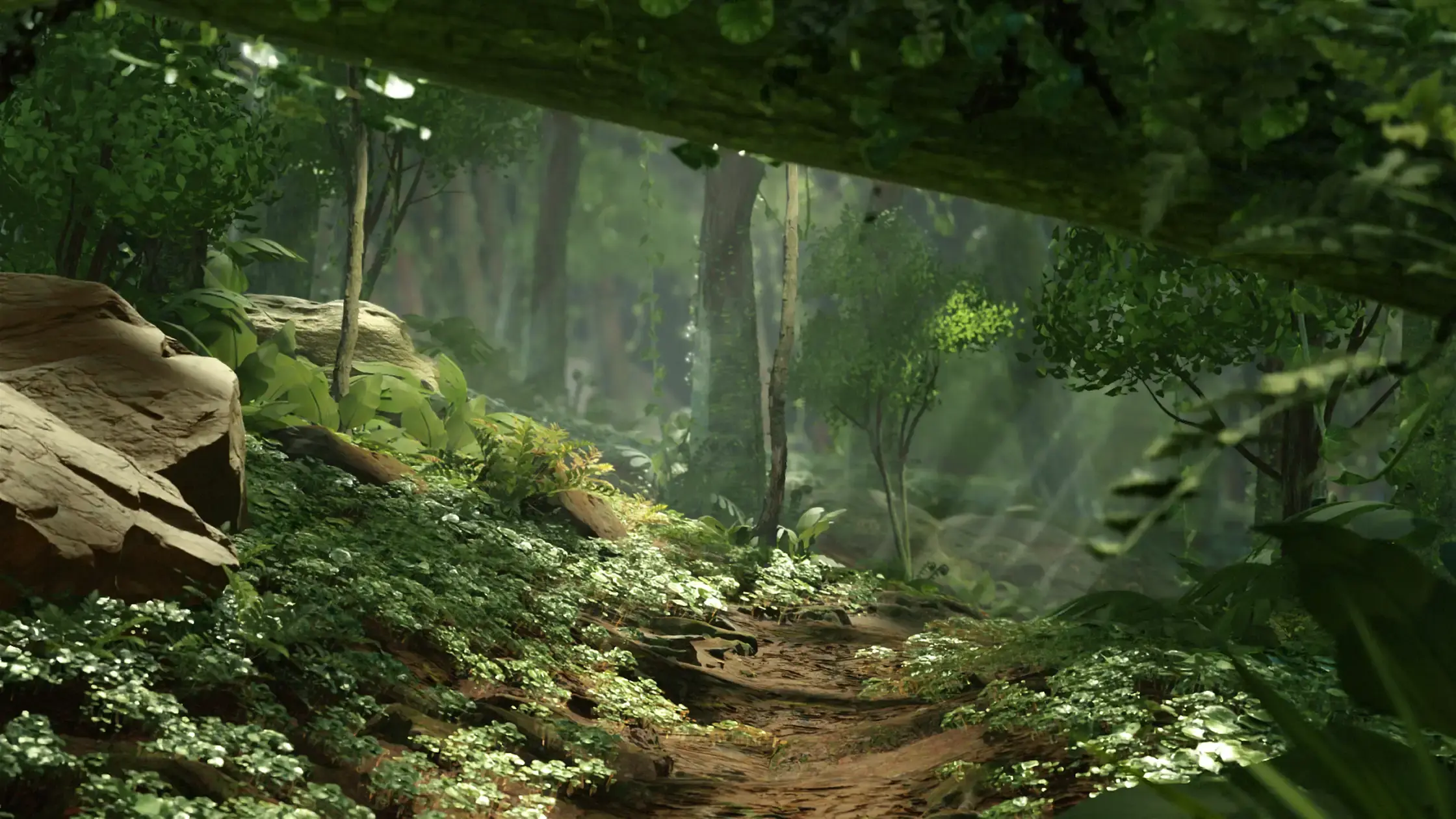
Natural Environments in 3D Design
Natural environments create strong emotional responses.
Examples include:
- forests
- mountains
- oceans
- skies
- wildlife landscapes
Imagine being able to show a product floating above calm water while sunlight breaks through clouds.
Or imagine a conservation message unfolding in a vibrant rainforest.
Natural environments often include:
- flowing water
- moving clouds
- textured terrain
- plants and wildlife
These elements make digital spaces feel dynamic and believable.
Brands often use natural settings for campaigns related to:
- sustainability
- travel
- wellness
- lifestyle storytelling
Applications of 3D Environment Design in Mobile Games, Film, and Marketing
3d environment design appears across many industries.
Mobile Games
In video games, 3D worlds are the basis for an immersive experience, allowing players to adventure through imaginative places or hyper-realistic environments.
Cities, landscapes, and obstacle paths shape the player experience.
Animated Films
Films rely on environment design to support characters and storytelling.
The film and animation industries use 3D environments to bring impossible or cost-prohibitive scenes to life, enhancing storytelling and allowing live-action footage to be seamlessly integrated with fantastical elements.
Settings define how scenes feel and how characters interact.
Brand Campaigns
Marketing campaigns use environments to create memorable product stories.
Instead of static visuals, products appear inside dynamic worlds.
Retail Screens
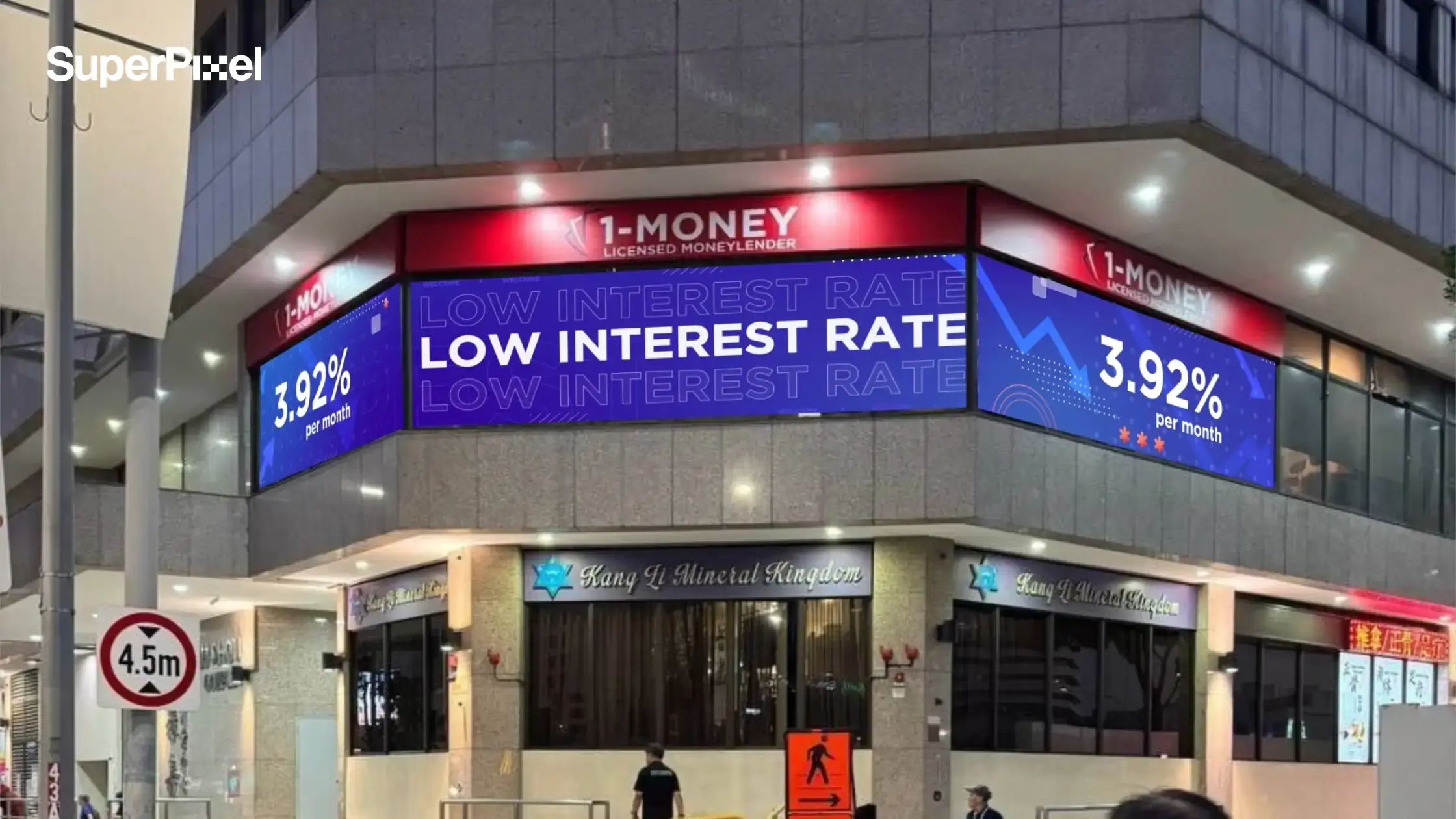
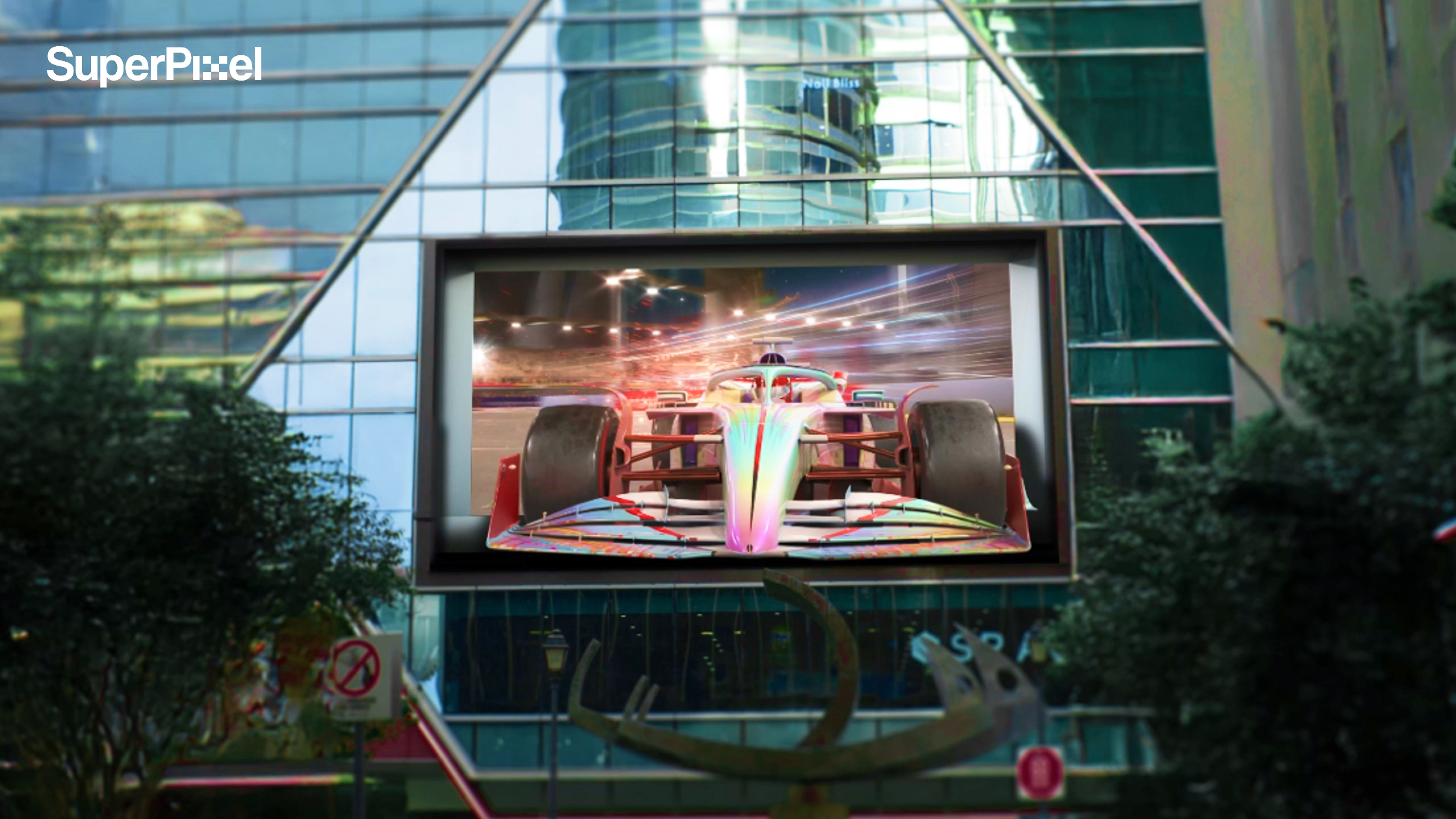
Large LED screens often display animated environments to attract attention.
These visuals stop people mid-walk.
Interactive Experiences
Some campaigns allow audiences to explore digital environments through apps or installations.
Users can interact with products inside virtual worlds.
Architectural Visualization
Architects and real estate individuals use 3D environment design to create highly photorealistic models of projects when they are only in the initial stages of completion.
Before a space exists, people can already begin to see it.
Lighting setups shape the mood, while interior spaces reveal scale, detail, and flow.
Virtual Reality
Virtual reality is highly dependent on 3D environments to immerse users in alternative realities, unlocking limitless possibilities that integrate entertainment with practical applications for different sectors.
In virtual reality, the environment is not just something people look at.
It is something they move through. That is why artistic expression, technical knowledge, and careful optimization rules matter, especially within hardware limitations.
Best Software for 3D Environment Design, from Unreal Engine to Blender
Different tools support different stages of environment design.
Unreal Engine
Unreal Engine is known for its graphical power in AAA projects and is widely used for creating photorealistic 3D environments.
This makes it useful for games, simulations, and marketing visuals.
Blender
Blender is a free yet powerful tool suitable for 3D environment design, making it ideal for indie developers.
Many studios use Blender for flexibility.
Autodesk Maya
Autodesk Maya is the industry standard for animation and is also an excellent 3D environment program for modeling.
It is widely used in film and animation production pipelines. It excels at complex animation workflows.
Cinema 4D
Cinema 4D is popular for motion graphics and advertising visuals.
It integrates smoothly with many design workflows.
Houdini
Houdini is known for its node-based workflow. This makes it especially useful for creating complex, dynamic environments in 3D design.
Unity
Unity is flexible and widely used among indie developers for creating interactive 3D environments.
Challenges in 3D Environment Design
Designing digital worlds brings several challenges.
Designing 3D environments presents numerous challenges, such as achieving lifelike textures, managing complex data, and ensuring correct interactions between models and lighting.
Balancing Detail and Performance
Highly detailed scenes require heavy computing power.
Artists must balance visual quality with performance.
The balance between realism and creativity is a major challenge in 3D environment design, as designers must create immersive settings while fitting within the story or gameplay.
Production Time
Environment creation involves multiple stages including modeling, texturing, lighting, and rendering.
Each stage requires careful coordination.
The rapid evolution of tools and techniques in 3D environment design demands continuous learning to remain competitive.
Stakeholder Alignment
Creative teams, marketers, and clients often review the same scene.
Clear direction early in the process helps reduce revision rounds.
Interdisciplinary collaboration is important but difficult in 3D environment design, as projects usually require artists, engineers, and narrative designers to work together.
Style Mismatch
Sometimes a concept changes during production.
Teams adjust lighting, textures, or layout to match the intended vision.
Maintaining a consistent style throughout extensive projects requires thorough coordination and acute attention to detail.
Technical Constraints
Different platforms have different requirements.
Mobile devices, retail displays, and social media videos all require optimization.
AI in 3D Design
Artificial intelligence now supports parts of the 3D workflow.
AI-assisted workflows are becoming increasingly important in 3D environment design as of 2026.
AI tools can assist with:
- concept generation
- reference images
- texture creation
- rapid prototyping
Even with AI support, human creativity still guides the final result.
Artists decide the story, mood, and visual direction.
3D Environment Design Services: How SuperPixel Supports Brand Stories
Brands rarely need just a 3D scene.
They need a visual story.
At SuperPixel, we’re not just animators—we’re storytellers.
Our work typically includes:
- concept development
- visual direction
- environment design
- animation production
- story-driven execution
The environment becomes the stage where the brand message unfolds.
Storytelling Through 3D Environment Design
A beautiful environment is not enough.
It also needs to tell a story.
The Story Lives in the Details
Environmental storytelling elements add realism by incorporating details like dirt, dust, or decay in 3D environments.
Small details like these add realism. They suggest that something has happened in this space before the viewer arrives.
That is what makes environmental storytelling so effective.
In the other hand, creating a beautiful location in a 3D environment is not enough; it must tell a story.
The Environment Speaks Without Dialogue
The environment begins to speak for itself.
It shapes mood. It creates context. It helps people understand the world more quickly, whether they are watching a film, exploring a game, or experiencing a campaign.
A strong environment does not just sit behind the action.
It gives the action meaning.
Believable or Fantastical, It Still Needs to Feel Real
High-quality environment modeling helps worlds feel convincing.
Sometimes the goal is realism. Sometimes it is something more fantastical.
In both cases, the environment needs to hold attention and support the story.
A place can look beautiful. But if it feels empty, the moment disappears quickly.
Lighting Shapes Emotion
Lighting plays an important role too. Lighting sets the mood in a 3D environment, influencing the emotional response of players.
In Games, Storytelling Also Guides Experience
The environment tells a story without words, enhancing the player’s experience.
Players read the world through layout, lighting, and visual cues. The environment is not just part of the background. It helps shape the experience moment by moment.
SuperPixel Case Studies in 3D Environment Design
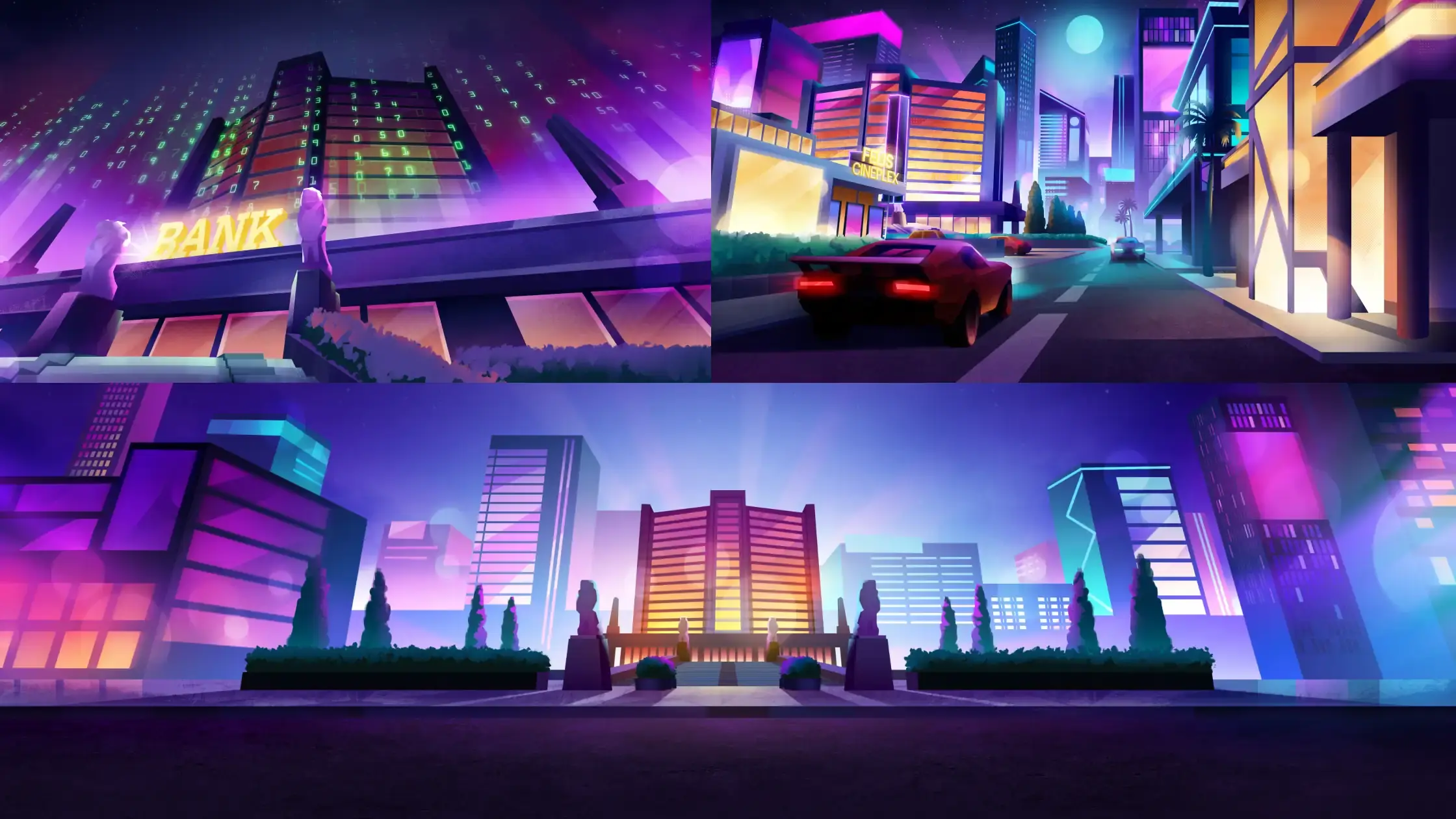
Case Study 1: Crypto.com Loaded Lions: Mane City – Fractured Fate
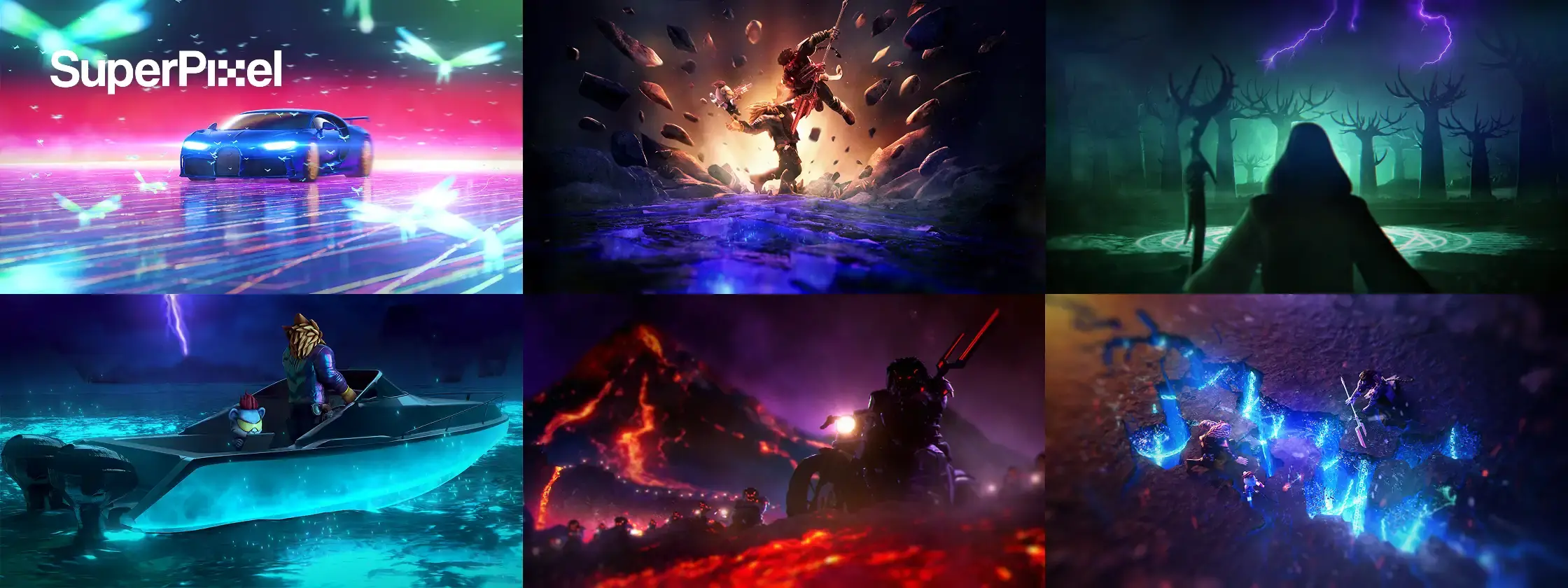
A fresh saga begins. Smoke moves through the frame. Strange creatures rise. Vast digital lands stretch into the distance.
For Loaded Lions: Mane City – Fractured Fate, Crypto.com wanted a cinematic 3D trailer to build hype for the next chapter in the game’s lore and support their NFT Land Sale.
Working from concept art, animatic, and storyboards, SuperPixel brought that vision to life in a 60-second film filled with stylised action, world-building visuals, FX simulations, and seamless transitions.
With iconic characters and six distinct lands, the final trailer helped spark curiosity and build anticipation across platforms.
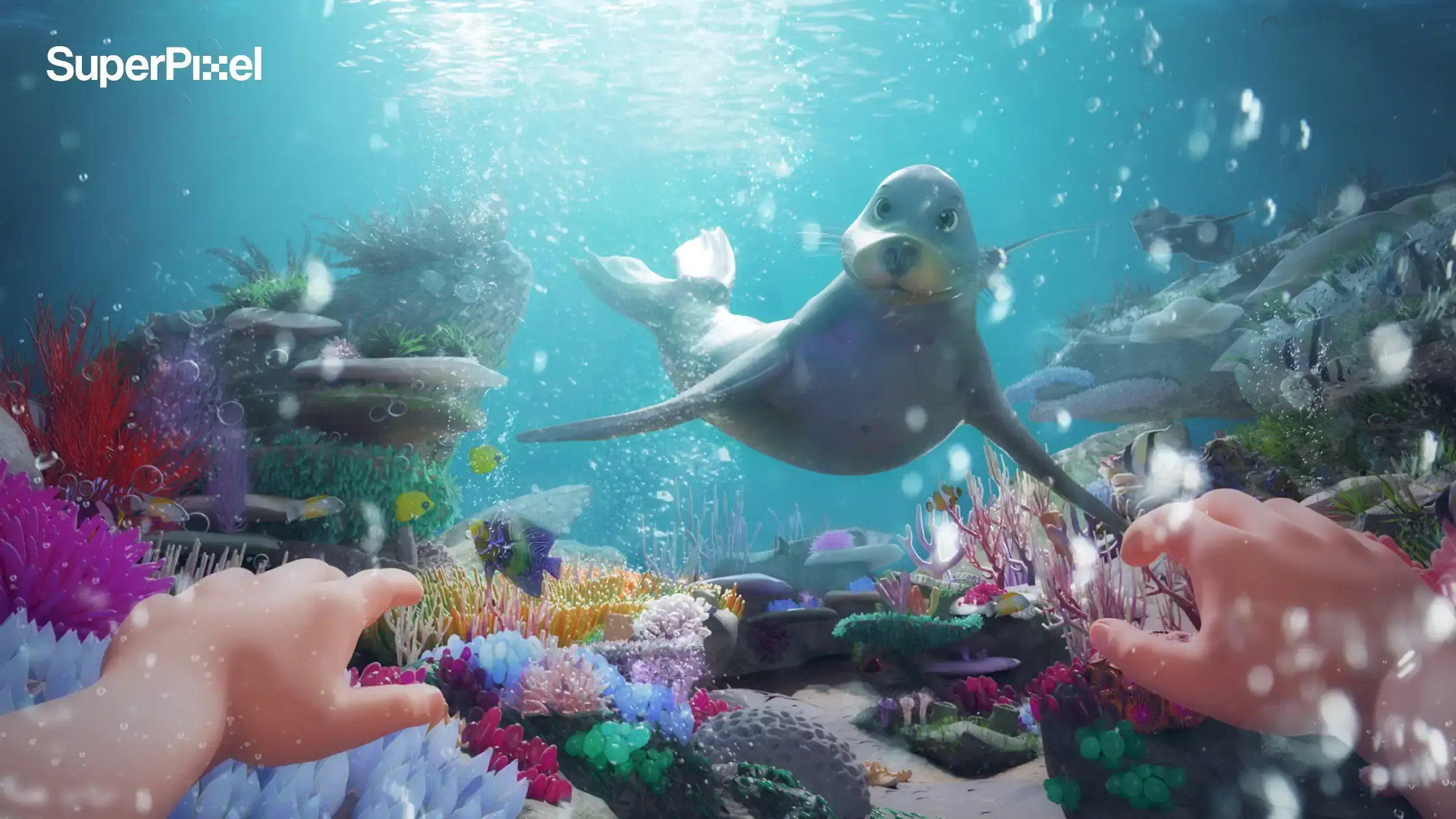
Case Study 2: Mandai Ranger Buddies Trailer
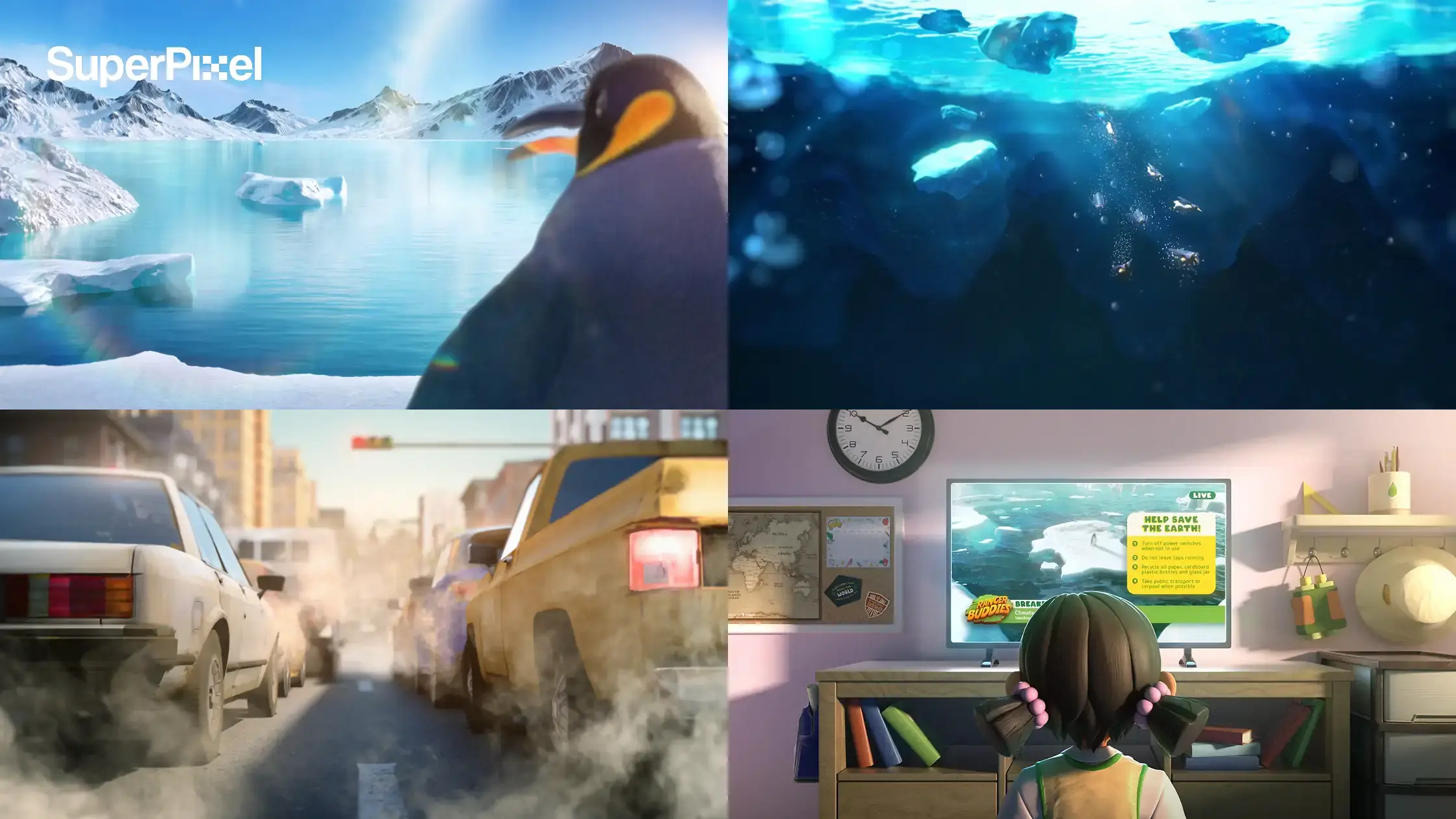
In the Mandai Ranger Buddies trailer, lively characters move through vibrant wildlife environments.
The environments play an active role in the story.
Trees sway. Rivers flow. Animals appear inside the landscape.
SuperPixel designed environments that allowed characters to interact naturally with their surroundings.
The trailer gained over 500,000 YouTube views and increased awareness for the Ranger Buddies program.
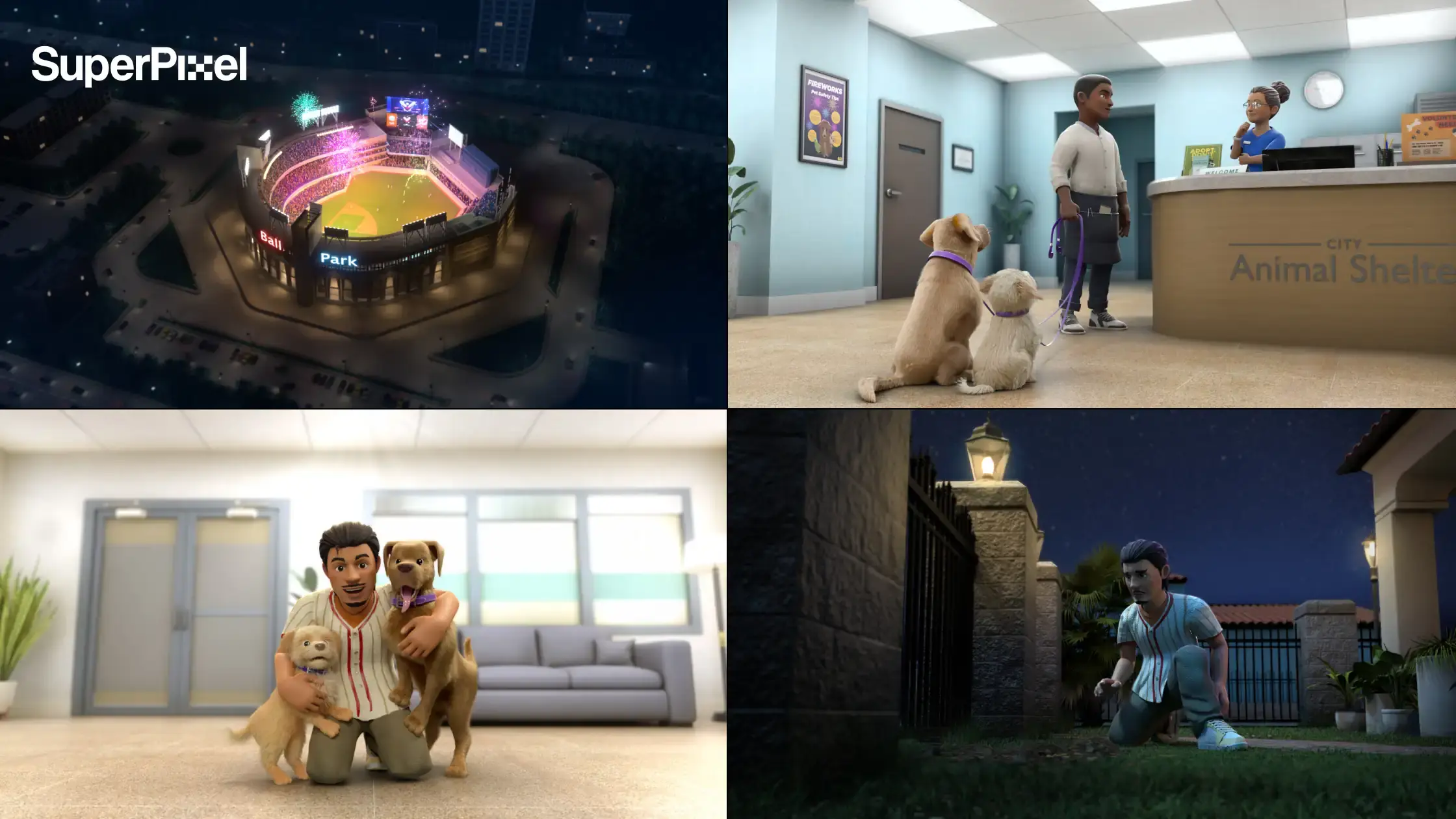
Case Study 3: Petco My Ruff Day
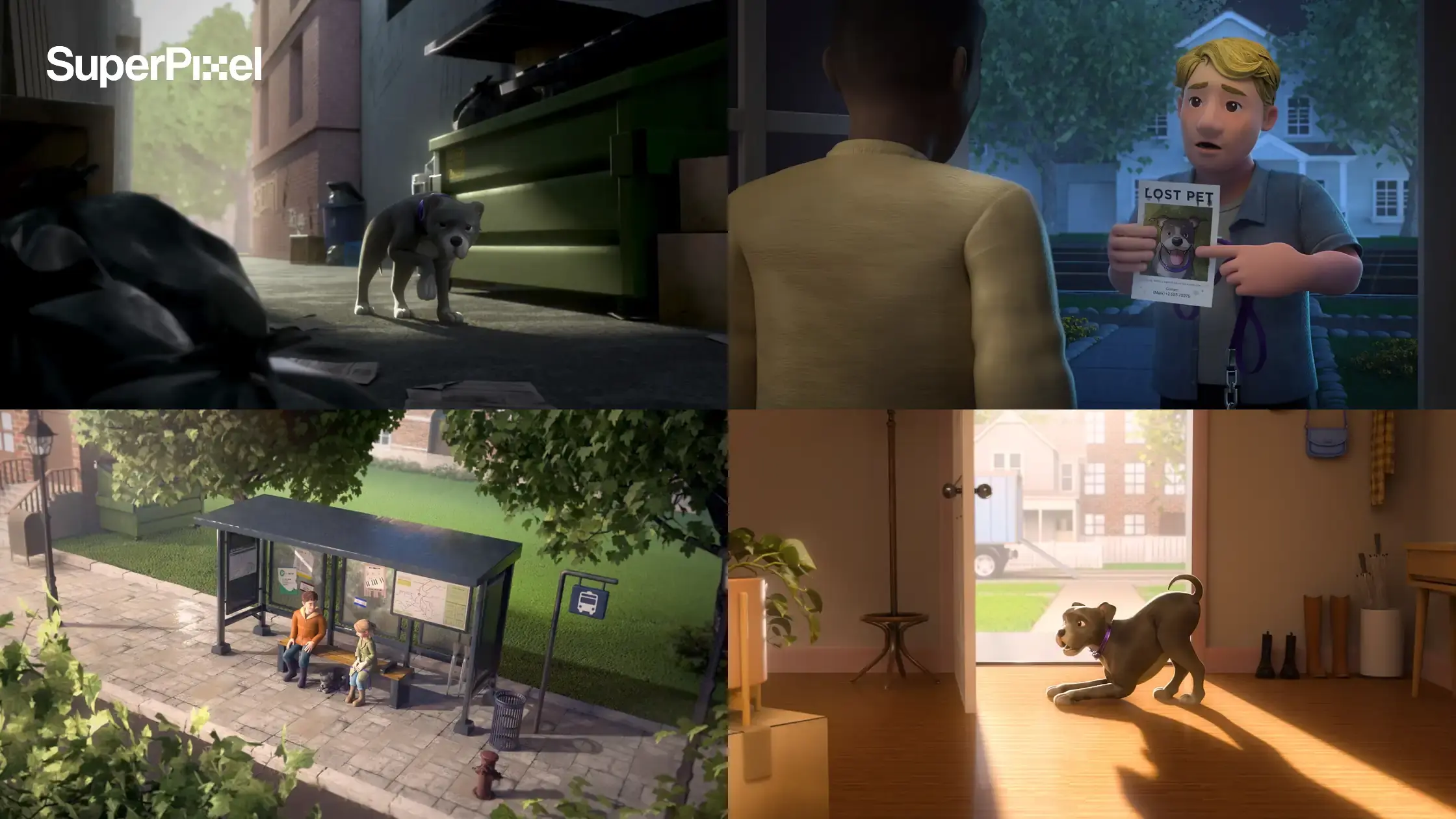
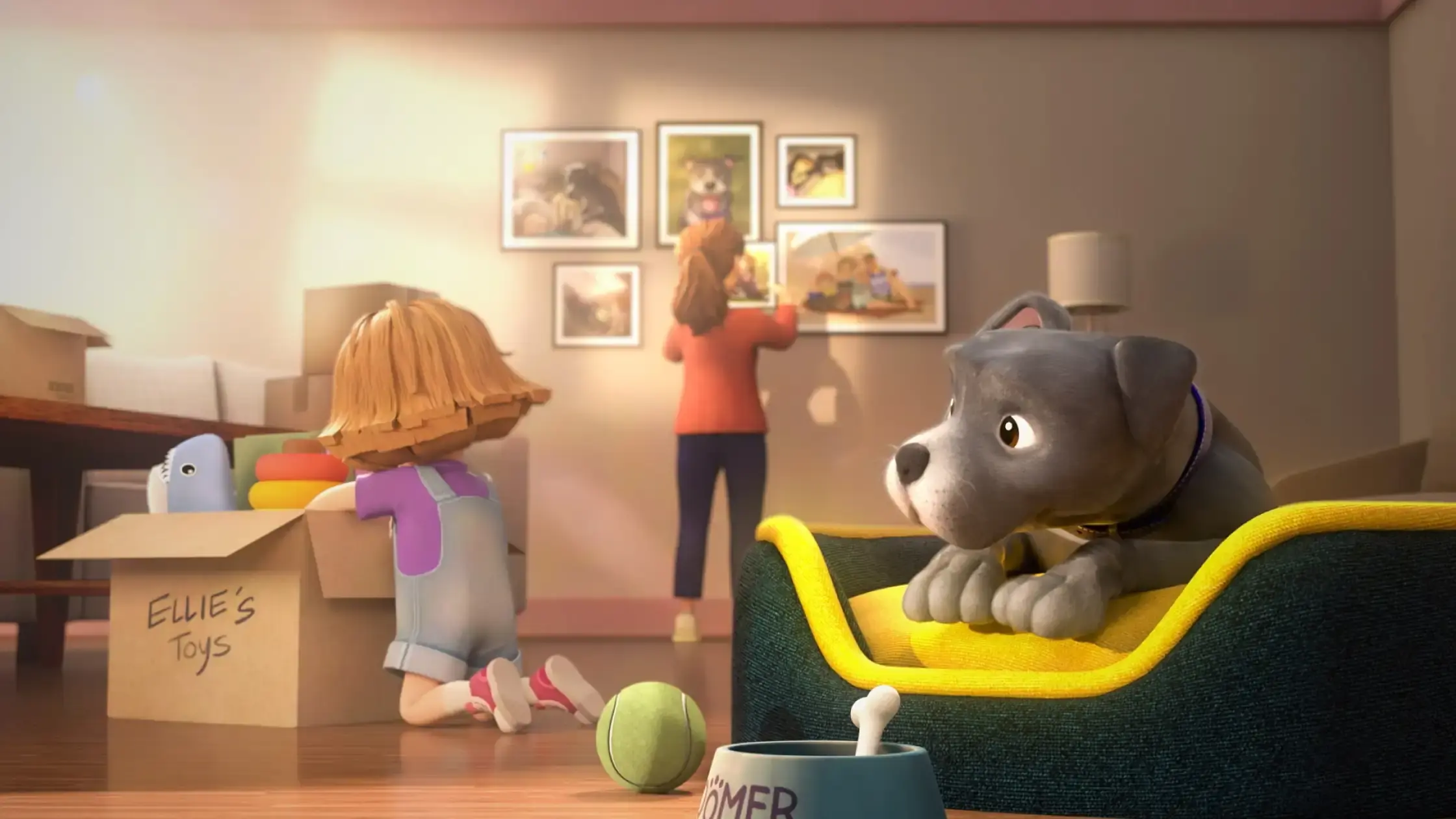
A dog runs out. The street gets bigger. The light turns cold. Home suddenly feels far away.
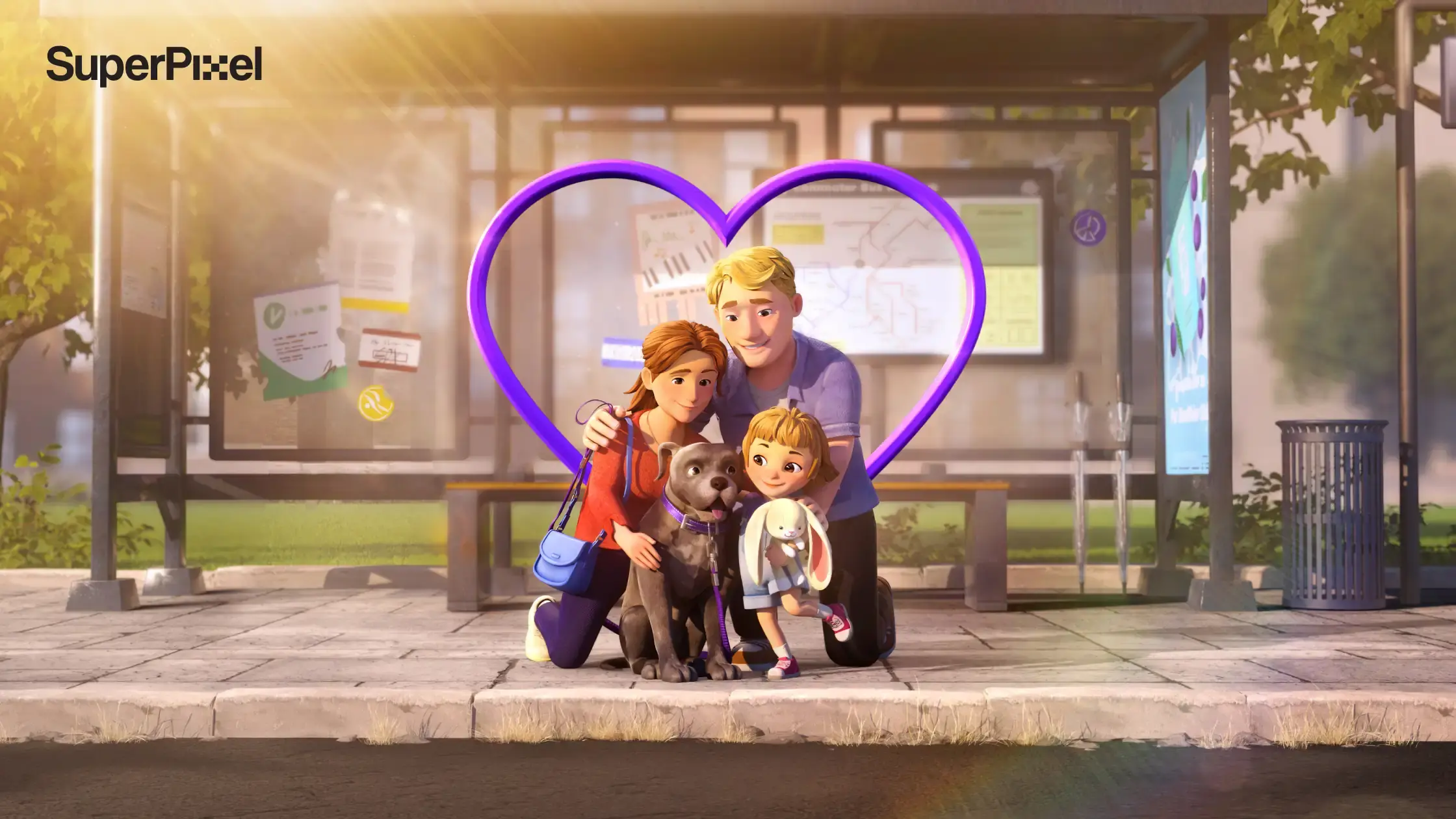
That feeling sat at the center of Petco My Ruff Day, a 3D animated short created to support Petco Love Lost, a platform that helps reunite lost pets with their families.
The goal was not just to make a cute pet story. The film had to do two things at once: carry the emotion of losing a pet, and help people understand the purpose of the platform in a short amount of time.
So the team built the world around small, believable details. Boomer’s flappy ears kept him playful and puppy-like. Ellie’s romper made her feel energetic and warm. The environments, lighting, and color shifts helped carry the emotion scene by scene, moving from cooler night tones into a softer, warmer ending as the reunion came into view.
The result was a story that felt clear, emotional, and easy to follow, while showing how 3D animation can support both storytelling and message clarity.
Practical Tips Before Starting a 3D Environment Design Project
Here are five practical tips for brands planning a 3D environment project.
1. Be Clear About the Story
Ask one question first.
What should viewers understand in the first three seconds?
The environment should support that message.
2. Decide Where the Visuals Will Appear
Content may appear on:
- social media
- LED screens
- websites
- event installations
The platform influences how the environment is designed.
3. Match the Style to the Audience
A children’s campaign requires a different style than a corporate brand.
Choose a visual style that fits the audience.
4. Think About Movement
Strong environments work with motion.
Camera movement and animated elements make scenes dynamic.
5. Choose a Studio That Understands Storytelling
Beautiful visuals alone are not enough.
The studio should understand communication, branding, and audience behavior.
Ready to explore possibilities for your next campaign?
Reply to request a consultation, ask for project examples, or browse SuperPixel’s portfolio for inspiration.
Conclusion
3d environment design is far more than a digital backdrop.
It builds context.
It shapes emotion.
It strengthens storytelling.
From marketing campaigns to animated films, environments guide how audiences experience visual content.
Imagine being able to show your brand message inside a space audiences want to explore.
Ready to bring your vision to life?
Reach out to discuss your project, request examples of our work, or explore the SuperPixel portfolio to see how environment design turns ideas into unforgettable visual worlds.