3d product animation services exist because brands are tired of product visuals that feel slightly “off,” timelines that stretch every time something changes, and revisions that turn into mini rebuilds.
If you’re investing in 3D, you’re really buying clarity, speed, and reuse, so your team can move without re-shooting or reworking the same asset again and again.
Key takeaways
- Interactive 3D models can increase the time customers spend on product pages by up to 80%.
- Product pages featuring 3D content can see conversion rate increases ranging from 20% to 40%.
- Digital assets from 3D animation can be reused and repurposed across multiple campaigns without the recurring costs of live-action shoots.
- 3D assets serve as the foundation for Augmented Reality (AR) and Virtual Reality (VR) experiences.
- Costs for 3D animation vary based on complexity, duration, and the provider’s tier.
Applications of 3D Animation Services
3D earns its budget fast when you need accuracy, control, and repeatable outputs. It’s also the go-to when filming is possible, but inefficient.
Real talk, 3d product animation services are less about “nice visuals” and more about speed, reuse, and keeping your sales and clients happy when a new product keeps changing.
Before build
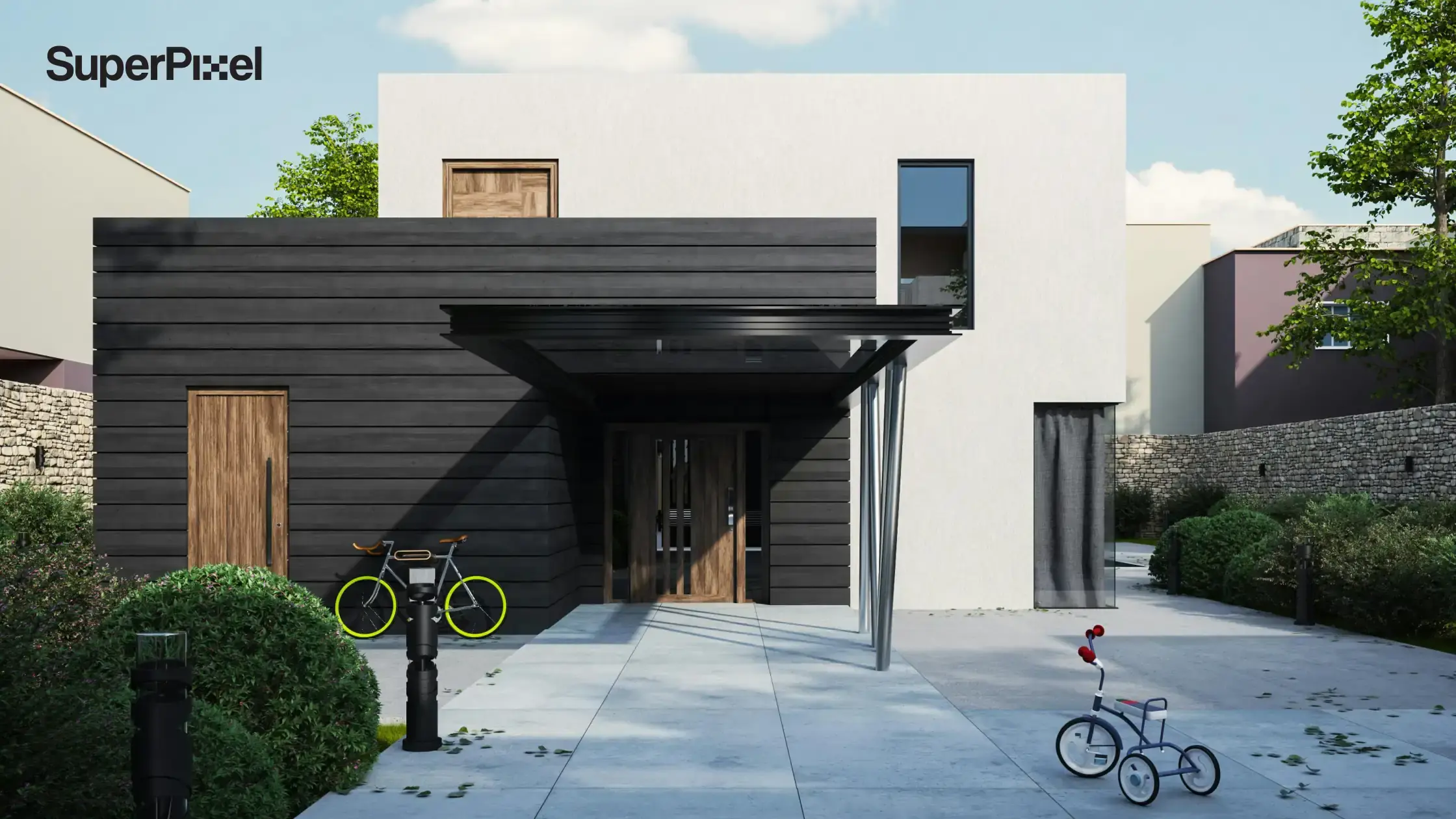
3D animation can help prospects and viewers see how a product or environment would look before it is manufactured or developed. Good for approvals. Less guesswork, less surprise later.
This is big for engineering and product approvals. You can connect stakeholders early, so feedback is clear and the build stays realistic.
Data visuals
3D animation can enhance corporate presentations by making data and infographics more engaging than static charts. Motion guides attention. Decks feel less sleepy. A bit of motion turns stats into engaging content. It helps your story resonate without stuffing more text on the slide.
Investor impact
3D animation can produce compelling videos that convey messages to investors in an impactful way. Clean visuals help alignment. Less time explaining. When time is tight, clear visuals help the room align faster. It’s easier to talk innovation when people can see it.
AR VR base
3D assets serve as the foundation for Augmented Reality (AR) and Virtual Reality (VR) experiences. Build right once. Future AR later also can. If your team in Singapore is thinking future formats, this keeps options open without rebuilding later.
How Brands Use 3D Product Animation to Drive Real Results
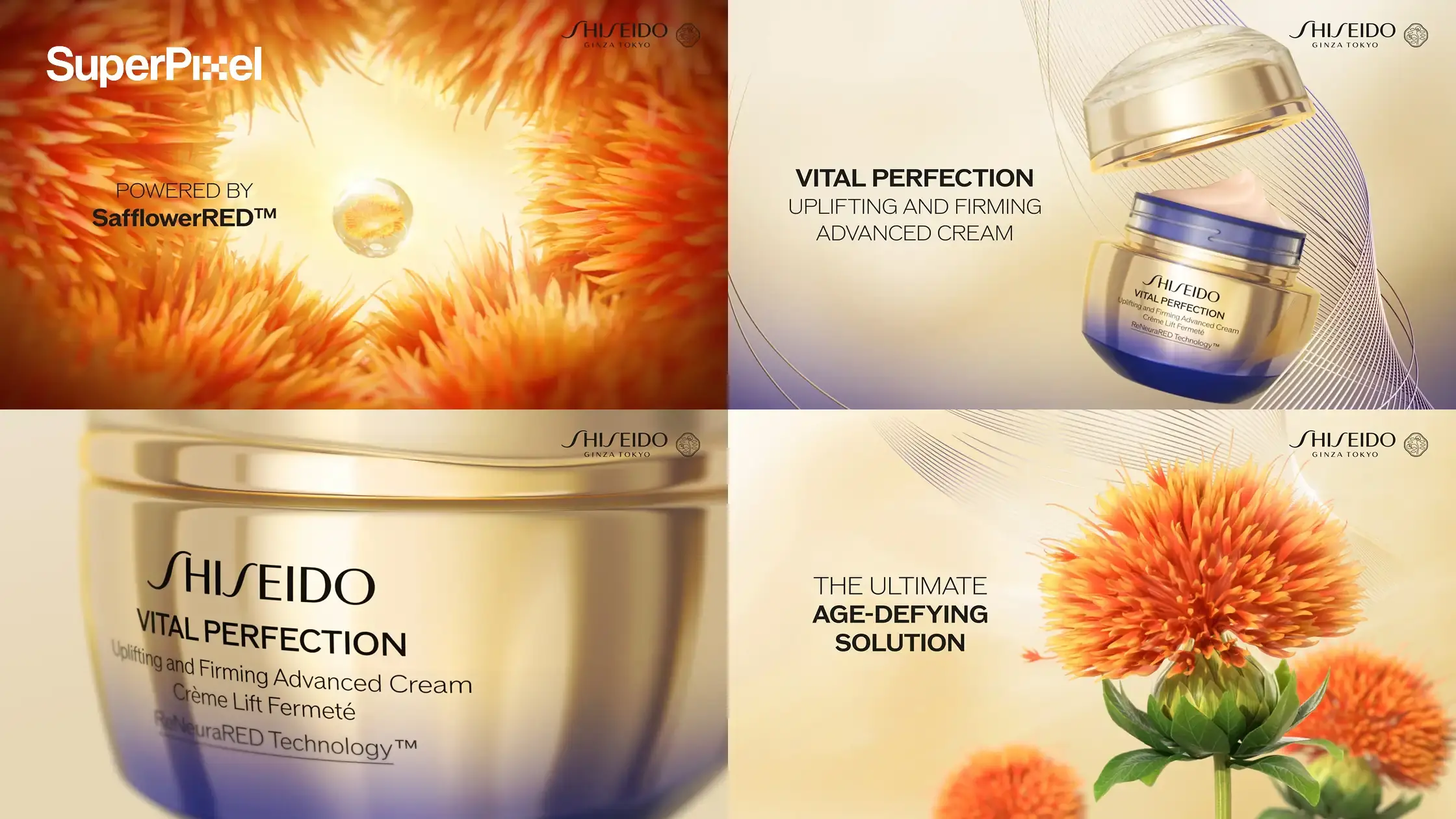
Great visuals are nice. But the best 3D product animation is built to do a job: make messages clearer, keep attention longer, and help campaigns perform.
At SuperPixel, we create 3D product animation services with that balance in mind. Every project is designed to look premium on screen, while staying grounded in strategy, audience behavior, and the platform it needs to win on.
Here are two examples of how motion helped brands communicate better and engage faster.
AIA Medishield Life Plan Explainer
AIA needed to explain the benefits of its Medishield Life Plan in a way that felt clear and approachable, without overwhelming viewers with insurance jargon.
We produced an 8-bit inspired animated explainer that translated complex concepts into a playful, relatable narrative. The retro style helped grab attention quickly, while the pacing and sound design made the information easier to follow.
The result was an explainer that improved viewer comprehension and helped the brand stand out in a category that often feels conservative and hard to communicate.
Redmart: “Shop Without Breaking A Sweat” Campaign
Redmart wanted something fresh to energize its social content. Instead of typical product visuals, we created a series of short 3D animated spots built around melting groceries, humor, and strong character-driven motion.
Designed for fast, scroll-first viewing, the videos delivered punchy storytelling in seconds. The campaign reached over 1 million views with a strong view-through rate, proving that high-quality 3D animation can boost engagement and performance when it’s built with clear intent.
Brand Storytelling through 3D Animation
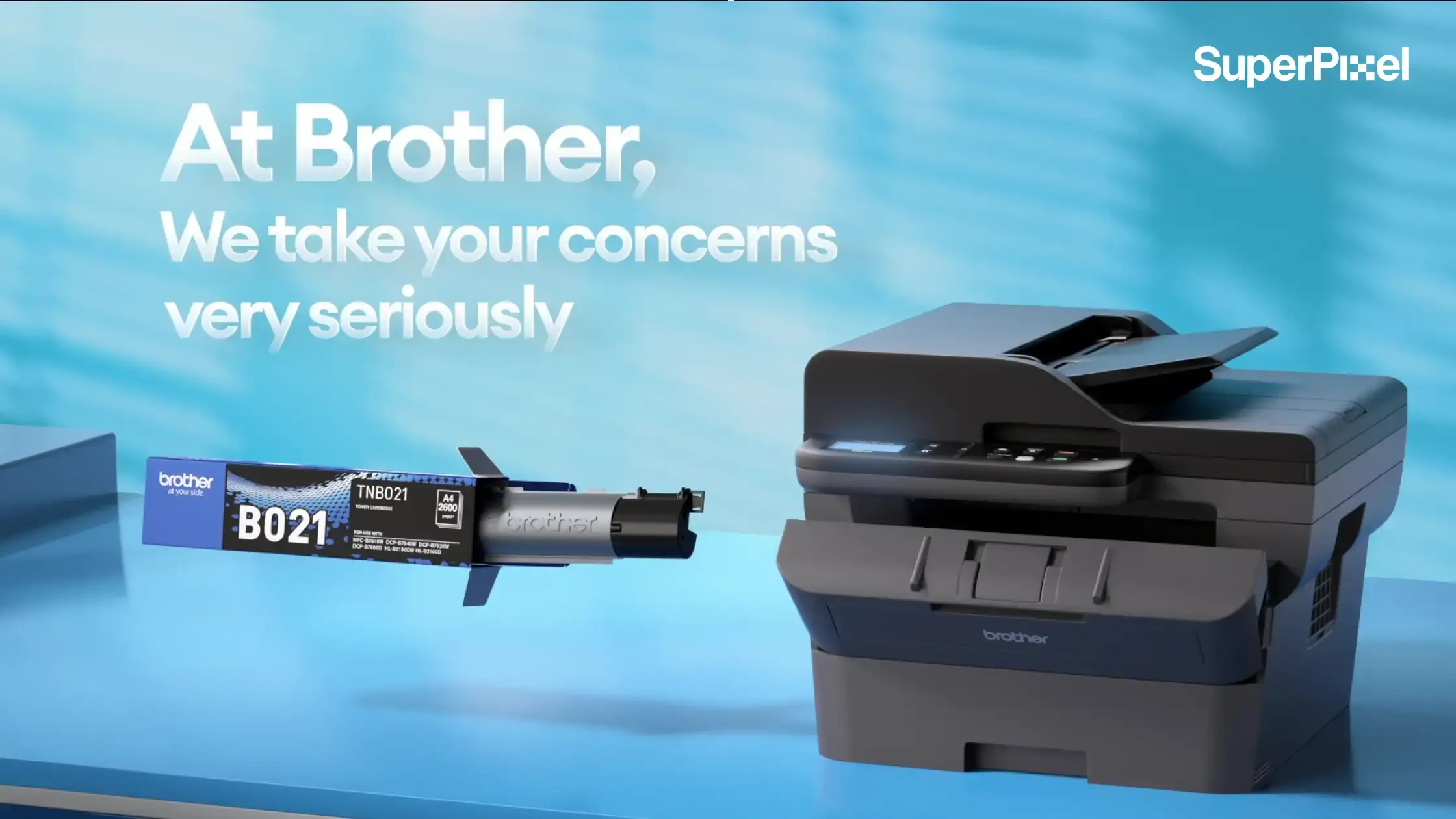
3D isn’t only for demos, it’s also for brand memory. The key is keeping the story honest to the product while still making it feel worth watching.
Brand story
Every brand has a story to tell, and CGI 3D product animation can help you bring that story to life. I always say keep the story tied to product truth. Pretty visuals that don’t match reality will kill trust fast.
Captivate
Engaging your audience is a crucial part of creating content, and CGI 3D product animation offers a captivating way to capture attention. You got about two seconds to earn the next second. Lead with the one feature that matters most, then move.
Holds attention
3D animation holds attention longer because it feels more immersive than flat graphics or static images. Good 3D has rhythm. Reveal, pause, move. Don’t spin nonstop until people blur out.
Immersive
3D animation allows immersive storytelling previously impossible or difficult with traditional animation techniques. This is where you show the unfilmable. Cutaways, internals, flows, mechanisms. All clean and controlled.
Every angle
3D animation can showcase products from every angle, providing viewers with a comprehensive understanding of key features and functionalities. When buyers can inspect properly, uncertainty drops. Support questions usually drop too.
3D Animation for Explainer Videos, Product Demos, and Presentations
If your product has moving parts, hidden features, or a complex “why it matters,” 3D gives you control over what people see and when they see it. You decide the sequence, the focus, and the pacing, so the story lands clean.
Demo alignment
3D animations are effective for product demonstrations and investor presentations.
3D animations can help convey messages to investors in an impactful way.
This is where 3D saves time lah. One shared visual means less guessing, less debating, faster yes or no. Especially in investor rooms, clarity is confidence.
Detail steps
3D animations can show every precise detail of a product from every angle. Close-up truth matters. If it’s premium, people will zoom in and judge the small cues. And if it’s complex, break it into steps, don’t dump everything at once.
Focus cutdowns
3D animations can be used across various platforms, including web, mobile, and social media. Immersion is really focus. Remove distractions and guide the eye. Then plan your ratios early so your hero shot works in vertical and your labels stay readable.
Testable lift
Product pages featuring 3D content can see conversion rate increases ranging from 20% to 40%. Treat this as directional, not a promise. The smart move is A/B test by category, measure properly, and iterate the first few seconds until it clicks.
Enhancing Marketing with 3D Product Animation
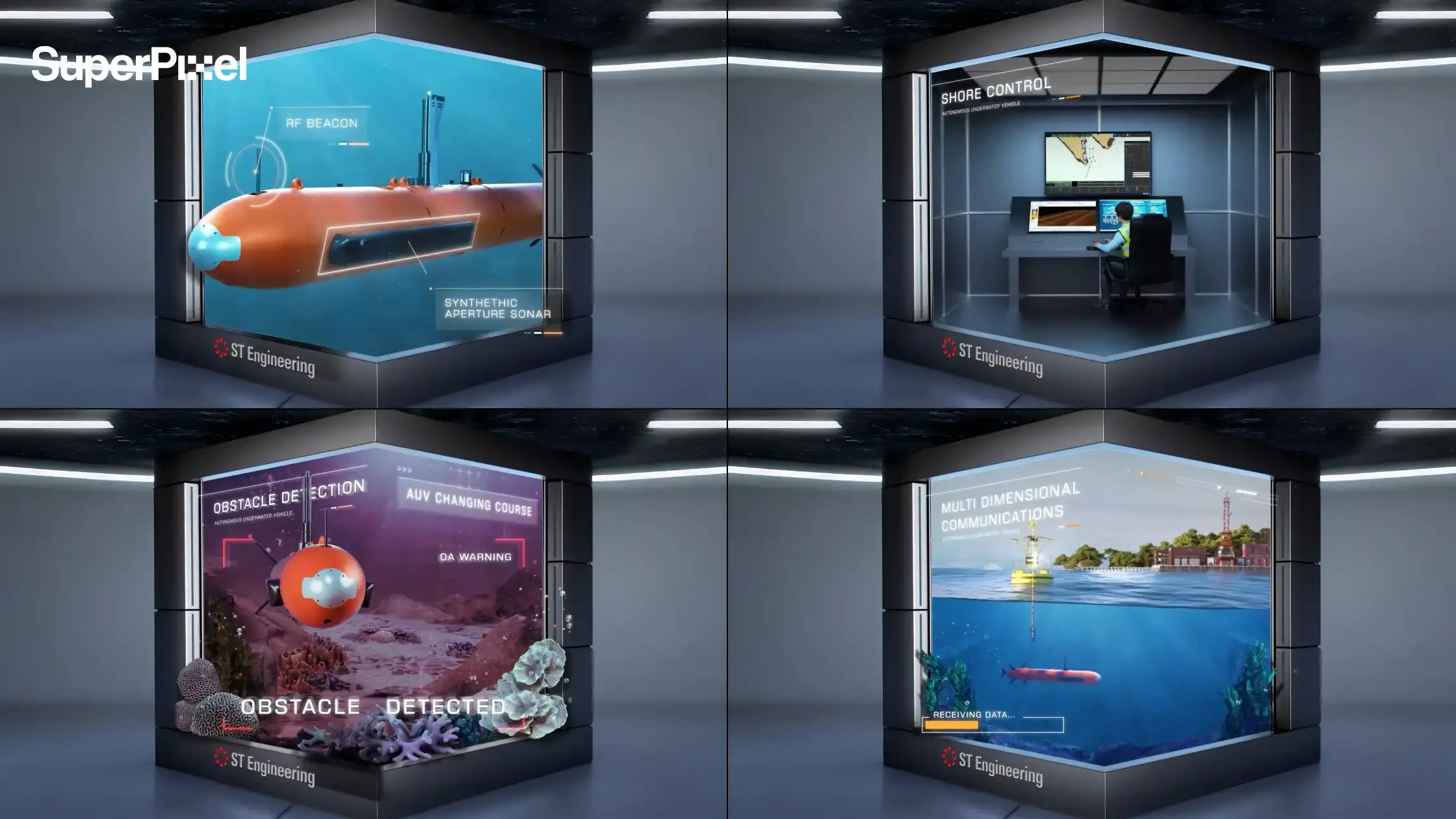
Marketing teams like 3D because one build can power many deliverables without rebuilding from scratch. That’s how you keep momentum when campaigns move fast.
Buyer angles
3D product animation can showcase offerings from every angle, providing a comprehensive understanding of key features. Show the angles that answer buying questions lah not every angle. And if materials look correct people trust faster. If the metal looks like plastic they will feel it even if they cannot explain it
Fast hooks
3D animations can improve conversion performance over time by capturing attention faster than static visuals. This is where 3D shines for marketing teams. You can keep re editing the first three seconds until it hits without reshooting anything. Less drama more iteration
Emotional pace
3D animation can enhance marketing strategies by creating captivating stories and expressing authentic emotions.
Emotion is not only faces. It’s pacing music timing and small human moments even in product work. Make it feel intentional not like a spinning catalogue
Repeat and test
3D animation allows brands to visually replicate ideas to aid in storytelling for marketing demonstrations.
Some high-involvement items like furniture can see conversion rate increases as high as 94% when featuring 3D content.
Repeatability is underrated. Same demo across teams markets and time keeps the message consistent. And for stats like this treat as direction not promise. Test by category and check your viewer UX first.
3D Animation Production Process
A clean process keeps timelines predictable and feedback productive. The best projects feel calm because approvals happen at the right checkpoints.
Core steps
The 3D animation production process includes steps such as discovery and concept planning, modelling and asset creation, animation and motion execution, and post production and final delivery.
Keep checkpoints clear and get sign-offs. If you don’t, the churn comes later, and everyone will feel it.
Build scenes
In 3D animation projects, teams build assets, place them into scenes, and create realistic movement with lighting, textures, and effects. Lookdev is make-or-break. Once materials and lighting are right, everything downstream becomes easier.
Rigging
Rigging technicians set up bones and controls so characters and objects can move naturally in scenes. For products, this is hinges, sliders, lids, springs. Anything that moves must feel believable.
Post
After animation is completed, editors add transitions, sound, and final polishing in post-production. Sound is a cheat code. A clean click or subtle texture sound can make motion feel premium fast.
Platform outputs
3D animations can be optimized for various platforms, including web, mobile, AR, and VR. Compression matters, especially on mobile. You want fast loads without turning details into blur.
QA
The quality assurance process in 3D animation is meticulous, employing advanced tools and techniques to guarantee accuracy and exceptional aesthetics. QA is where you catch label mistakes, shadow glitches, clipping, colour drift. The stuff people love to screenshot.
Choosing a provider
You don’t need to be technical to buy well. You need a practical lens that checks craft, process, and how the team communicates. And yeah, you can totally “spot-check” a studio like SuperPixel using the same lens.
What to focus on
To choose a quality 3D product animation service, focus on technical precision, industry-specific expertise, and transparent project management.
When I’m assessing a team (including how we run things at SuperPixel), I look for timeline realism, tight comms, and proof they can handle revisions without drama.
Like, do they show you checkpoints early, or only surprise you at the end. So we’ll usually push for clear sign-offs and clean versioning so your feedback doesn’t become a mess.
Tools check
Verify that a 3D animation service uses industry-standard tools like Blender, Maya, or 3ds Max and advanced rendering engines like V-Ray or Corona. Tools matter less than workflow, but it’s still a useful signal. The real question is: can they plug into your pipeline and deliver reliably.
At SuperPixel, the emphasis is usually on consistency and handoff like naming, file structure, renders, and formats. So the asset can actually be reused across campaigns, not just “nice to look at” once.
Budget expectations
Pricing should feel explainable. If a quote feels random, it usually means the scope is fuzzy or the process isn’t mature.
Cost varies
Costs for 3D animation vary based on complexity, duration, and the provider’s tier.
Complexity is usually materials motion and approvals not just how pretty the final looks
CAD helps
Providing your own 3D CAD files can reduce 3D animation costs, as it avoids the need for building assets from scratch.
Clean CAD saves time if the files are prepared well scale naming and parts separation matter
Price range
Basic entry-level 3D animation can cost between $1,000 and $5,000, while premium cinematic work can exceed $30,000.
Pick the tier that matches the job a product page loop and a launch hero film are different beasts
Next steps you can take this week
If you want fewer revision cycles, focus on clarity first, then test early, then lock deliverables. That rhythm saves teams a lot of time and stress.
Brief first
List what to put in a brief: product type, target platform, key features, references, deadlines.
I also add one more line: what must be true about the product. Like “finish must look matte, not glossy” or “lid opens 120° max.” That keeps decisions grounded and speeds feedback.
Quick test
Ask for a lookframe plus a 3–5 second motion proof to confirm style, materials, and motion direction.
This is your micro-win moment. You catch wrong lighting, wrong texture, wrong movement early, before it becomes expensive to fix later.
Deliverables
Confirm cutdowns, aspect ratios, loops, stills, and any viewer assets.
When outputs are locked early, edit becomes selection, not negotiation. Less back-and-forth, less “eh can resize again?”
Reuse plan
Plan where the 3D asset will be reused next so the build supports future needs.
Reuse works best when timelines are honest. Don’t create fake urgency during approvals. Keep deadlines real, and trust stays intact.
What SuperPixel Actually Delivers: Asset-First 3D
If you only take one thing from this article, take this one lah: 3D is not just a video. It’s an asset.
An asset you can keep reusing for product pages, ads, pitch decks, and later on even extend into AR/VR if you want. And at SuperPixel, this is exactly how we treat it, asset-first.
We don’t build a one-off “pretty film” and call it a day. We build a clean master model, lock the material look, then set it up so your team can keep creating cutdowns and variants without rebuilding everything again.
And the biggest win for most marketing teams usually not “wah the visuals so nice” one. It’s more like:
- revisions faster, less headache
- SKU updates don’t force you rebuild everything
- content can be cut down, repurposed, and refreshed without restarting production
Think about your favourite animated movie, why it feels so real? The small details lor. Materials, lighting, and motion all got weight. Product animation same thing. When details correct, people trust faster.
And when the workflow is tidy (that’s the SuperPixel part), you don’t just get one good video, you get a whole set of usable outputs.