


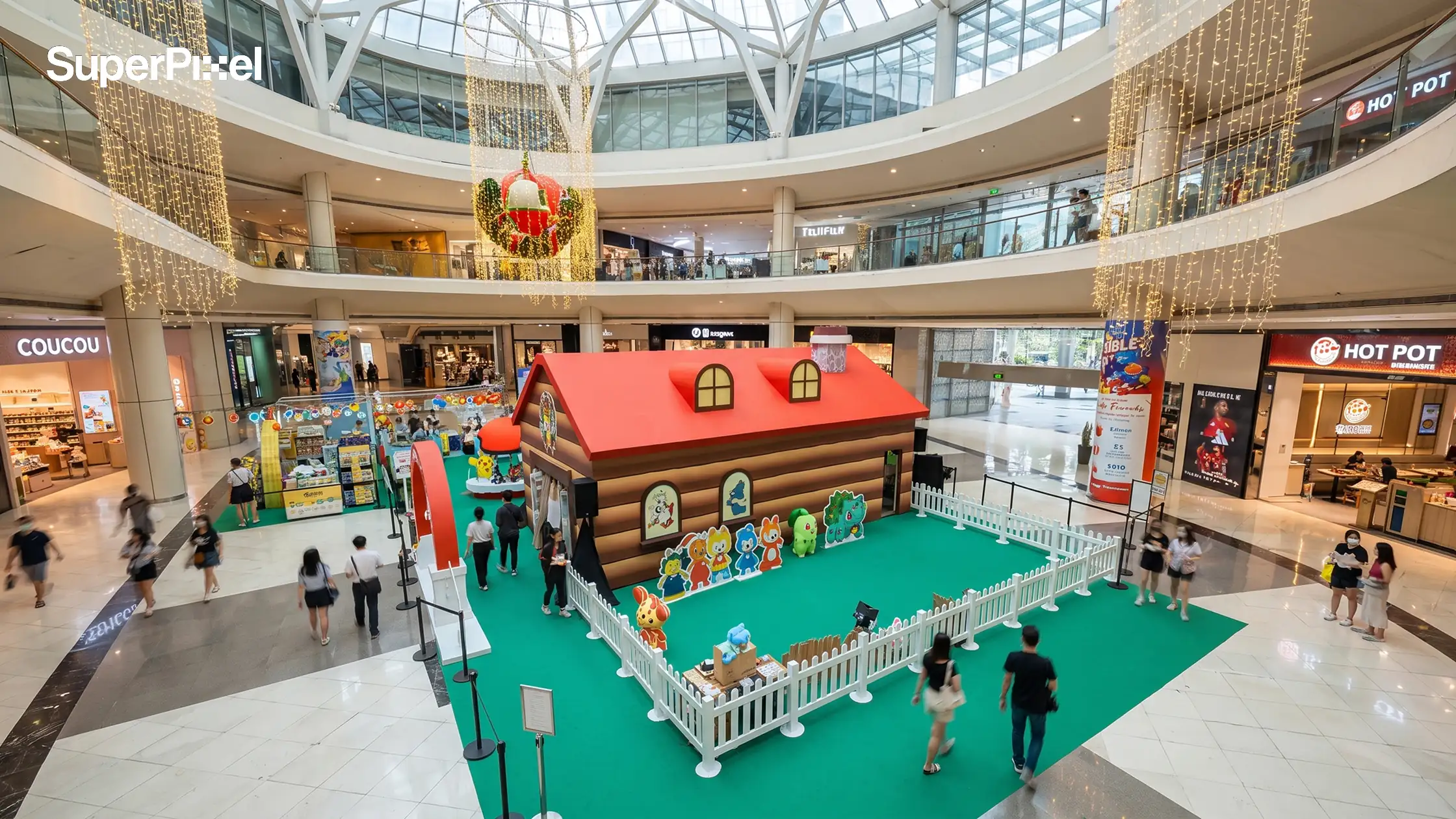
When our team creates an experience for a busy mall, we know it begins before anyone touches a screen or scans a QR code. It begins while shoppers are still walking, surrounded by storefronts, promotions, and countless other things competing for their attention.
They may notice a movement, slow down, and look for a clue about what will happen next. That brief moment tells us a great deal. Before discussing screens, sensors, or AR features, we need to know whether the experience gives people a clear reason to step closer and an easy way to join.
Sometimes, mobile AR is the right way to continue a product story through a shopper’s phone. In other situations, a shared installation creates a stronger public moment, while a well-directed motion display may communicate the idea more clearly than either. What matters is not how advanced the technology appears, but what it allows your audience to see, do, and understand within the retail environment.
AR or Interactive Installation: What Are You Actually Choosing?
Augmented reality and interactive installations are often grouped together, but they ask different things from your visitors.
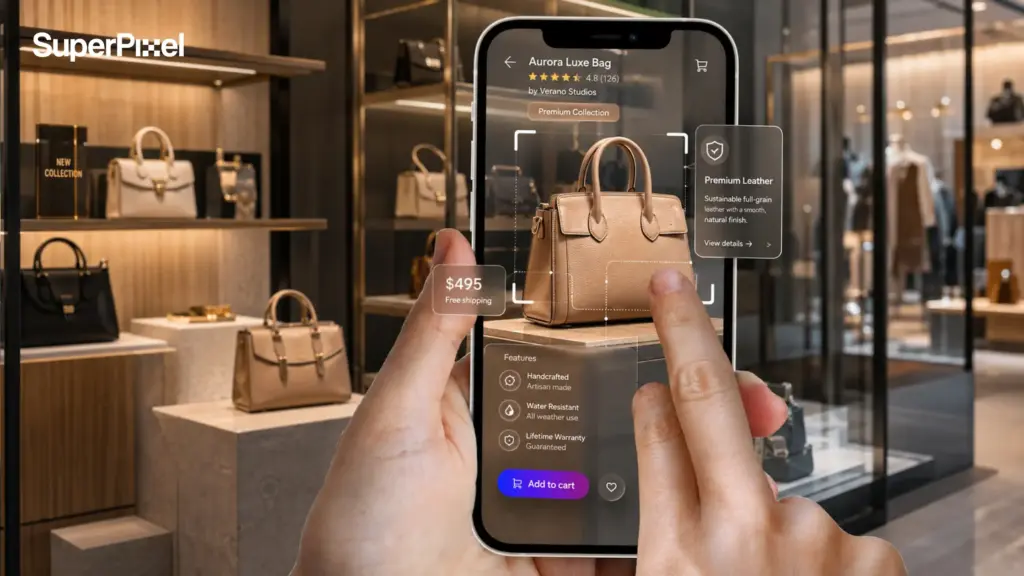
Mobile or QR-triggered AR adds a digital layer through a shopper’s phone. Your audience may scan packaging, view a virtual product, or continue the experience after leaving the mall. An interactive installation uses screens, projection, sensors, touch, or motion to make the physical space itself respond.
Mobile AR is personal and portable, but it asks the shopper to scan, load, and follow content on a device. A shared installation is tied to the venue, yet people can watch someone else participate before deciding to join.
What Makes Shoppers Stop and Participate?
We have learned that people rarely stop simply because a display looks impressive. They stop when they sense there is something for them to do.
A brighter interaction point, a character looking towards the trigger, or a pulsing area can guide the visitor without a long instruction card. Once they act, the surface should answer in a way that feels clearly connected.
This is where motion becomes signage. When feedback arrives too late or appears somewhere unexpected, visitors may assume the experience is not working, even when the technology is functioning perfectly.
What We Learned from the Pokémon Happy Holidays Activation
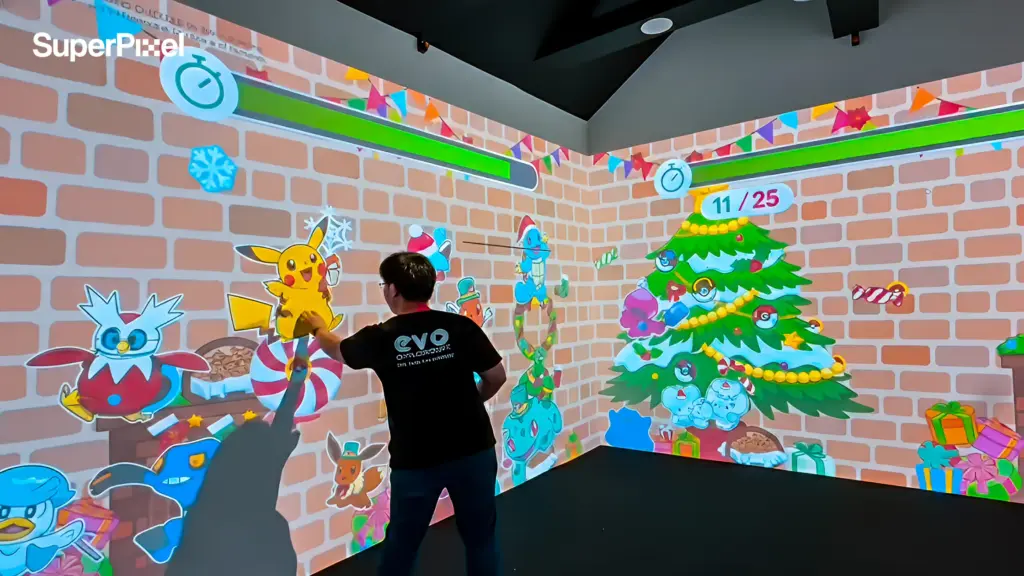
One project that shaped how we think about shared participation was the Pokémon Happy Holidays interactive wall experience at Suntec City. We created an interactive wall mapping experience called Holiday Cabin, turning a snowy room into a playful environment where visitors could hunt for their favourite Pokémon.
The experience used 3D motion graphics and real-time sensors, but our role went beyond making the technology work. We needed the interaction to feel natural for mall visitors arriving mid-walk, often with their families and without time to study instructions. The wall had to respond clearly to touch so people could understand what their action had caused.
What made the experience special was how one participant could draw others in. A child might approach first while an adult watched from behind. Another shopper could notice the wall reacting, pause, and move closer. The installation was creating an audience at the same time as it was creating a user.
For our team, the strongest lesson was not about how many features we could add. It was about making the story, animation, and interaction feel like one experience. When the wall answered touch clearly, the technology disappeared into the play.
Why Audience Flow Changes the Creative
During storyboard and interaction-flow reviews, clients often notice things that were easy to miss in the first concept. The largest character may sit on one side of the wall while the usable trigger appears somewhere else. Visitors follow the visual focus, then touch the wrong area.
This is why we consider the mall environment while the creative is still flexible. We look at entrances, sightlines, queue pressure, lighting, noise, screen height, and how much room families have to gather.
Animation helps guide that movement. Pacing can create a pause, contrast can highlight the right area, and a character’s glance can lead the eye. When everything moves at once, the activation may look lively, but your audience receives no clear direction.
Choosing Between Mobile AR and a Shared Installation
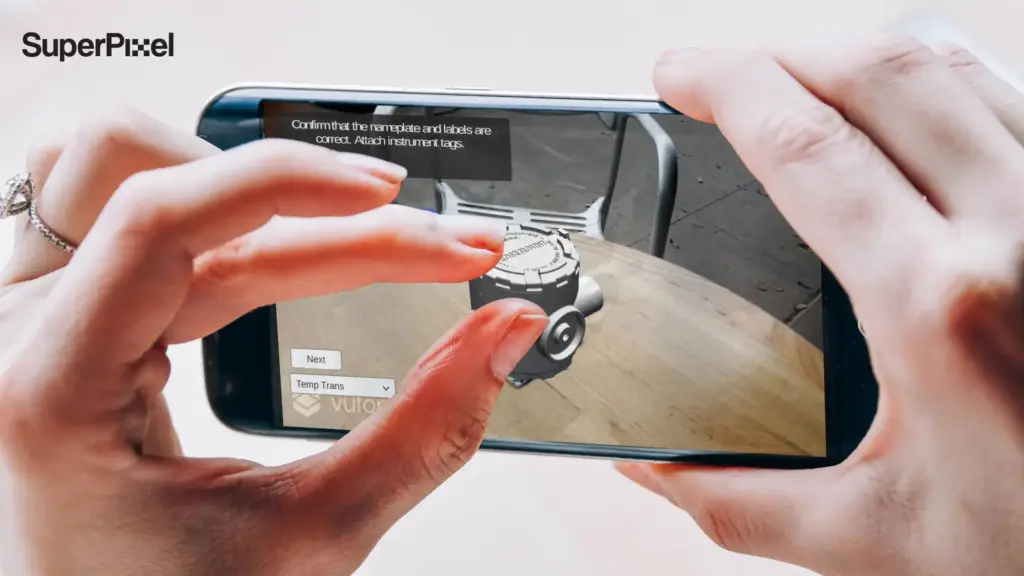
Mobile AR can work well when your campaign needs to travel beyond the venue. It can extend packaging, support a small pop-up, connect shoppers to ecommerce, or give them something to revisit later. Research in the Journal of Informatics Education and Research suggests that AR can support emotional engagement and perceived credibility in online shopping by helping people visualise products in context.
A shared installation may suit seasonal campaigns, family events, public launches, and activations that benefit from visible crowd energy. One person’s participation becomes part of the invitation for everyone around them.
We begin by looking at what each format asks your shopper to do. Mobile AR adds scanning and loading. A shared installation needs more venue and sensor planning, but it can remove the device barrier at the point of entry.
What Marketing Teams Should Decide Before Production
It is easy to fall in love with a striking creative idea, but behind the scenes, production gets wonderfully complex when the marketing team, the venue managers, and our technical crew are all approving different moving parts.
Before we even open our storyboard software, we always like to sit down with everyone and figure out who holds the final decision-making power for visitor flow, creative content, and the physical setup on-site.
Your audience and core campaign goals naturally steer everything that comes next. If we are designing a shared space for families, we need to carve out enough physical room for groups to gather and play together.
If we are leaning toward mobile AR, our focus shifts to checking venue connectivity and making sure the scanning process feels entirely effortless for shoppers. We also talk through the finer details early on, such as languages, screen formats, mall regulations, hard deadlines, and how you plan to measure success.
We love hashing all of this out through initial flow maps, rough storyboards, and early motion tests with our clients. At this stage, moving a trigger zone, trimming a clunky step, or sharpening an instruction is quick and painless.
But once our animation, sensor logic, and venue blueprints are fully locked in, tweaking even a single detail can send a ripple effect through the entire production pipeline. That is why our very first move is almost always about subtraction, clearing away the noise so the heart of your experience can shine through.
When AR Is Not the Right Answer
AR or an interactive installation may add more friction than value when people cannot stop, connectivity is unreliable, lighting interferes, or the message must be understood instantly from a distance.
Sometimes a strong motion display, product film, or simple interactive screen communicates the idea more clearly. Vogue Business has described physical retail’s appeal as discovery beyond the routine ecommerce scroll. That discovery does not always need complex technology; it needs a reason for people to care.
Adding technology to an unclear premise only makes the confusion more expensive.
Frequently Asked Questions
Is augmented reality suitable for every retail environment?
Every venue has its own pace, and AR is rarely a universal fix. We always assess whether shoppers have the physical breathing room to pause. If concourses are fast-moving or lighting and connectivity are poor, a clean motion display is far more reliable.
What is the difference between AR and an interactive installation?
Mobile AR relies on the visitor’s personal device, extending the campaign onto a phone screen or product packaging. An interactive installation transforms the physical venue into a shared public playground through sensors and projection.
How can retailers measure engagement during an activation?
We look beyond vanity metrics to observe genuine human behaviour. Are groups lingering to watch? Do visitors complete the interaction loop? Tracking dwell times alongside these natural reactions reveals true audience connection.
What should we prepare before approaching a production studio?
Share your core campaign objectives, target audience details, venue floor plans, and delivery deadlines. Most importantly, define the very first action you want visitors to take when they approach your space.
Discuss Your Retail Activation
We’d love to hear all about what you’re dreaming up for your next retail space. Tell us about your campaign goals, who you’re trying to reach, the mall or venue environment you’re working with, and any early visual ideas you have in mind.
Whether you need a lively interactive installation that stops crowds in their tracks, mobile AR, or something wonderfully simple, our team is here to help you figure out the best path forward. Let’s create an experience your visitors will genuinely love stepping into!