


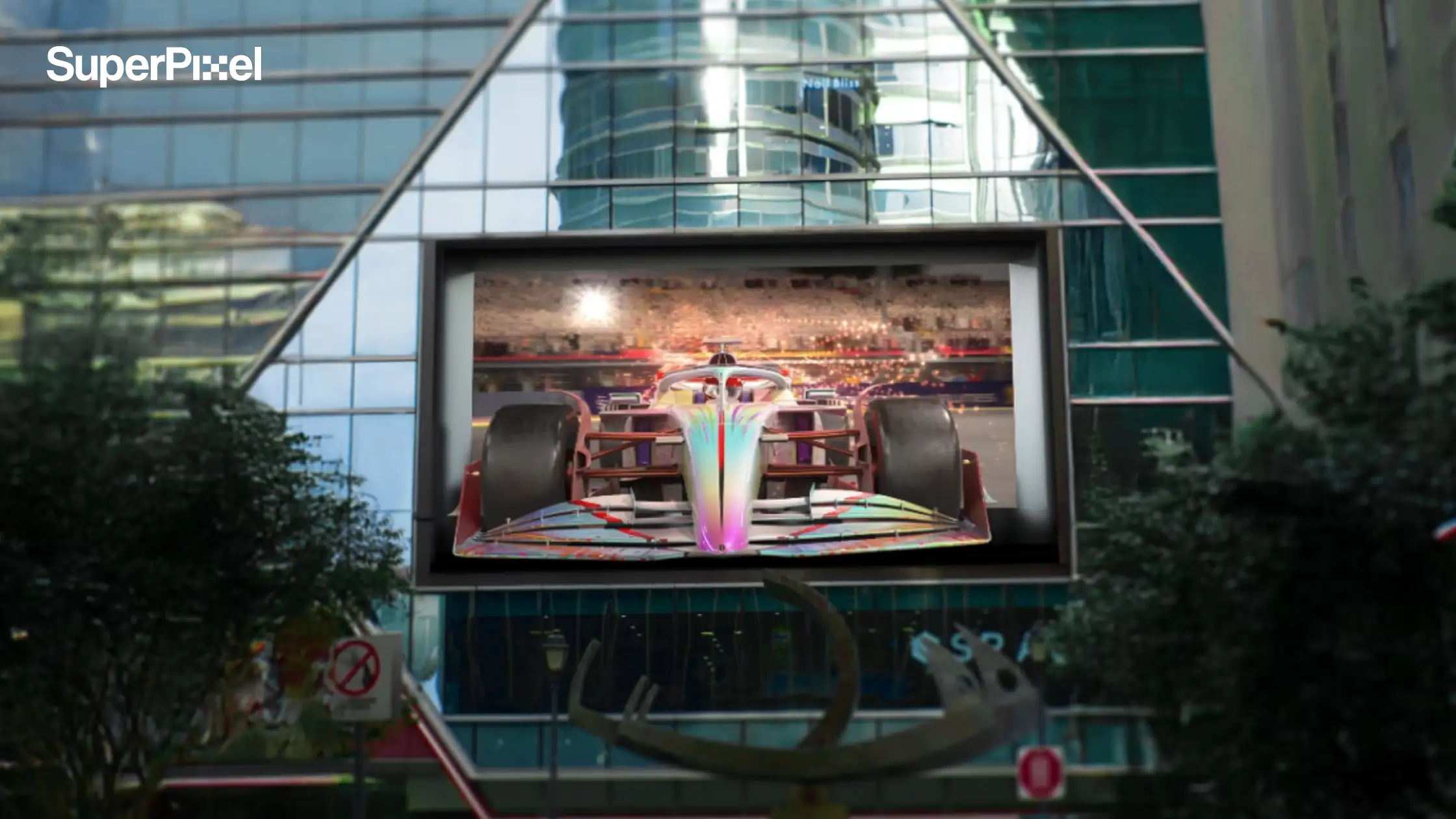
3D billboard advertising can make a flat digital screen appear to hold depth, movement and scale. A product may seem to extend beyond the frame, a character may appear to move through a corner screen, or a visual world may feel larger than the surface it sits on.
But the strongest 3D billboard is not built around the idea of making something “pop out”.
It is built around one visual idea that people can understand quickly, even when they are walking through a mall, passing a street corner, waiting for transport or moving through an event space.
For brands, agencies and campaign teams, the question is not only whether a 3D billboard looks impressive. It is whether the format helps make the campaign message clearer, more visual and easier to remember.
What Is 3D Billboard Advertising?
3D billboard advertising usually refers to digital out-of-home advertising that uses anamorphic perspective to create the illusion of depth on a flat LED screen.
The screen itself is still flat. The three-dimensional effect comes from how the content is designed, modelled and animated for a particular viewing position.
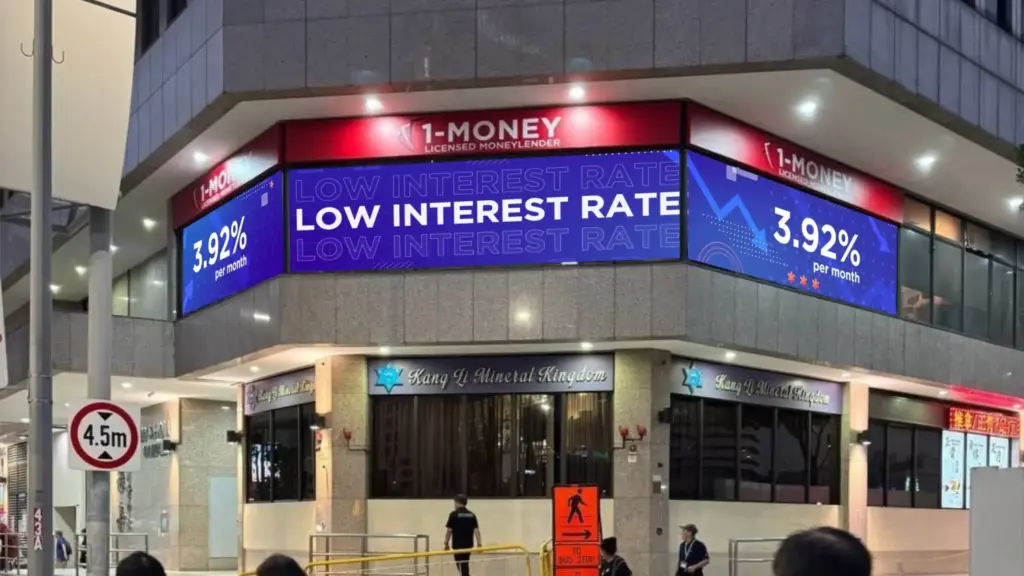
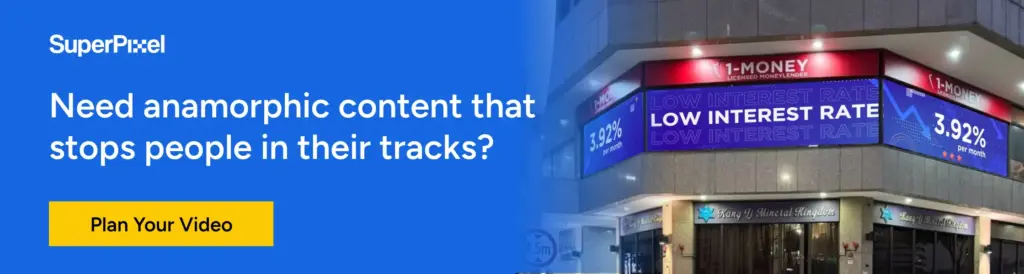
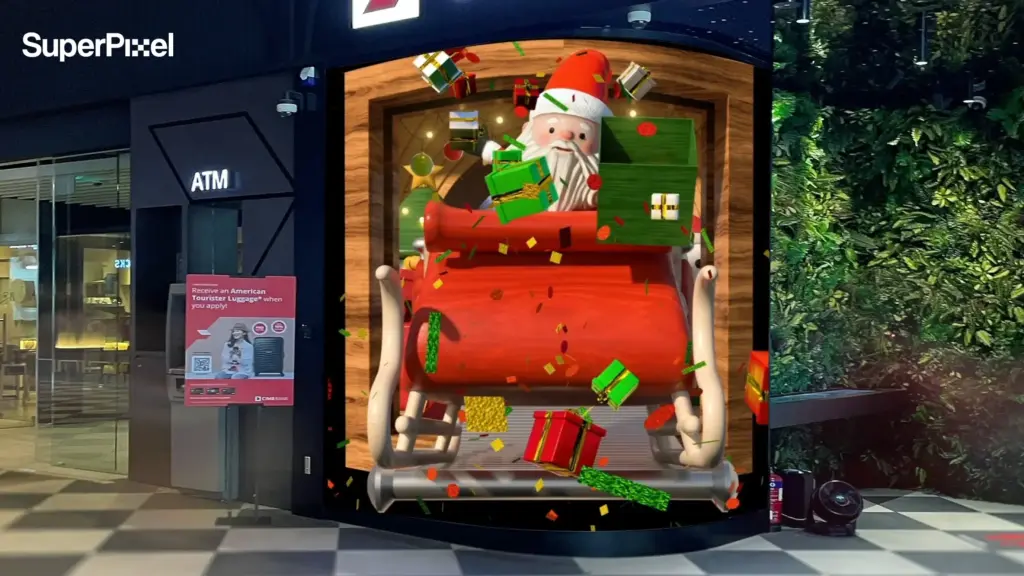
A well-built anamorphic billboard can make it look as though an object is sitting inside the screen, emerging from it or interacting with the building’s architecture. This is especially common on corner screens, where two connected surfaces create the feeling of a deeper visual space.
Most 3D digital billboards do not require special glasses or a specialised “3D” display. The effect is created through animation, forced perspective and screen-aware composition.
How Does Anamorphic Perspective Work?
An anamorphic billboard works by designing the animation around a chosen viewing angle.
Rather than placing a standard video onto a screen, the production team treats the screen as part of the visual composition. Object scale, shadows, camera movement and perspective are adjusted so the animation appears dimensional from the main viewing position.
The Illusion Is Built for a Specific Viewpoint
An anamorphic billboard usually looks most convincing from one side of a plaza, pavement or public space.
From other angles, the artwork may appear stretched or distorted. That is expected. The aim is not to create a perfect 3D effect from every direction, but to make it work where most viewers are likely to stand or pass by.
This is why screen dimensions, location, viewing distance and audience flow need to be understood before animation begins.
Perspective Creates the Depth
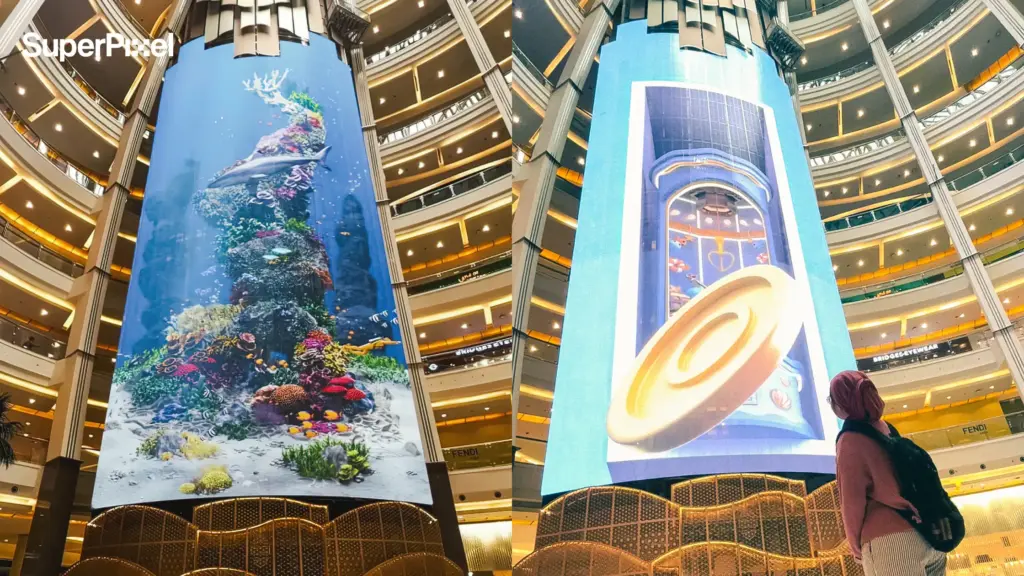
A 3D animation team uses a virtual camera, object scale, lighting and motion to make a flat screen appear deeper than it is.
A product might seem to rise from inside the display, move towards the screen edge, or interact with a corner LED layout. The effect works when the movement, angles and shadows all support the same visual reading.
The Site Shapes the Animation
Screen shape, surrounding architecture, ambient light and viewing time all affect the final design.
A large corner screen may support a deeper visual space, while a roadside display may need a simpler animation that reads quickly. Large-format screen content should be planned around the real location, not only a desktop preview.
How SuperPixel Approaches These Projects
SuperPixel helps shape 3D billboard ideas around the screen, viewing angle and the visual moment people need to understand.
For Dreame’s pop-up outside The Heeren, Singapore, we created a location-shot FOOH (Fake-Out-Of-Home) animation that blended a digital product reveal into the real setting. Perspective, motion and on-site composition helped the illusion feel connected to the physical space around it.
The format was different from an anamorphic billboard, but the same questions came first: what is the one idea, and what viewpoint is it built for. We develop the core concept, plan the reveal and perspective, then create screen-ready 3D animation that works with the display, location and audience flow.
Why Brands Use 3D Billboard Advertising
3D billboard advertising can help turn a campaign idea into a clearer visual moment in a public space. Perspective, scale and motion can do more than make a screen look dimensional. They can show how a product works, reveal an idea step by step, or make an abstract message easier to picture.
It tends to suit:
- Product launches with a feature, shape or mechanism worth showing physically
- Retail and mall activations that need a focal visual point in a shared space
- Characters or mascots that can interact with the screen edge or architecture
- Property and lifestyle campaigns that need to show a space or setting rather than describe it
- Public-facing messages that need to be understood quickly, without supporting copy
- Complex services or concepts that benefit from a simple visual metaphor rather than an explanation
The format works best when it supports one clear campaign idea, rather than trying to make the 3D effect do all the work on its own.
What Makes a 3D Billboard Effective?
The most effective 3D billboards usually share a few practical qualities.
One clear visual idea
A passer-by should be able to understand the main idea in a few seconds. That might be:
- a product breaking through a screen
- a character interacting with the screen edge
- a space opening up inside the billboard
- a transformation from one state to another
- an object appearing much larger than expected
Trying to communicate several messages, product benefits and campaign lines in one short loop often weakens the effect. A strong 3D billboard gives the viewer one clear visual answer before adding supporting information.
A simple reveal structure
The animation needs a beginning, a reveal and a clear end point. The reveal should not happen too late. People may only see part of the playback loop, so the core idea needs to be understandable even when viewers join halfway through.
A useful approach is:
- Establish the product, object or visual world.
- Create a clear shift or reveal.
- Hold the strongest visual moment long enough to register.
- Show the brand or message in a clean, readable way.
Perspective that matches the screen
Anamorphic advertising is not a standard social media animation enlarged for a billboard.
The virtual camera needs to match the intended screen angle. The 3D assets, typography, motion paths and shadows must all work with the actual display geometry.
This is especially important for L-shaped screens, curved displays and unusual LED layouts.
Motion with enough time to read
Fast movement can look exciting in a preview, but on a large public screen it may become difficult to follow.
The animation should give viewers enough time to understand what they are seeing. The visual moment needs room to land before the next action begins.
This does not mean every billboard should be slow. It means the pacing should match the environment and audience behaviour.
Common Mistakes to Avoid in 3D Billboard Advertising
- Making the effect the whole idea
A product appearing outside the screen should still support the campaign message, not exist only as a visual trick. - Designing before confirming the site
Screen shape, viewing angle and location affect the animation. A concept built for a corner LED screen may not work on a flat display. - Adding too much copy
Keep text short. The animation should carry the main idea, with only essential branding or supporting information. - Overcomplicating the reveal
Too many camera moves, transformations or moving elements can make the screen harder to follow. One strong reveal is usually enough. - Ignoring where people will stand
An anamorphic billboard is designed for a specific viewpoint. If the audience cannot naturally see it from that angle, the illusion may not read clearly.
A short concept stage can help test whether the idea suits the screen before detailed animation begins.
What Brands Should Prepare Before Starting
A clear brief helps the creative and production process move with fewer surprises. Before starting a 3D billboard project, prepare five essentials:
- Campaign objective
Define what the screen needs to do: introduce a product, support a launch, explain a service, or create a focal point for an activation. - One core message
Summarise the idea in one sentence. For example: “Show how the product makes an everyday task quicker.” This gives the animation team a stronger starting point than simply asking for something that looks 3D. - Screen and site details
Share screen specifications, location photos, viewing angles, audience flow and operator guidelines. These details shape perspective, framing and timing. - Brand and campaign assets
Provide product files, packaging, campaign lines, brand guidelines, photography and character references. This helps determine what can be adapted and what needs to be created. - A realistic production window
Allow time for concept development, styleframes, animation, technical testing, approvals and final screen delivery. The timeline will depend on the complexity of the idea, available assets and screen requirements.
Read more: Social Media Animation: Your Best Social Media Strategy
When Is 3D Billboard Advertising a Good Fit?
3D billboard advertising can be a strong fit when the campaign has a simple visual idea that benefits from depth, scale or motion. It is particularly suitable for:
- product launches
- entertainment and character-led campaigns
- retail and mall activations
- property and placemaking campaigns
- technology products with visible features or functions
- automotive, travel and lifestyle campaigns
- public awareness messages with a clear visual metaphor
- event screens and large-format digital installations
It may also work when the campaign has an existing visual world that can expand naturally into a larger screen experience.
Before committing to production, ask one question: would the idea still make sense if people only watched five seconds of it? If the answer is yes, the format may be worth exploring.
Is a Five-Second Test Enough?
Before committing to production, ask one question: would the idea still make sense if people only watched five seconds of it?
If the answer is yes, the concept has a good chance of translating well to a public screen, whether that’s a product launch, a retail activation, a character-led moment or a public awareness message with a clear visual metaphor.
If the answer is no, the idea may need one more round of simplification before it goes anywhere near a screen brief.
Planning a 3D Billboard or Anamorphic Screen Campaign?
A product launch, campaign idea, retail activation or public-facing message may not need a bigger visual. It may need a clearer one.
SuperPixel works with brands, agencies, event teams, mall operators and campaign planners to shape 3D animation, anamorphic billboard concepts and large-format screen content around the message, environment and intended audience.
Start with the visual idea, the screen location and the moment people need to understand. The animation can follow from there.