You’ve been asked to roll out a new training initiative across departments. Deadlines are tight. Attention spans are shorter.
And the last live-action training video you produced looked great but didn’t quite land the way you hoped.
As a decision-maker, you’re not just choosing a vendor. You’re choosing a format that will shape how your people learn, retain, and apply knowledge.
The question isn’t “animation or live action?” It’s: When does animation make all the difference in corporate training and when should you still pick live action?
Key takeaways
- Animation is often more cost effective and scalable for complex concepts and updates.
- Live action works best when human emotion, body language, and real environments matter.
- Strong corporate training videos start with the right target audience and learning goal.
- Pre production and post production discipline matter more than format alone.
- The right video production agency will guide you through a decision framework that not push a single solution.

Corporate training videos: Why Companies Keep Using Them
Corporate training videos aren’t just a trend. They’ve become one of the most reliable tools companies use to scale knowledge, standardise processes, and keep teams aligned.
1. Interactive Learning That Drives Action
Interactive elements in training videos include branching scenarios, clickable quizzes, and decision-making tasks. Instead of passively watching, employees actively participate, which makes the learning experience more engaging and practical.
2. Tailored Content That Improves Performance
Specialized training video production companies create tailored content to improve employee performance and retention. When training is aligned with real business goals, it moves beyond information-sharing and starts shaping real behaviour.
3. Productivity Gains Up to 50%
Some companies see up to a 50% improvement in productivity due to specialized training videos. Clear, structured visual guidance reduces errors and helps teams execute tasks faster and more confidently.
4. Training Time Reduced by 40–60%
Training videos can reduce employee training time by 40–60% compared to traditional methods. Employees can learn at their own pace and revisit content anytime, without repeating long in-person sessions.
5. Information Retention Up to 65%
Visual content can boost information retention to 65%. When people see processes and concepts illustrated clearly, they remember them longer and apply them more accurately.
6. Stronger Onboarding Experience
High-quality video content enhances onboarding by clearly communicating procedures and best practices. A well-structured onboarding video builds confidence early and creates consistent expectations across teams.
7. Flexible Formats for Different Needs
Diverse formats in training video production include live-action, 2D/3D animation, and screencasts. Each format serves a different purpose, whether it’s building emotional connection or simplifying complex systems.
8. Engaging Visuals That Support Learning
Corporate training videos should be well-produced with engaging graphics to assist knowledge retention. Thoughtful design and pacing guide attention and prevent information overload.
9. Structured Production for Better Results
The production process typically includes thorough pre-production, scriptwriting, and post-production. Strong planning and polished execution are what turn a simple video into an effective learning tool.
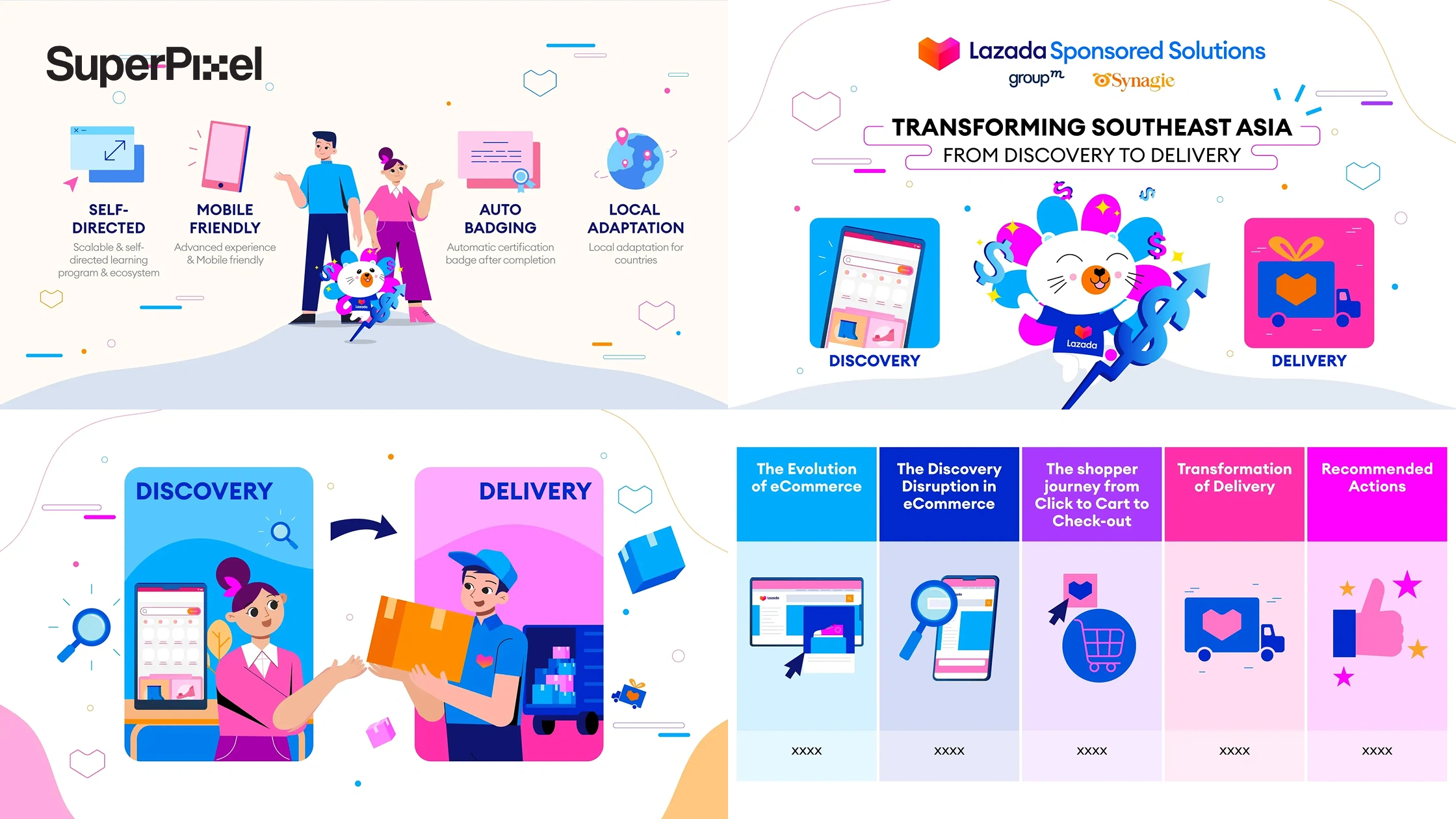
Target audience: When Animation Beats Live Action
Before choosing a format, start with your target audience.
Ask:
- Are they desk-based knowledge workers?
- Field technicians?
- Healthcare professionals?
- Retail frontline staff?
Different audiences process information differently. Animation often beats live action when:
1. You’re explaining complex concepts
Technical processes, healthcare policies, financial systems—these aren’t always visible in the real world. Animation simplifies abstract ideas into digestible visuals. Instead of filming someone describing a process, you show it unfolding visually.
2. You need consistency across regions
Animated videos avoid wardrobe changes, location issues, and talent continuity. For global corporate training, that stability reduces reshoots and keeps turnaround time predictable.
3. You expect frequent updates
Live action reshoots can be costly. Animation allows modular editing in post production, swap out a section without reassembling the entire crew.
4. You want tone control
Animation lets you calibrate tone carefully. Serious but not intimidating. Friendly but still professional.
That doesn’t mean live action has no place. In fact, corporate photography and filmed interviews are powerful when authenticity and human presence are central.
The key is alignment with learning goals.
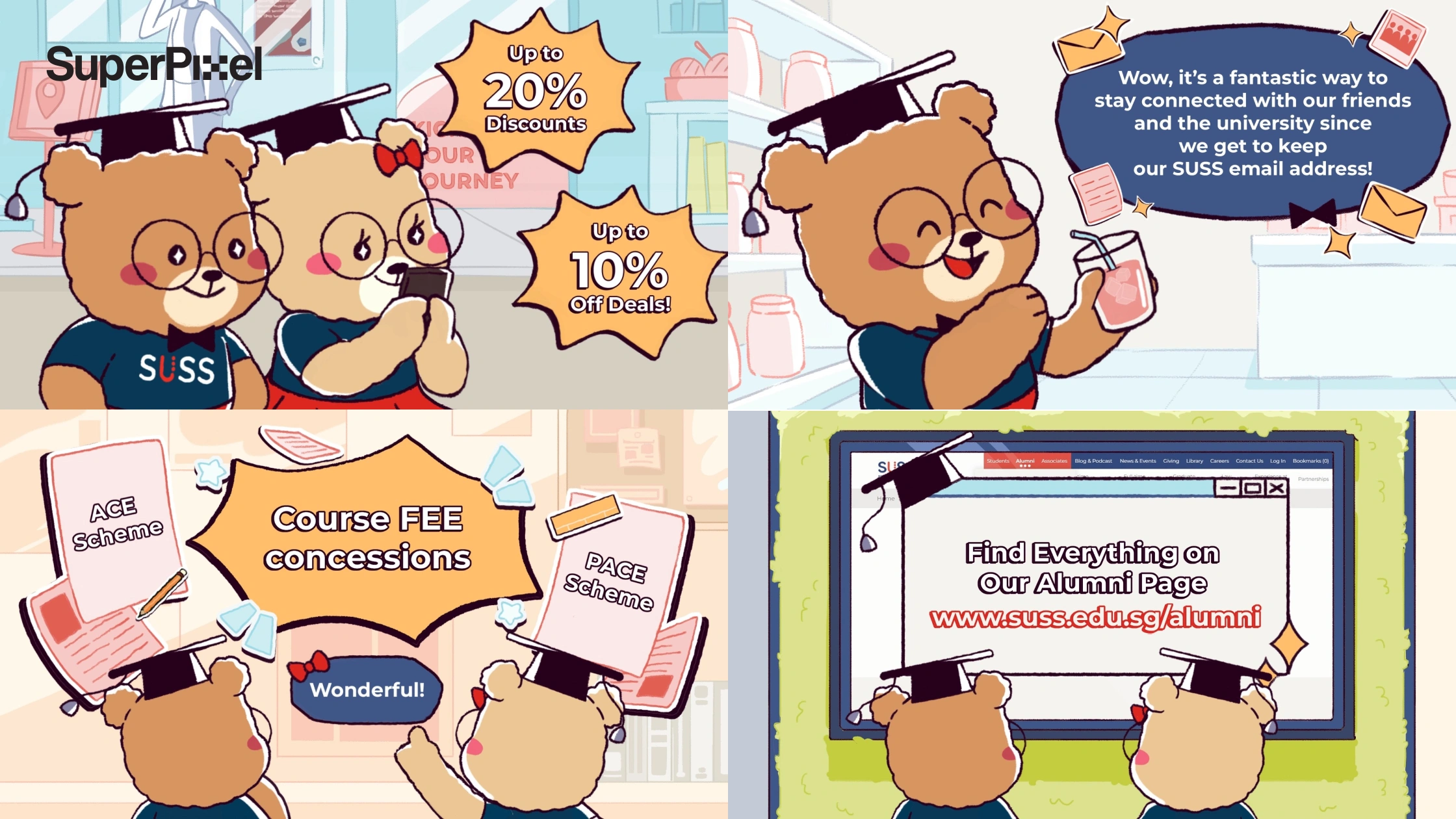
4 Ways to Produce Training Videos in 2026
AI-first (fastest)
Using AI technology, companies can create professional-quality training videos in just a few minutes by selecting templates and adding scripts. AI-generated training videos can be updated quickly, ensuring that the content remains relevant and accurate.
Colossyan utilizes generative AI to help corporate teams create training content efficiently, allowing for quick video generation without the need for traditional production resources.
Agency-led (end-to-end)
Professional video production agencies provide full-service, end-to-end approaches including needs analysis and post-production. A professional firm should provide a clear project timeline, typically 6–8 weeks.
Hybrid / specialist teams
NextThought provides access to subject matter experts who can star in training videos, enhancing the credibility of the content produced. NextThought is known for its quick turnarounds in delivering corporate training videos, typically taking 4 to 12 weeks depending on the project’s complexity.
Lean builds
Building an in-house video production team can provide more control over the video creation process.
Working with freelancers and contractors can allow for the creation of effective, high-quality videos if managed properly. Film students can be a more affordable option for video production, providing decent results depending on their experience level.
If you’re comparing vendors, it’s common to see the best-fit providers offer variety rather than one fixed format. Top providers for 2026 often offer a mix of live-action, 2D/3D animation, and interactive formats.

Corporate video production: The Formats You’ll See in 2026
Training video production is evolving quickly. In 2026 and beyond, you’ll likely see a mix of:
- 2D animated videos
- 3D product demos and demo videos
- Live-action scenario training
- Screencast tutorials
- Interactive branching modules
- AI-generated avatar explainers
Modern video production services blend formats. A single corporate video may open with live action, transition into animated explainer videos for clarity, then end with a real-world case example.
AI tools are also entering corporate training. Some platforms allow teams to produce scenario-based modules quickly. That said, AI doesn’t replace strategy, strong pre production, or creative storytelling. It assists—it doesn’t replace expertise.
A strong video production agency doesn’t just produce. They guide you through format decisions based on your knowledge gaps and learning objectives.
e learning content: How Video Improves Time, Retention, and Performance
Why does video work so well in corporate training?
Visual information is processed faster than text. When employees see processes mapped visually, retention increases. Many organizations report:
- Reduced onboarding time
- Fewer compliance errors
- Higher productivity after structured corporate training
Animation amplifies these benefits by turning abstract rules into visible sequences.
For example, when SuperPixel worked on the AIA Medishield Life Plan Explainer, the challenge was simplifying insurance coverage details into understandable segments. Insurance policies are dense. Text-heavy slides wouldn’t have worked.
Through animated explainer videos, complex concepts were visualized clearly. The result? Information that customers and internal teams could actually understand and revisit. That’s the power of structured video services aligned with learning goals.
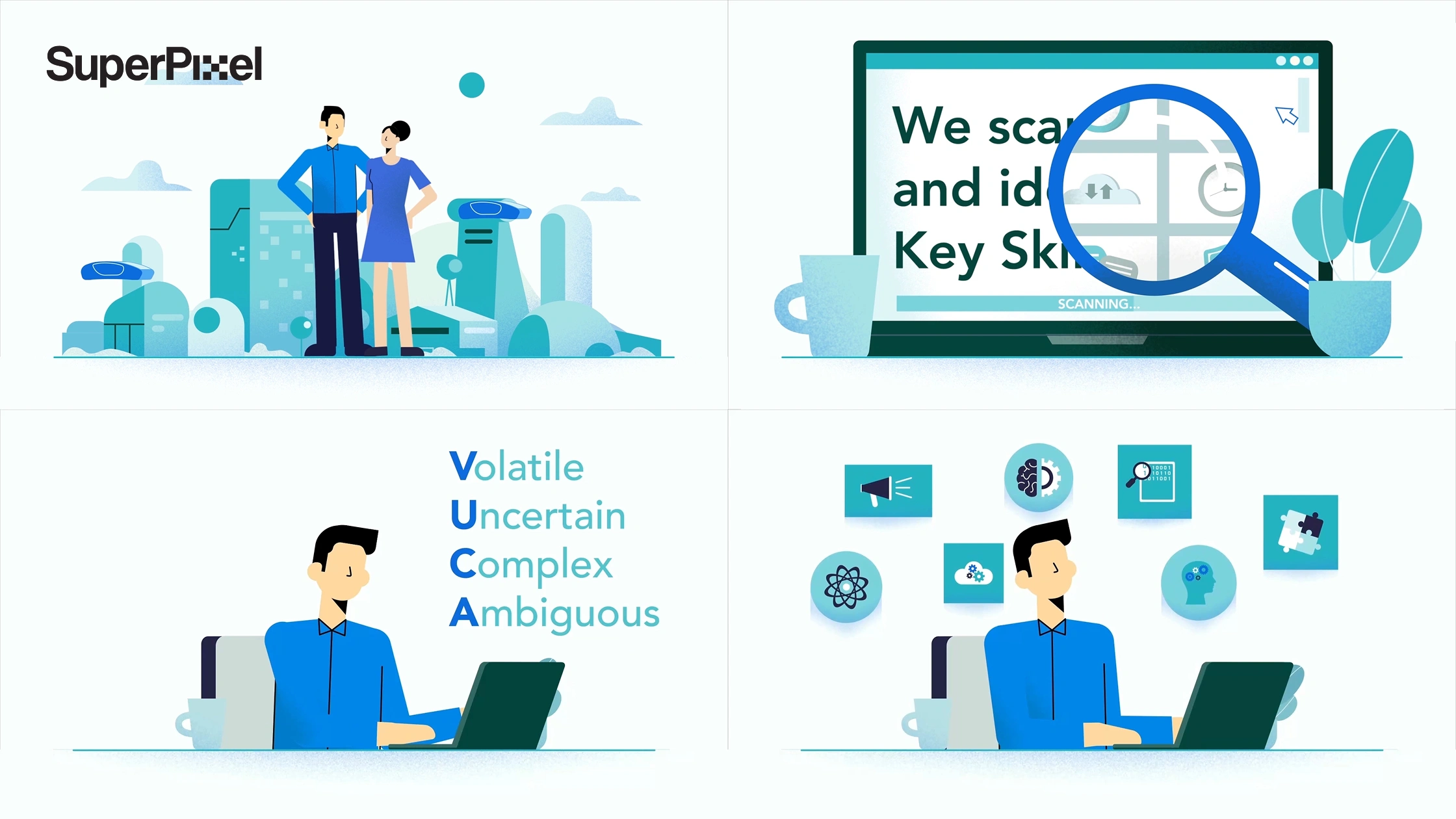
Content marketing: Where Training Videos Also Help
Corporate training videos aren’t limited to HR.
The same video content can support:
- Internal onboarding
- Partner enablement
- Customer education
- Social media content
Training content can evolve into marketing videos or brand videos with small edits. One well-planned video project serves multiple functions.
This is where content marketing intersects with corporate training. A well-designed module can be edited into product videos or demo videos for external audiences.
When done well, training content strengthens both employee capability and brand perception.
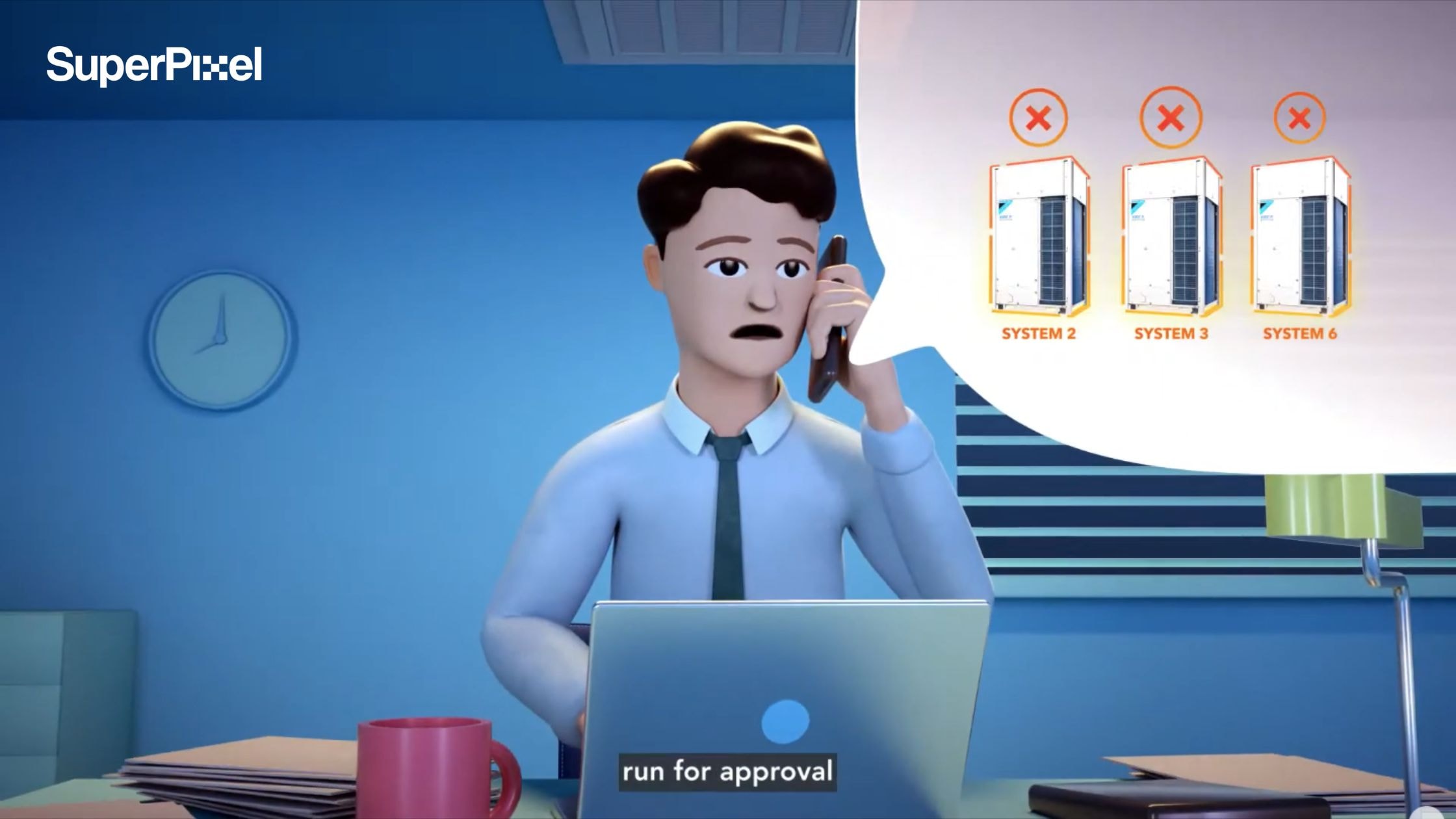
Pre production: What a Real Training Video Process Includes
No matter the format, strong pre production determines quality work.
Professional corporate video production typically includes:
- Needs analysis
- Script development
- Storyboarding
- Visual style alignment
- Stakeholder review
- Clear timelines
Rushing pre production leads to expensive revisions in post production. Animation especially requires clarity before design begins.
A seasoned team will work closely with you, aligning on brand values, audience, and measurable goals before cameras roll or before animation starts.
Post production: Why Quality Work Shows Up in the Final Learning Experience
Post production is where training videos either feel polished or rushed.
Strong editing, sound design, pacing, and motion graphics elevate high quality videos. Clean transitions and thoughtful visual hierarchy reduce cognitive load.
For animation, post production includes:
- Voiceover recording
- Motion refinement
- Subtitle integration
- Localization
- Audio mastering
The difference between average and high quality content often lies in this phase.
It’s also where seamless collaboration between clients and production teams matters. Clear feedback loops shorten turnaround time and protect your track record.
Quality work: What “Good” Looks Like (Length, Tone, Rewatchability)
Good corporate training videos are typically 3–5 minutes per module. Long enough to explain. Short enough to retain attention.
Quality work means:
- Clear learning objective
- Engaging pacing
- Appropriate tone
- Designed for replay
- Aligned with brand values
Animation often excels in rewatchability. Employees are more willing to replay concise animated explainer videos than lengthy filmed lectures.
Look at client feedback. Look at completed projects. A strong portfolio and proven track record across various industries signals capability.
When Animation Makes Complex Topics Easier
Some subjects demand animation.
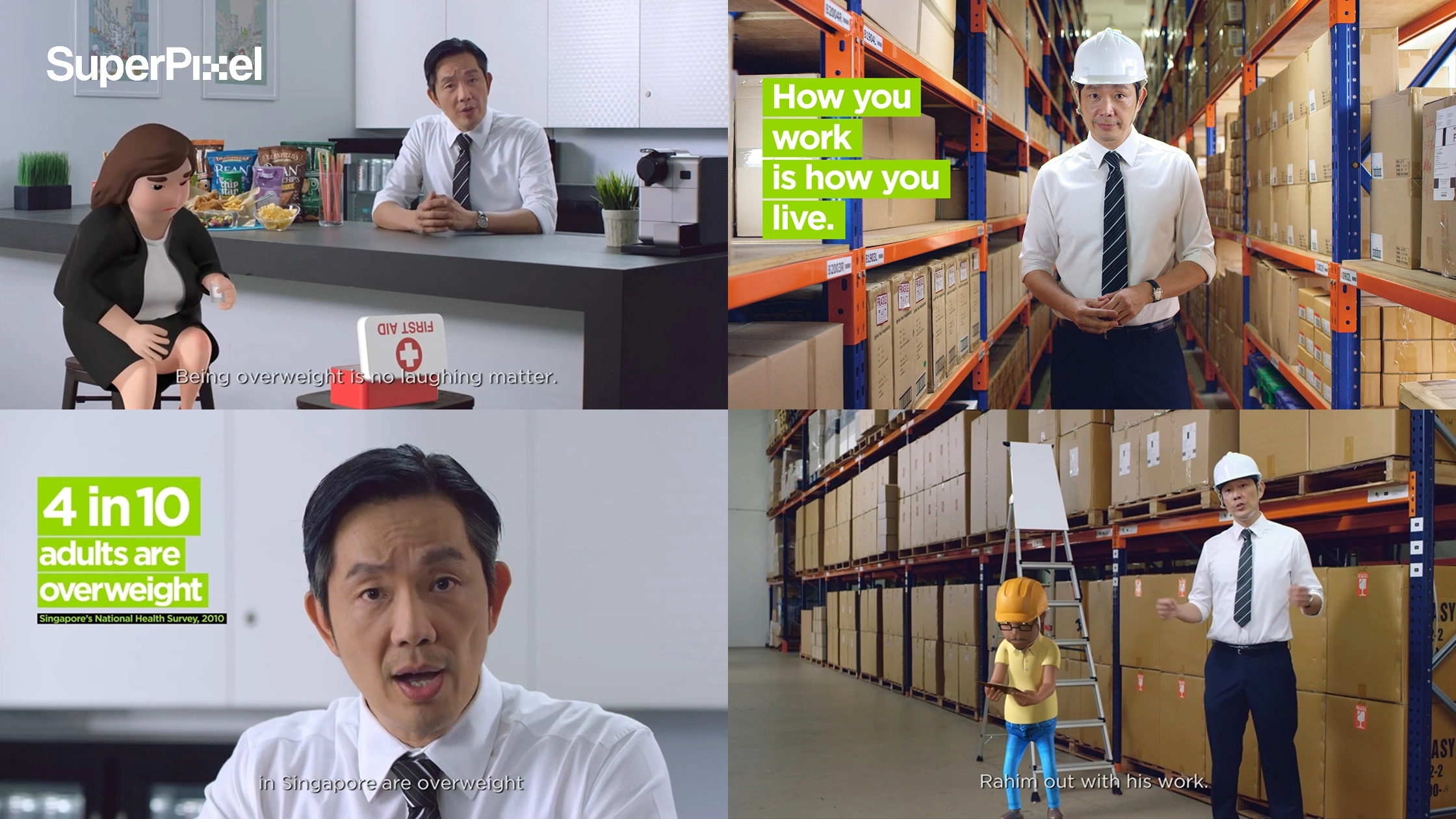
Healthcare is a prime example. When SuperPixel collaborated on the Health Promotion Board “Antibiotic Boy” Campaign, the goal was behavior change. Antibiotic misuse is a serious public health issue.
Live action could show people taking medicine but it couldn’t visualize bacteria resistance effectively. Animation simplified complex medical ideas into relatable characters and scenarios. It made science understandable without overwhelming the audience.
For corporate teams in healthcare, finance, or tech, this is critical. Complex concepts require clarity, not clutter.
Corporate video: Your Build Options (In-House, Freelancers, Students, Agencies)
When planning a corporate video project, you typically have four routes:
In-house team
Greater control. Higher fixed costs. Requires internal expertise.
Freelancers
Flexible. Requires strong project management from your side.
Students
Lower cost. Quality may vary. Limited track record.
Professional video production agency
End-to-end services: pre production, filming, animation, post production. Strong portfolio. Proven track record across international brands and various sectors.
If your training program affects compliance, safety, or brand perception, quality work matters.
A production house with expertise in corporate video production will assist beyond filming that helping you decide format, pacing, and distribution strategy, like SuperPixel.
When Live Action Is Still the Right Call
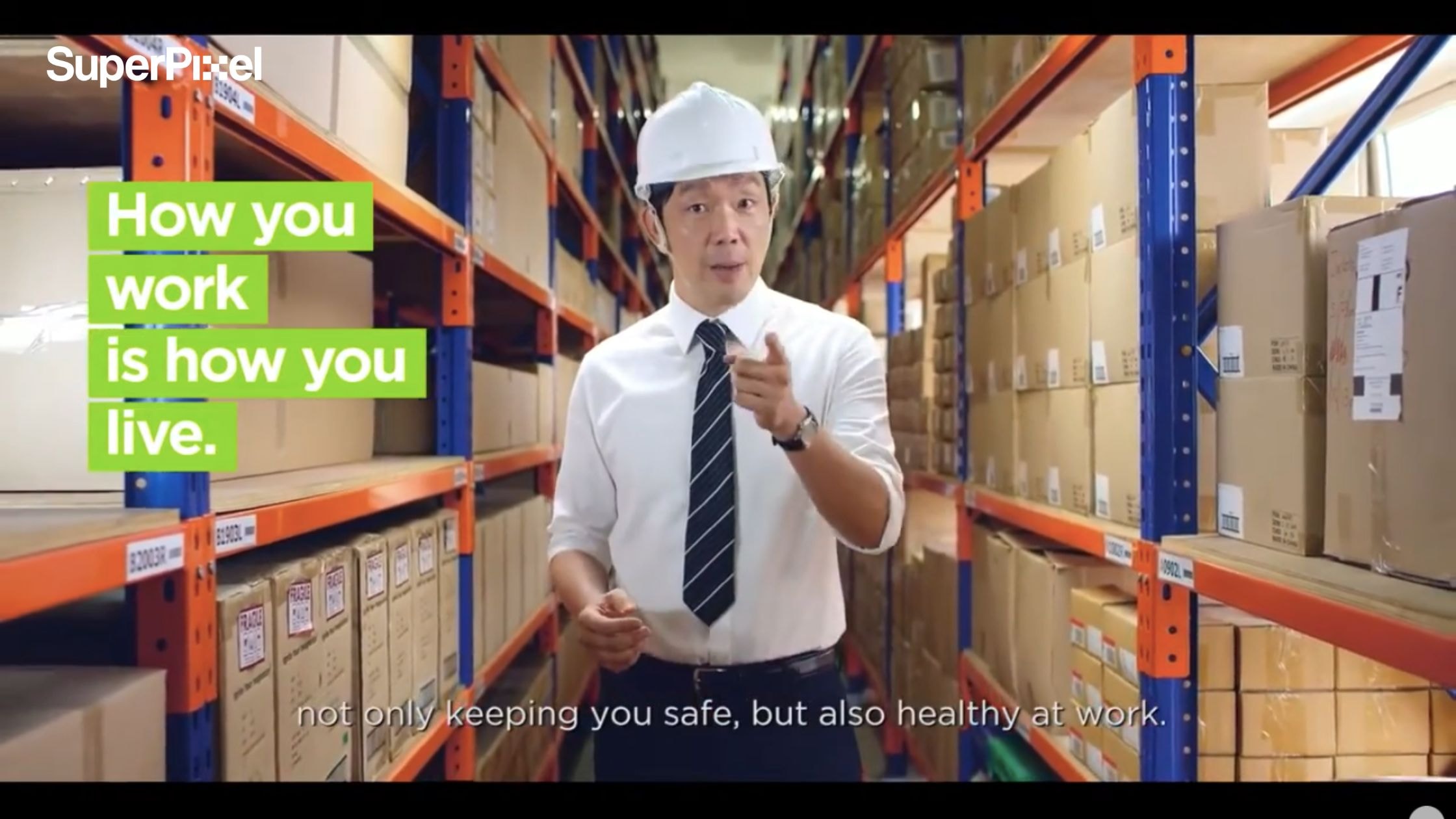
Live action shines when:
- Emotional storytelling matters
- You need real employee testimonials
- Physical product handling is central
- Authentic environment builds trust
Corporate photography and filmed interviews capture genuine reactions. For leadership messages or culture-building corporate training, seeing real faces builds connection.
Animation complements live action but doesn’t always replace it.
Sometimes, the best solution blends both.
AI Video Tools vs Traditional Production
AI video tools can generate training modules quickly. They reduce cost and time for simple updates. Some tools translate content across 70+ languages instantly.
For procedural updates or quick internal announcements, this can be cost effective.
But AI struggles with:
- Nuanced creative storytelling
- Emotional resonance
- Brand alignment
- High quality content that reflects brand values
Traditional corporate video production still leads when clarity, depth, and impact matter.
The decision framework is simple:
| Training Goal | Best Format |
|---|---|
| Compliance update | AI or simple animation |
| Technical explanation | Animation |
| Leadership message | Live action |
| Behavior change campaign | Animation or hybrid |
| Culture building | Live action + animated segments |
Training Video Production Companies: Timeline Expectations and Planning
A typical professional timeline for corporate training videos ranges from 6–8 weeks.
This includes:
- Discovery
- Scriptwriting
- Pre production
- Production
- Post production
- Review cycles
Shorter turnaround time is possible for smaller projects. Larger programs across various industries require longer planning.
Choose partners with a strong portfolio, clear communication, and a track record of delivering quality work on schedule.
Who Does What Well (Examples)
Different production companies bring different strengths.
Some focus heavily on live-action filming and corporate photography. Others specialize in animated explainer videos and e learning content.
In singapore, production houses serve clients across various sectors—from healthcare to tech to finance. When evaluating partners, review:
- Completed projects
- Expertise in your industry
- Ability to work closely with internal stakeholders
- Client feedback
- Depth of services (from marketing videos to product videos)
The right partners feel like an extension of your team.
The Decision Framework: When Animation Beats Live Action
In corporate training, format isn’t about preference. It’s about alignment with your audience, your learning goals, and your brand values.
At SuperPixel, we focus on helping decision-makers make informed choices through 2D animation, 3D visuals, or blended video production services. Because in training, the right format can make all the difference.
If you’re exploring your next [internal link: contact us] initiative, start with the question that matters most:
What does your audience need to understand and what’s the clearest way to show it?