After running animation studios across three countries for more than a decade, one truth keeps resurfacing: healthcare communication doesn’t fail because it’s complex that it fails because it’s unclear.
From Vancouver to Singapore, we’ve worked with healthcare brands, insurers, and public institutions facing the same challenge. Medical terminology, policies, and procedures are often accurate but inaccessible. And in healthcare, when people don’t understand, they don’t trust.
This is where healthcare animation services play a critical role.
At SuperPixel, we use animation not as decoration, but as a strategic communication tool theone that turns complexity into clarity, and information into understanding.
Key takeaways:
- Animation transforms complicated medical content into something that is easy to understand.
- Visual storytelling dramatically boosts patient recall compared to text-based materials alone.
- Strategic animation produces measurable business outcomes, like higher conversions and fewer customer support calls.
- A studio’s clinical fluency and understanding of compliance are more critical than a stylish portfolio.
- The true return on investment in healthcare animation is measured in patient comprehension and trust, not just vanity metrics.
Introduction to Medical Animation
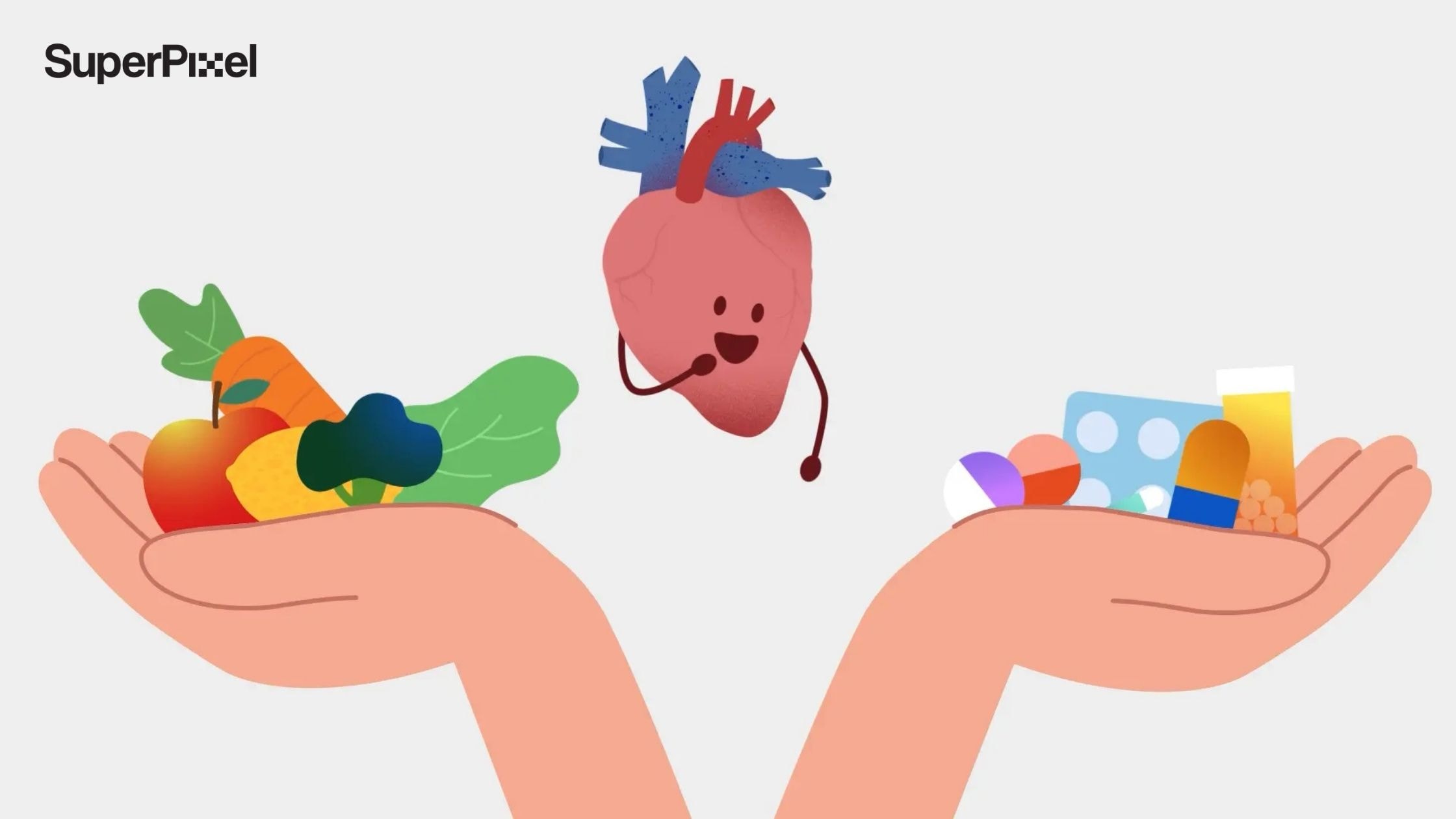
Medical animation is reshaping how healthcare organizations communicate. By combining accurate medical information with clear visual storytelling, animation simplifies complex topics such as anatomy, treatments, insurance policies, and biological processes.
Healthcare animation services are now widely used for:
- Patient education
- Medical and pharma marketing
- Internal training for healthcare professionals
- Public health awareness campaigns
Whether it’s explaining how a drug works at a cellular level or guiding patients through a procedure, animation makes information clearer, more engaging, and easier to remember.
Why Animation Builds Trust in Healthcare and Patient Education
In healthcare, clarity is not optional. Misunderstanding can lead to anxiety, poor decisions, or even non-compliance.
Animation helps by:
- Breaking down complex processes into step-by-step visuals
- Reducing cognitive overload
- Supporting different levels of health literacy
Studies consistently show that animated visuals improve learning and recall, especially when explaining complex biological or medical processes compared to static graphics.
But trust isn’t built by visuals alone.
What many healthcare organizations struggle with is health literacy. A lot of agencies can make content look good, but few can make it truly understandable without sacrificing accuracy. Effective healthcare animation services bridge that gap by making medical information both correct and accessible.
Animations in Health Campaigns
Public health messages are important, but let’s be honest, the most people scroll past them. Animation helps the message land faster and stick longer, whether it’s on social media, digital ads, or screens in clinics.
And when you add advanced visualization tools on top, healthcare brands don’t just “show up” in a crowded market, they look sharper, clearer, and more trustworthy at first glance.
Case in Point: AIA Medishield Life
When we worked with AIA, the challenge was explaining the intricacies of Medishield Life insurance without overwhelming consumers. Instead of defaulting to a serious, clinical style, we used a nostalgic 8-bit animation approach to make the information feel approachable.
The results:
- 60% improvement in consumer understanding
- 25% reduction in customer service inquiries
Clarity didn’t just improve communication, it improved operations.
Business Cases Where Animation Delivers Results
When animation is aligned with a clear business goal, it becomes a growth driver, not a creative extra.
Pharmaceutical & Biotech
Mode-of-action (MoA) animations visually explain how drugs work at a molecular level that something static diagrams or text simply can’t achieve. These animations support both HCP education and patient understanding.
Medical Devices & MedTech
Product animations on landing pages or sales materials clearly demonstrate usage, benefits, and differentiation, leading to higher conversion rates and shorter sales cycles.
Public Health & Wellness Campaigns
Animation excels at simplifying behavioral messages at scale.
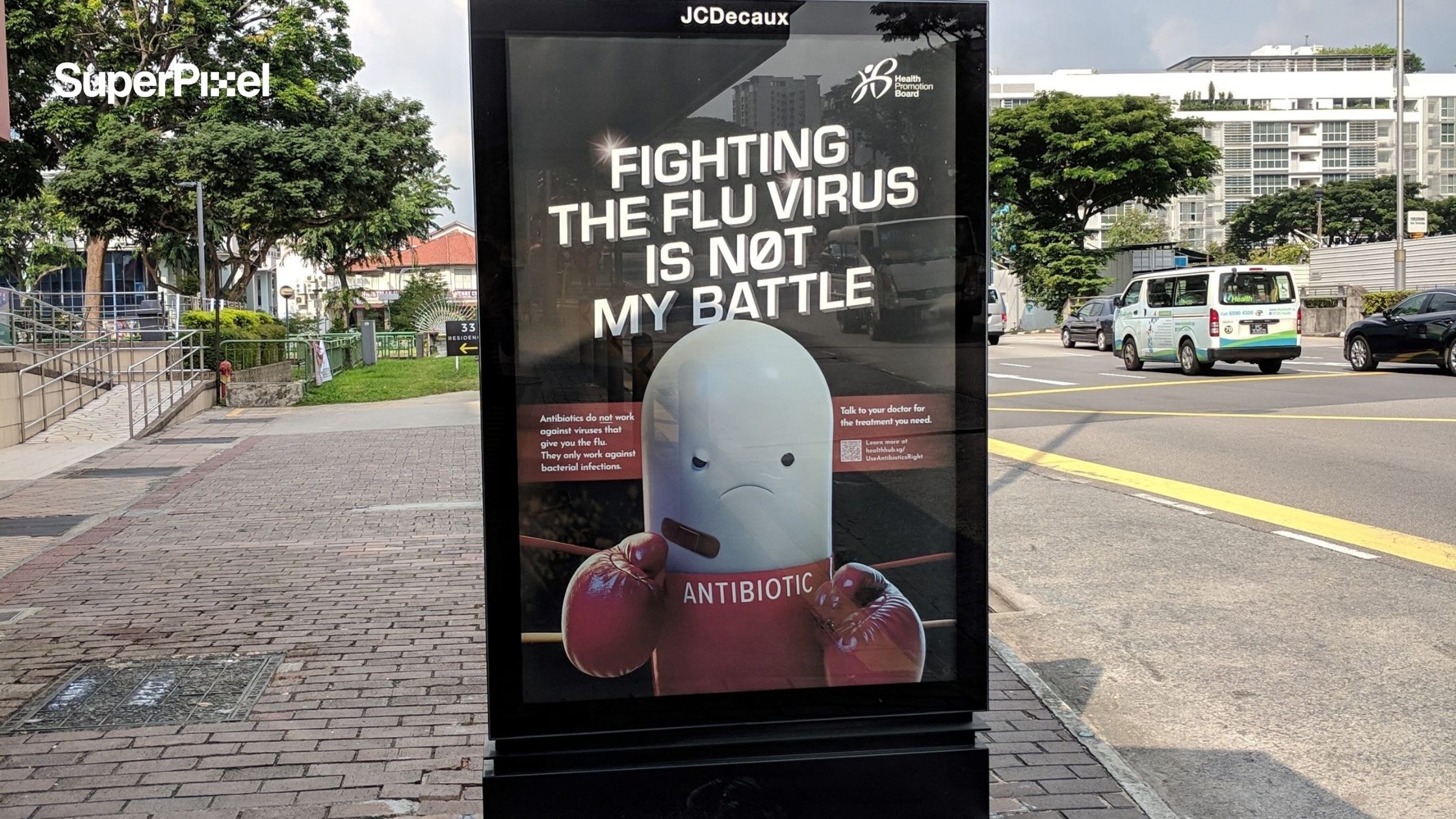
For Singapore’s Health Promotion Board, we created the “Antibiotic Boy” campaign to educate the public on responsible antibiotic use. The topic was complex and traditionally low-engagement.
The outcome:
- 78% message recall (up from 23% with text-only campaigns)
- 40% improvement in correct antibiotic usage
This is where healthcare animation services deliver real-world impact not just views.
Internal Training and Education: Empowering Teams with Animation
Healthcare evolves fast. Continuous training is essential, but traditional manuals and presentations often fall short.
Medical animation improves internal education by:
- Demonstrating procedures clearly
- Explaining physiological processes visually
- Improving retention and reducing errors
Hospitals, pharmaceutical companies, and healthcare organizations use animation to ensure teams stay aligned, informed, and confident, ultimately supporting better patient outcomes.
How to Choose the Right Medical Animation Studio
Choosing a creative partner for a healthcare project goes deeper than just looking at a showreel. Style is important, but it should never trump strategic fit.
A studio might create beautiful work, but if they don’t understand clinical accuracy, revision workflows for medical review, or compliance, they could become a liability.
It’s essential to choose a team that is highly skilled, with proven expertise in both video production and medical projects, to ensure quality results.
Specialist studios often offer comprehensive medical animation services, including explainer videos, interactive educational courses, and virtual reality experiences tailored to complex medical concepts.
Additionally, aligning animation projects with the company’s goals is crucial to enhance efficiency and support organizational culture within healthcare organizations.
From my perspective as a studio founder who has worked on projects for clients like Netflix and Disney, accuracy and empathy are the two pillars of great health communication. When you’re vetting a studio, you need to ask questions that go beyond their creative process.
Key Questions to Ask a Potential Animation Partner:
- Can you share examples of how you’ve handled clinically sensitive information?
- What is your workflow for incorporating feedback from medical and legal review teams?
- How do you ensure your final output is compliant with relevant industry regulations?
- How do you measure the success of a project beyond views and likes?
- How transparent is your production process, and can you explain each stage to help with budget planning?
Here’s a quick comparison of what to look for:
| Trait | Specialist Healthcare Studio | Generalist Studio |
|---|---|---|
| Expertise | Deep clinical and regulatory fluency. | Broad creative skills, but may lack health-specific knowledge. |
| Process | Workflows designed for medical review and transparent production process. | Standard creative workflows that may not account for compliance needs. |
| Focus | Prioritises accuracy and clarity. | May prioritise aesthetic style over informational precision. |
| Impact | Aims for measurable health and business outcomes. | Often focuses on brand awareness and engagement metrics. |
Healthcare Video Production Best Practices
Still proud of how far healthcare video production has come. Because when it’s done right, animation doesn’t just look good, it shapes decision making, builds trust with doctors, and communicates vital information without overwhelming the audience.
At its core, effective healthcare animation balances three critical pillars: scientific accuracy, audience empathy, and platform optimization. Miss one, and even the most polished final product risks falling flat.
Scientific Accuracy Built on In-Depth Knowledge
In healthcare, credibility starts with research and depth. Every animation wether explaining medical procedures, surgical techniques, or disease progression must be grounded in in depth knowledge of medicine.
That means:
- Collaborating closely with medical professionals and doctors
- Validating visuals that explain surgical procedures and disease pathways
- Ensuring accuracy when visualising pharmaceutical products, medical device functionality, and new technologies
This is especially critical when tackling complicated topics like how medicine works inside the body or how a condition evolves over time. Accuracy isn’t a nice-to-have, it’s the foundation of trust.
Audience Empathy: Making Complicated Topics Understandable
Healthcare animation exists to clarify, not to impress with jargon.
The best healthcare video production teams understand that different audiences require different levels of explanation:
- Patients need reassurance and clarity around medical procedures and disease progression
- Medical professionals expect precision and respect for their expertise
- Public audiences need complex ideas translated into something approachable
Using plain language without oversimplifying allows animation to communicate vital information while reducing anxiety and confusion. This is where engaging visuals become the ideal solution by helping people understand without feeling overwhelmed.
Pre-Production to Post-Production: Where Strategy Meets Craft
Strong healthcare animation starts long before animation begins.
Pre production is where success is defined:
- Clarifying objectives and target audience
- Setting realistic expectations
- Aligning creative direction with compliance needs
During production, techniques like 3D animation allow teams to visualise:
- Surgical techniques
- Internal processes of medicine
- Medical device functionality at a level impossible with live action
Then comes post production, where pacing, sound design, subtitles, and structure ensure the animation works seamlessly across platforms such as web, mobile, social, and internal presentations.
The Real Goal: Understanding That Drives Better Decisions
The true purpose of healthcare video production isn’t just to inform.
It’s to:
- Help audiences process complex ideas
- Support confident decision making
- Deliver information with clarity, empathy, and precision
When animation achieves that, it becomes more than content—it becomes a communication asset that supports better outcomes across healthcare, from education to adoption.
The Future of Healthcare Video: Where Tech Meets Pulse
At SuperPixel, we’ve always believed that if a picture is worth a thousand words, a well-crafted animation is worth a million when lives are on the line. But looking toward 2026, the game is changing.
We’re moving past “pretty pictures” and heading straight into deep-tech storytelling that feels more like the future and less like a whiteboard lecture.
Trends in Healthcare Animation Technology
The biggest shift I’m seeing right now is the explosive rise of 4D Animation. While 3D gives us the “what,” 4D gives us the “when” by adding the critical dimension of time to complex medical models.
It’s currently projected as the fastest-growing segment in the industry, and for good reason. Whether we’re visualizing how a chronic condition evolves over a decade or tracking a drug’s absorption in seconds, 4D allows us to map the journey of health with surgical precision.
We are also seeing a massive pivot where animation is no longer just a “marketing extra” but a core training powerhouse. We’re increasingly building high-fidelity assets for medical professionals to sharpen their skills. Why? Because the brain craves motion.
Animation enhances comprehension and retention in ways a 200-page manual never could. By simulating complex surgeries or device mechanics in a digital environment, we’re helping healthcare teams reduce errors before they even step into the operating room.
The horizon looks even more exciting as we integrate:
- Interactive AR/VR: Turning “watching” into “doing” with immersive patient simulations.
- AI-Driven Personalization: Tailoring the complexity of a medical video on the fly to match a patient’s specific literacy level.
For us at SuperPixel, the mission remains the same: using the sharpest tech to make the most complex science feel like common sense. In a digital-first world, healthcare animation isn’t just a service, it’s the new language of trust.
The Strategic Edge: How We Use Animation at SuperPixel
In my view, healthcare animation isn’t just about visuals; it’s a strategic tool designed to hit specific goals across the industry:
- Diverse Audiences, One Source of Truth: We use diverse animation services to simplify complex data for everyone—from patients needing clarity to medical professionals requiring high-level precision.
- Digital Health Campaigns: Animation is now the backbone of public health messaging, allowing us to broadcast vital information across digital channels with massive engagement.
- The Pre-Visit Power Move: Sending animated videos to patients before their first doctor visit effectively conveys essential medical info, making the actual consultation much more productive.
- Empathy Over Anxiety: We’ve seen that presenting difficult topics in a compassionate, animated style significantly reduces patient anxiety compared to sterile, clinical text.
- Precision Training: For the pros, animation serves as the ultimate training tool to demonstrate complex surgical procedures and medical device usage with “X-ray” clarity.
Beyond the Visuals
At SuperPixel, we see animation as a high-performance tool for the entire healthcare ecosystem. Here’s how we’re using it to drive real impact:
Tailored Complexity
Whether it’s a biological process, a treatment pathway, or a surgical flow, healthcare animation (2D or 3D) helps convert complex medical information into a clear, structured visual explanation, usable for both patient education and clinician communication.
Whiteboard & 2D for clarity, speed, and cost efficiency
When the goal is straightforward understanding, whiteboard animation and 2D/motion graphics are ideal because they simplify abstract concepts in a step-by-step way. They’re also typically faster to produce and more cost-effective, often significantly cheaper than fully 3D approaches.
3D for innovation, investors, and high-stakes visuals
When the message depends on showing realism, like a new medical device, a mechanism inside the body, or a drug interaction, high-quality 3D becomes the better fit. This is especially helpful for explaining mechanism of action and supporting investor-facing or stakeholder-heavy presentations.
Surgical visualization as a training and alignment tool
Surgical animations can show complex procedures with detail and consistency, helping medical teams align on steps, risks, and sequencing, especially when live-action footage is not feasible or not clear enough.
Pre-visit empowerment and patient confidence
Sending short animated explainers before a first appointment can prepare patients with key context, so the visit becomes a more confident conversation, not a confusing first exposure.
Remote production + easy updates (more flexible than live-action)
Animation can be produced remotely, updated when guidelines change, and versioned for different audiences, often making it a more practical long-term option than repeated live-action shoots.
Interactive VR/AR for hands-on learning
Interactive animation using VR/AR can create immersive, scenario-based experiences that support hands-on learning, whether it’s practicing procedures, understanding device usage, or simulating patient interactions in a safer, repeatable way.
Frequently Asked Questions About Healthcare Animation Services in Singapore
1. Why choose healthcare animation services in Singapore?
Singapore is a regional hub for healthcare, life sciences, and medical innovation. Healthcare animation services in Singapore are often built to meet high standards of medical accuracy, regulatory awareness, and clinical depth, making them suitable for hospitals, pharmaceutical companies, and medical technology brands operating across Asia.
2. What types of healthcare animation services does SuperPixel offer?
SuperPixel provides healthcare animation services ranging from 3D medical animation and explainer videos to visuals for medical procedures, surgical techniques, pharmaceutical products, and medical device functionality—all designed to communicate complex ideas clearly and responsibly.
3. Can healthcare animation help with medical marketing efforts?
Yes. Healthcare animation is an ideal solution for marketing efforts that involve complicated topics such as disease progression, disease pathways, or new technologies. By using engaging visuals, brands can support clearer decision making while maintaining trust with doctors, patients, and medical professionals.
4. How does SuperPixel ensure medical accuracy in its animations?
Accuracy is addressed from pre production to post production. SuperPixel works closely with clients’ medical professionals, research teams, and reviewers to ensure all content is based on in-depth knowledge, realistic expectations, and validated medical information before reaching the final product stage.
5. Who typically uses healthcare animation services in Singapore?
Healthcare animation services are commonly used by doctors, hospitals, pharmaceutical companies, medtech brands, insurers, and public health organisations. They support a diverse range of use cases, including education, training, awareness campaigns, and high-stakes healthcare communication.