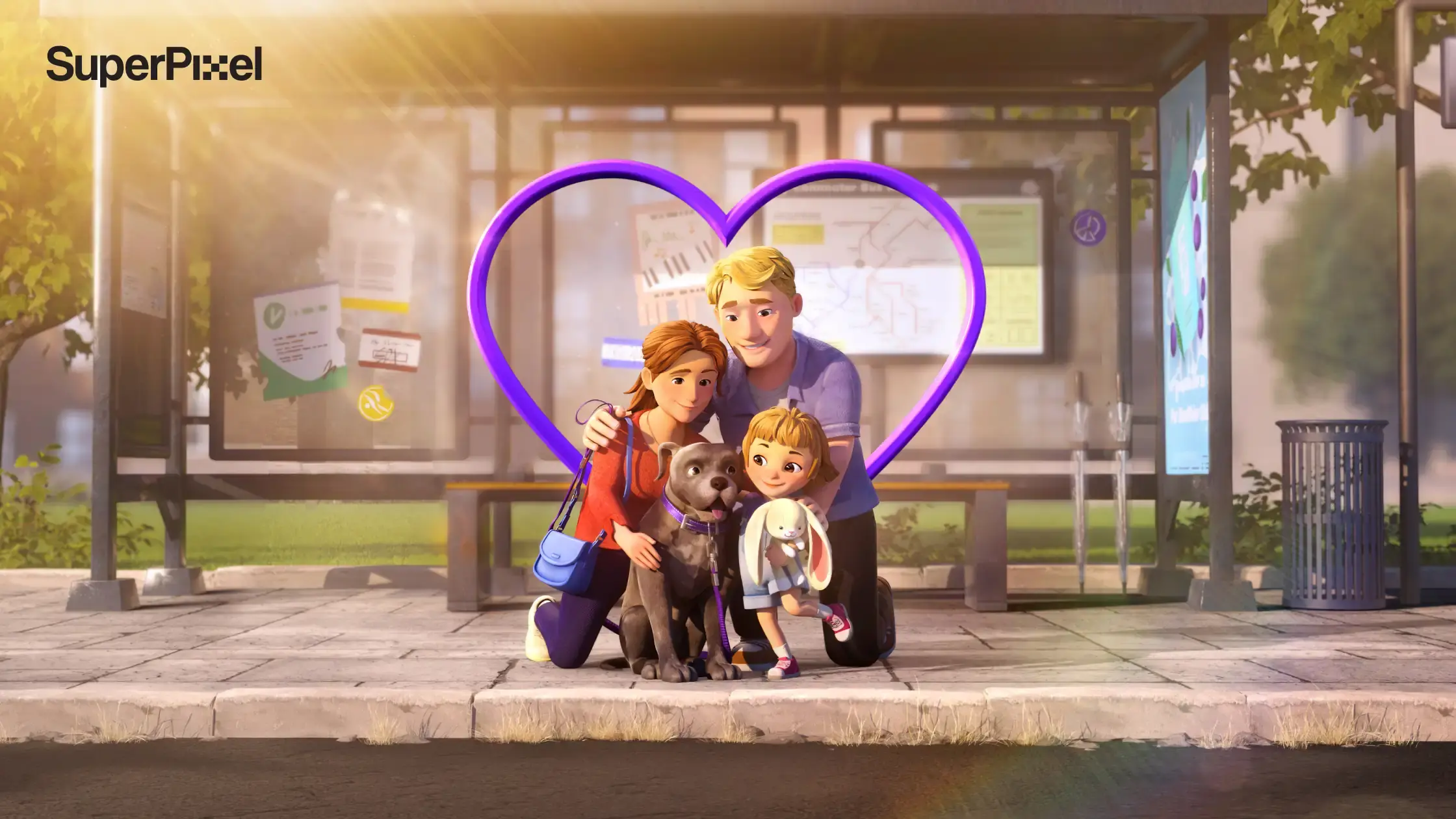
Pharmaceutical animation services in Singapore became especially meaningful to us when the Health Promotion Board first briefed us on their public health challenge.
We knew right away that conventional creative wouldn’t cut it. The goal was to make government health messaging memorable and action-driving for everyday Singaporeans.
We weren’t just creating content; we were designing for behavioural change. That challenge pushed us to rethink everything that how do you translate complex health concepts into visual stories people not only understand, but actually care about?
That project taught me that pharmaceutical animation isn’t just about showing a drug’s journey through the human body. It’s about bridging the gap between intricate science and human understanding, and that lesson has shaped our approach at SuperPixel ever since.
Key Takeaways:
- Pharmaceutical animation translates complex medical concepts into clear, engaging visual narratives for a broad audience, from doctors to patients.
- Core applications include Mechanism of Action (MOA) videos that visualise drug mechanisms, clinical trial explainers, and patient education tools.
- Animation builds brand authority by balancing scientific accuracy with creative visual storytelling, strengthening credibility across marketing channels.
- A transparent, multi-stage process involving medical consultation, meticulous script writing, and rigorous compliance reviews is crucial for creating scientifically accurate animations.
- Effective pharmaceutical animations are versatile assets that support omnichannel marketing, improve training, and deliver a measurable return on investment.
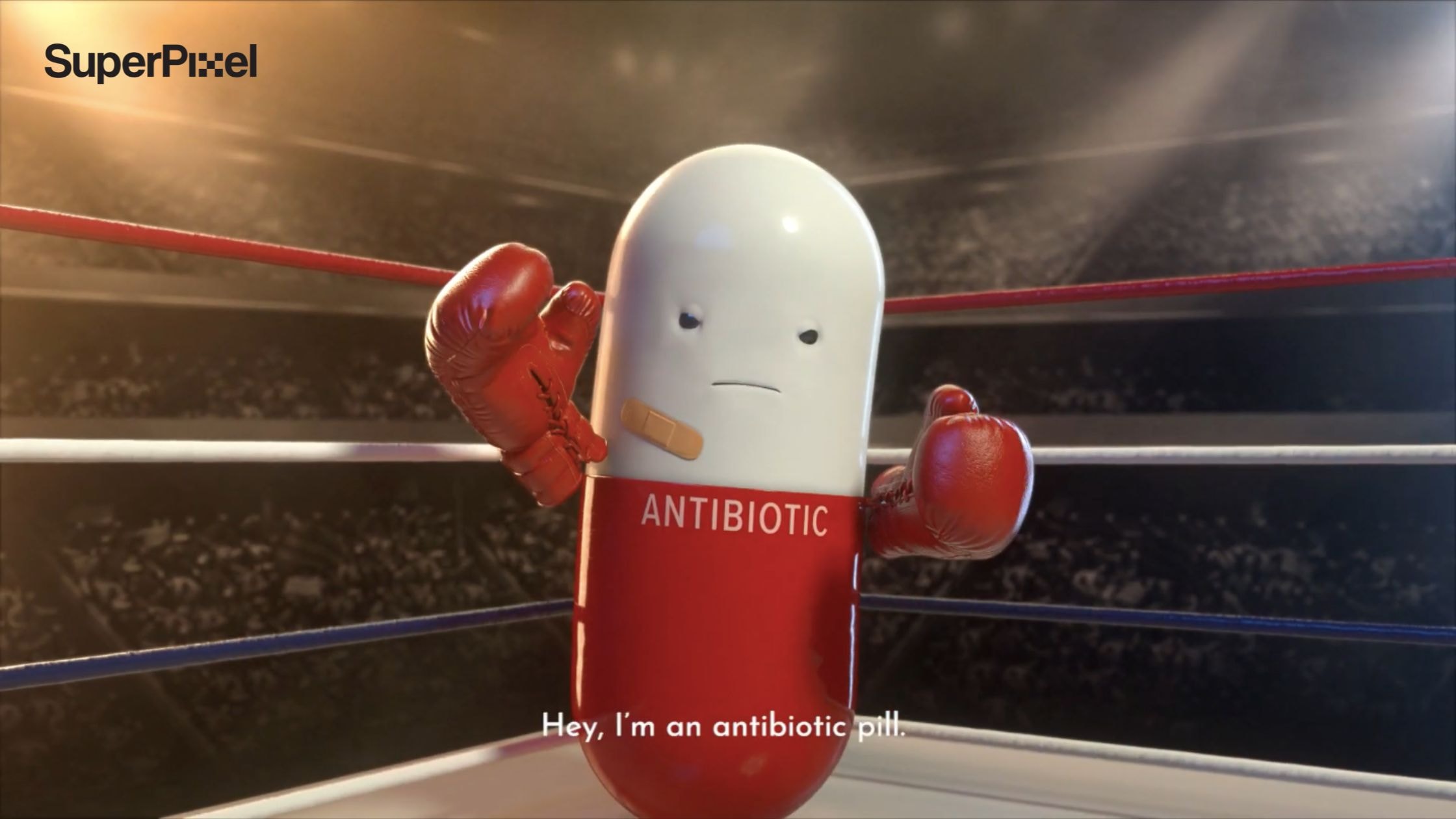
Why Pharmaceutical Animation Matters in Today’s Healthcare Communication
In the creative business, clarity is everything. Honestly speaking, this is something most pharma companies struggle with.
They have groundbreaking science, but communicating it effectively to a broad audience from busy healthcare professionals to anxious patients is a massive hurdle.
This is where design-driven animation services become more than just a marketing tool; they become an essential scientific communication tool. It’s about creating a thorough understanding that static images or dense text can never achieve.
Also read, 3D Animation Services That Help Brands Convert and Captivate
For pharma marketers – clarity builds confidence
For marketers, the core challenge is engagement. How do you make your message cut through the noise? It’s not about flashy graphics; it’s about making complex ideas digestible.
When you visually break down drug mechanisms or clinical trial data, you’re not just showing, you’re explaining. This clarity builds confidence.
According to a report from Chasing Illusions, using medical animation can boost engagement by 70%, which directly aligns with the results we see in our campaign metrics.
It helps improve ROI because a clear, visually compelling message is a memorable one that works across various marketing channels.
For medical educators – visual storytelling simplifies learning
From a creative direction standpoint, what we’re really doing is translating dense data into visual storytelling. This is critical for educating healthcare professionals and students across numerous medical fields and medical specialties.
Think about trying to understand molecular interactions from a textbook versus seeing them unfold in a 3D animation. The design principle here is deceptively simple: show, don’t just tell.
This approach helps accelerate the understanding of medical concepts, making learning more effective for the next generation of medical professionals.
For investors and regulators – accuracy equals trust
When we pitched the creative concept to our B2B clients like Daikin, we learned that technical detail is non-negotiable. The same is true for the pharmaceutical industry, but with even higher stakes. For investors and regulators, scientific accuracy equals trust.
High-quality pharmaceutical animations must be scientifically accurate, presenting complex biological processes with precision. This isn’t just about looking good in a presentation; it’s about satisfying industry regulations and giving stakeholders the confidence to invest in pharma companies.
For educate patients – animation reduces fear and empowers understanding
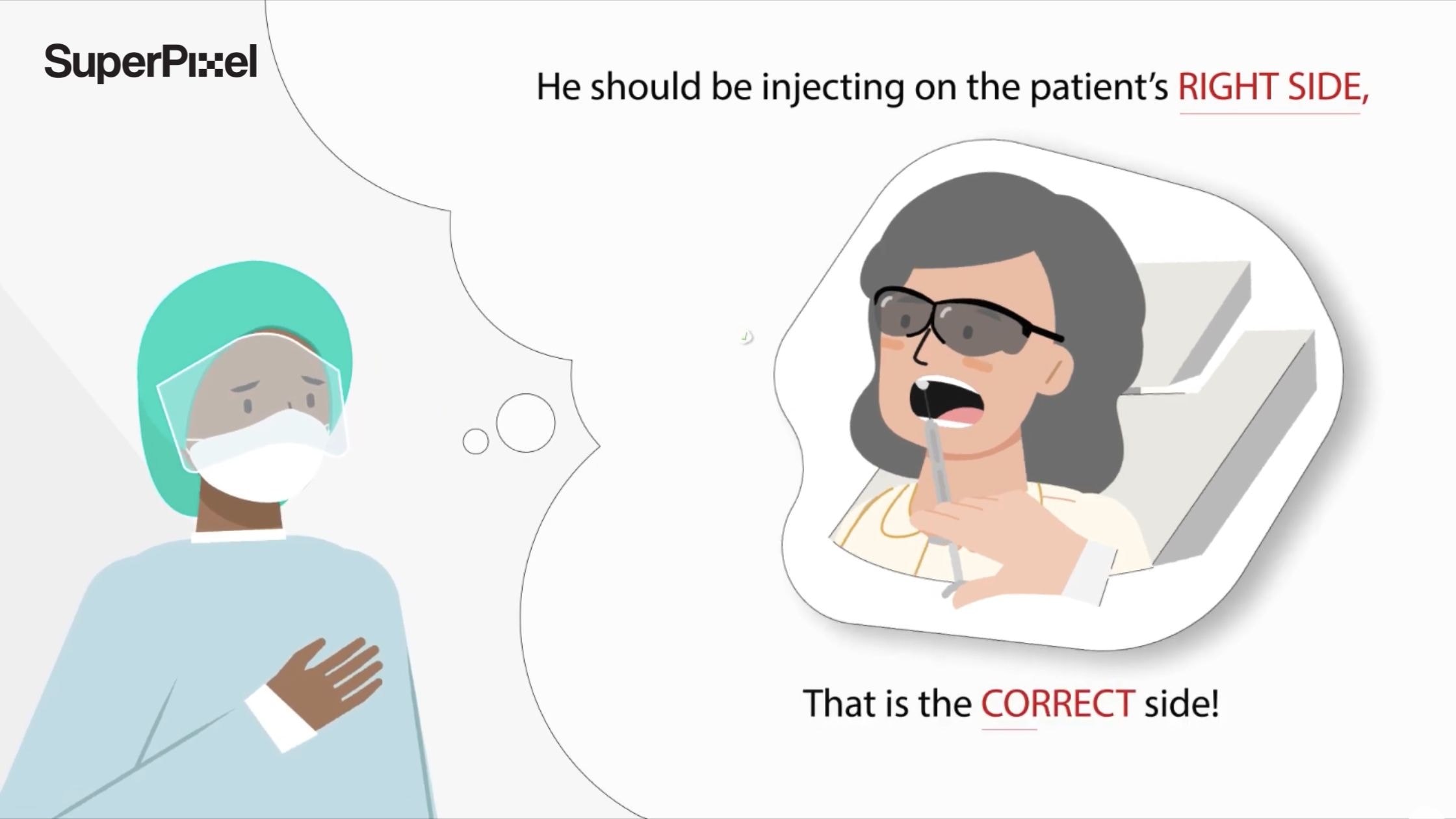
Patients often feel overwhelmed by medical terminology or treatment instructions. Animation brings clarity and comfort.
It helps them understand what’s happening in their bodies, what to expect during a procedure, or how to use a device without causing user errors. When patients understand more, they feel more in control and that leads to better outcomes.
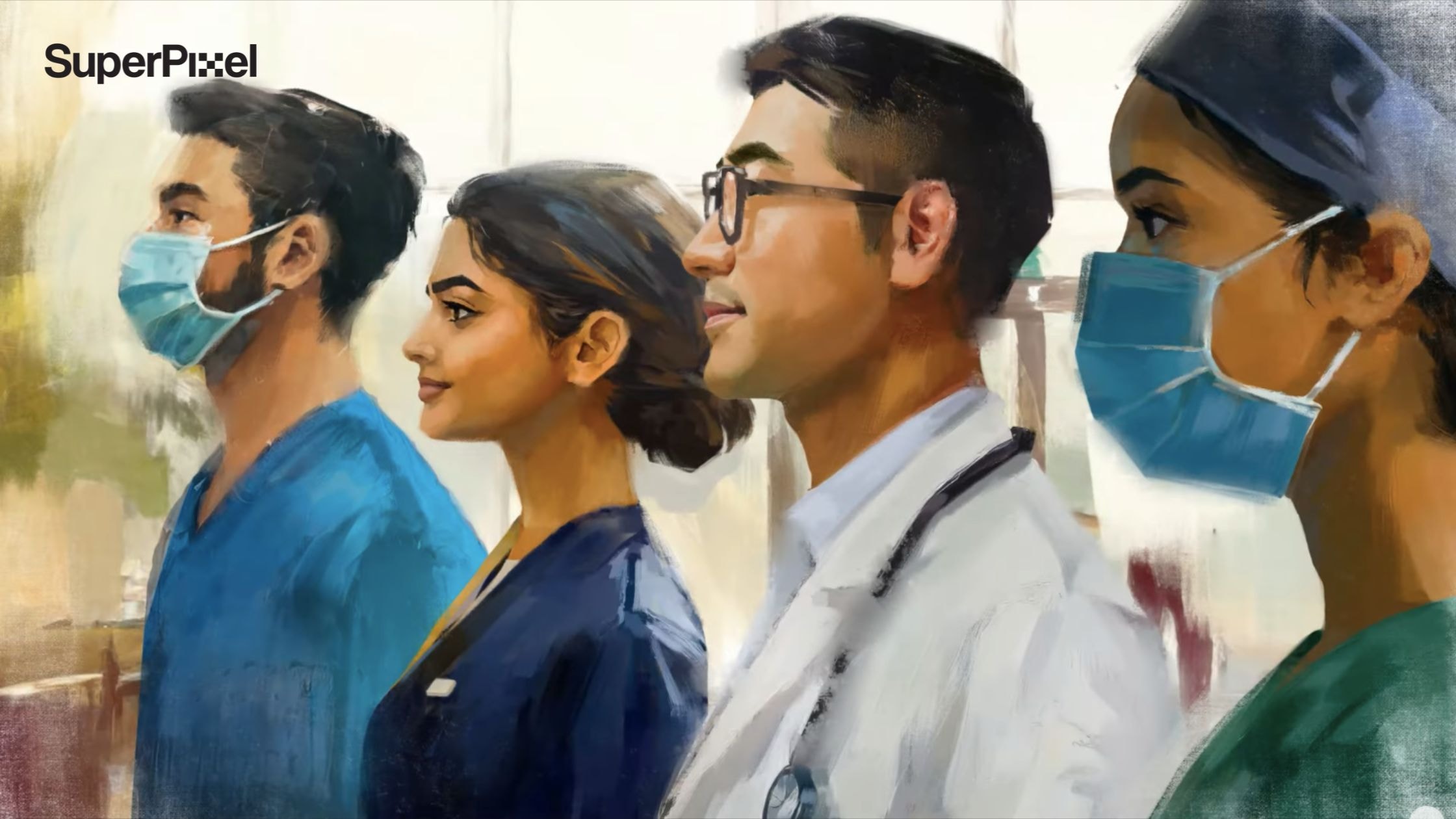
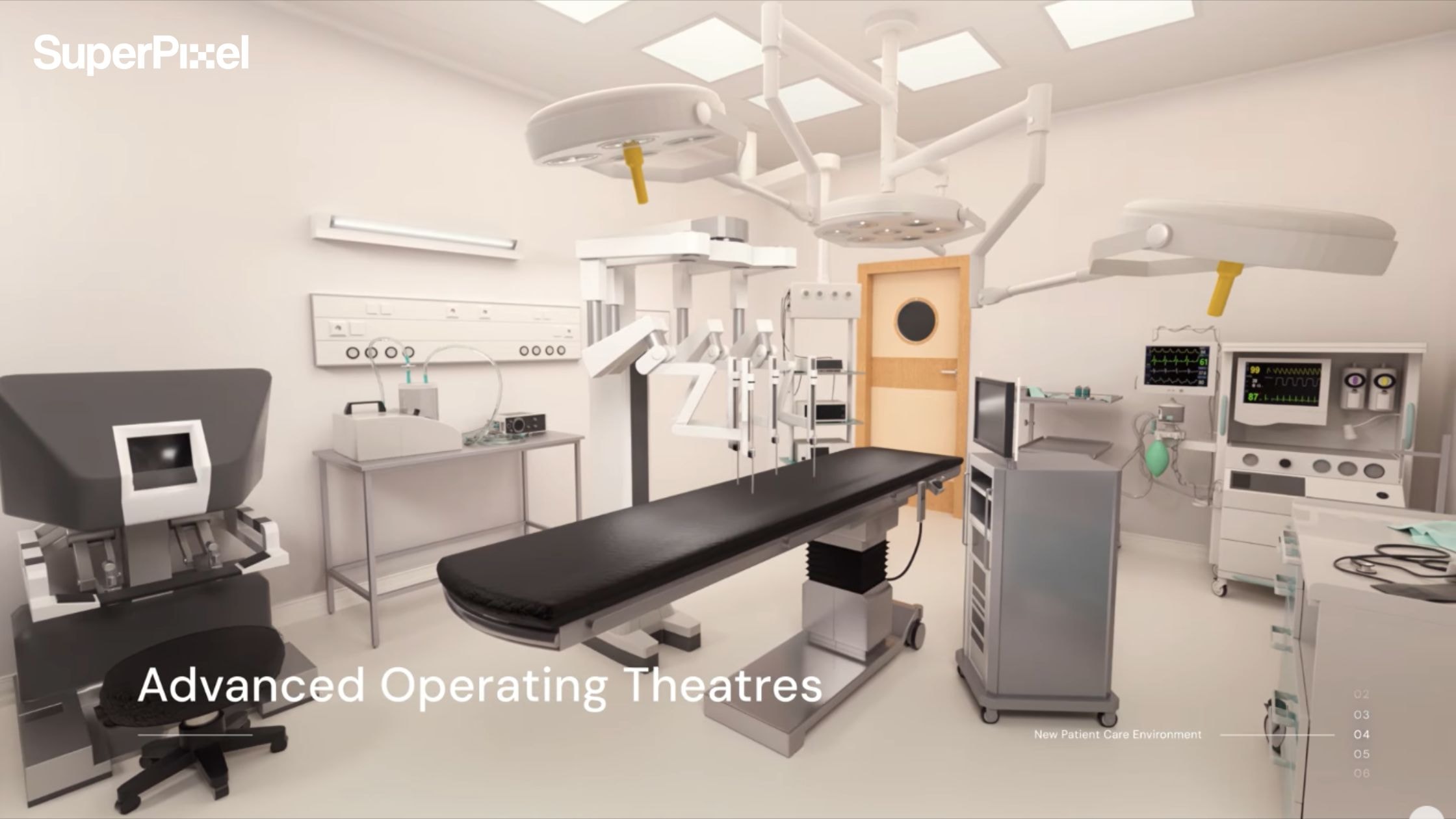
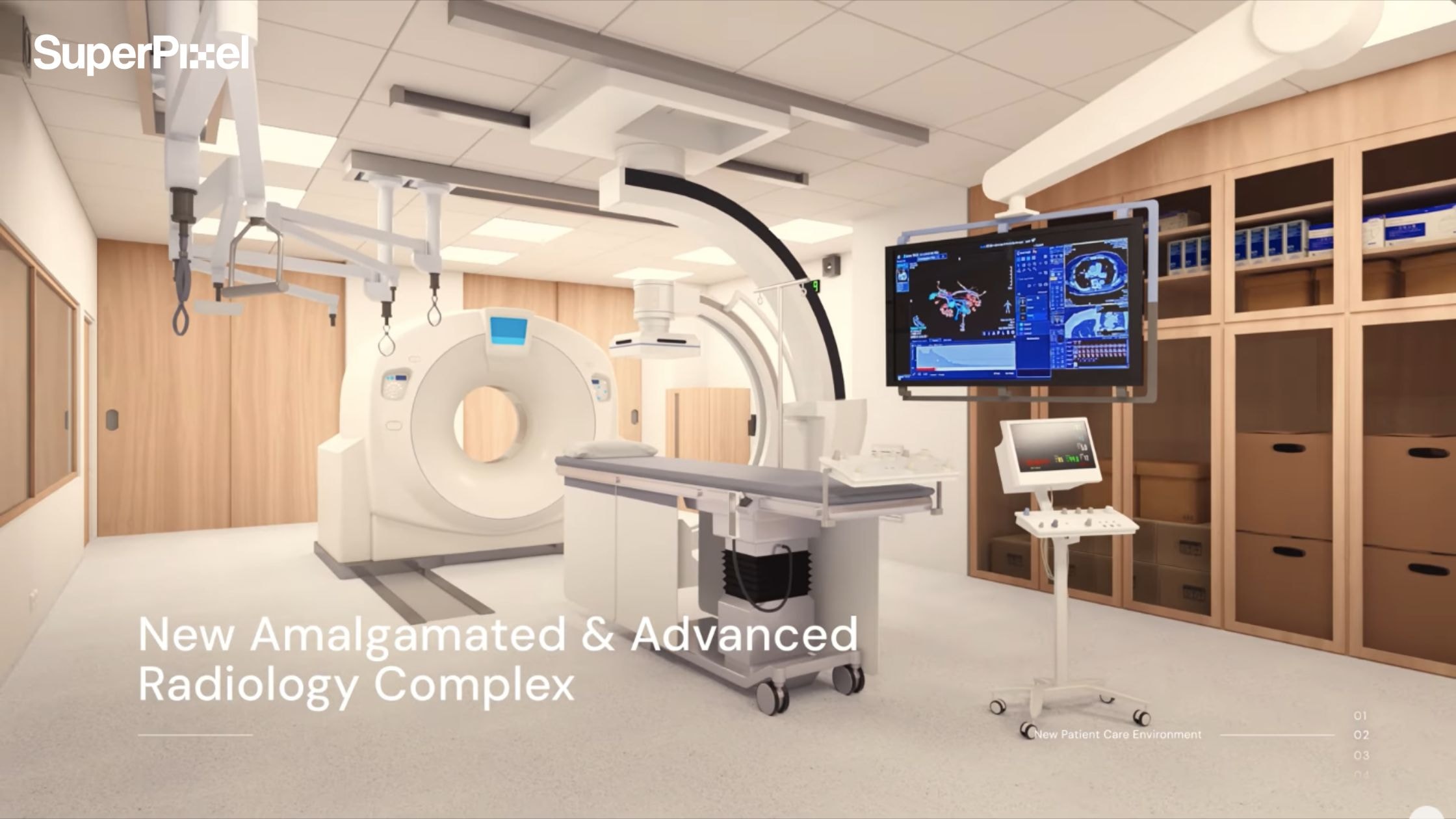
Mount Elizabeth Hospital LizGallery Digital Art Installation
When Mount Elizabeth Hospital approached us for their “Project Renaissance,” they wanted something more than a visual makeover. They wanted a digital art experience that preserves the hospital’s heritage while also bringing in modern, interactive storytelling.
We created three digital pieces: two animated films and one interactive installation. Each one carried a different artistic style.
Together, they honoured MEH’s healthcare workers, highlighted the hospital’s transformation, and brought its daily operations to life through an interactive simulation. LizGallery became a living tribute to the people who shape the hospital every day.
What made this project special wasn’t just the craft, as it was also the heart. Every stroke, every scene, and every animation was designed to celebrate the humans who keep the hospital running every single day.
Core Applications of Pharmaceutical Animation Services
Building SuperPixel from the ground up in 2015 taught me that a creative tool is only as good as its application. For pharmaceutical animation, the applications go far beyond simple explainers.
It’s about creating a whole suite of visual tools designed for a diverse range of needs.
Drug mechanism of action (MOA) videos
This is probably the most common request we see, and for good reason. MOA videos demystify the complex science behind how a drug works.
From a creative lens, the challenge is to visualise the unseen the drug’s journey, its molecular interactions, and cellular changes within the human body.
These medical animations make pharmacokinetics understandable for a broad audience, from specialists reviewing pharmaceutical mechanisms to patients trying to understand their treatment plans.
Clinical trial visualization
Here’s where the creative breakthrough happened for many of our clients. Clinical trials are incredibly complex, and explaining the recruitment process, patient journeys, or different phases can be a real headache.
Creating highly detailed visual narratives of clinical phases is a powerful tool for research teams to align internally and to communicate progress to external stakeholders with detailed visuals that simplify complex procedures.
Patient education and onboarding tools
We must never forget the end-user. For patients, a new diagnosis or treatment plan can be overwhelming. Patient education animation empowers them by simplifying complex medical information.
A scoping review published in the Journal of Medical Education and Curricular Development confirms that medical animations significantly improve patient recall and understanding.
Animated videos can explain how to use medical devices, what to expect from surgical procedures, or how to manage a condition. This not only improves patient understanding but also helps reduce user errors and anxiety.
Medical device demos and product launches
Just like in our work with technical B2B clients, medical device animation is critical for sales and marketing. A 3D animation can showcase a device’s features and medical procedures far more effectively than static images or a dense manual.
For a product launch at a conference or across digital platforms, a high-impact motion graphics video can make all the difference, capturing attention and clearly demonstrating the value and proper use of medical devices.
How Pharmaceutical Animation Enhances Brand Impact
From a creative and business standpoint, we needed to build a model where design directly drives business results. The pattern I see across award-winning creative work is that it connects with people on an emotional level while delivering a clear message. This approach is central to how pharma animations can elevate a brand.
Builds emotional connection through visual empathy
Scientific storytelling isn’t just about data; it’s about people. By creating humanised visual narratives, pharma animation can foster empathy for patients and their caregivers.
Showing the real-world impact of a treatment or explaining a condition in a way that resonates emotionally builds a powerful connection that static data sheets never could. These visual stories transform abstract medical concepts into relatable human experiences.
Strengthens brand authority with scientific credibility
What separates good creative from award-winning work is the balance between creativity and accuracy. In healthcare, this is paramount. Your visual style must be engaging, but the content must be rooted in scientific accuracy.
Getting this right strengthens your brand’s authority and positions you as a credible, trustworthy voice in the medical field.
Supports omnichannel marketing
The beauty of customized animations is their versatility. A single, well-produced medical animation can be adapted for a huge range of marketing channels.
It can be the centrepiece of a product launch, broken down into micro-content for social media, used in presentations for healthcare providers, and integrated into e-learning modules. This allows for a consistent and compelling message across all brand touchpoints.
Inside the Pharmaceutical Animation Process
At SuperPixel, we’ve refined a four-stage process that ensures our creative work is not just visually stunning, but also strategically sound and scientifically accurate. We’ve found this approach completely transforms how we think about pharma video production.
- Research and Concept Development: It starts with a deep dive. We work closely with medical consultants and review scientific literature to ensure we have a thorough understanding. From there, we develop a creative concept and storyboard that aligns with the project’s goals and the core message.
- Scriptwriting and Visual Narrative: This is where we transform complex information into a compelling story. The script writing process focuses on clarity and relatability, ensuring the final animation will connect with its intended audience, whether they are medical professionals or patients. This shapes the entire visual style and narrative flow.
- Design, Modeling, and Animation: Our teams in Singapore and Jakarta then get to work creating highly detailed 3D models and engaging animations. Whether it’s 2D motion graphics or complex 3D medical animation, we use industry-leading tools to bring the scientific story to life with exceptional quality.
- Review, Compliance, and Delivery: Rigorous review cycles with the client and their medical experts are built into our process. This crucial step ensures the final animation meets all scientific and industry regulations, and aligns with brand guidelines, before the final delivery. It guarantees the work is not only creative but compliant.
Measuring the ROI of Pharmaceutical Animation
Running campaigns for both SMEs and MNCs showed me that at the end of the day, results are what matter. The great thing about digital animation services is that their impact is highly measurable.
Engagement and comprehension metrics
You can track viewer completion rates, time-on-page for web-based medical animation videos, and even conduct recall tests to see how well the message stuck. When our Health Promotion Board campaign achieved a 65% message retention rate, we knew the visual storytelling approach was working.
Conversion and lead generation for marketing campaigns
For marketing campaigns, the impact is even more direct. We track how animated explainers on landing pages reduce bounce rates and increase lead generation.
Take our work with Daikin’s B2B campaign. The challenge was to translate complex technical messaging into engaging content. Our design-driven animation led to a 40% improvement in qualified B2B lead generation, proving the business case for clear, visual communication.
Internal training effectiveness
Don’t forget the internal audience. Pharmaceutical animations are powerful tools for e-learning. You can measure their effectiveness by tracking employee competency scores, a reduction in procedural errors, and faster onboarding times for new team members who need to understand complex medical processes.
The Future of Pharmaceutical Animation
Looking at this through a design lens, the future is incredibly exciting. Emerging tech like augmented reality (AR) will allow for even more immersive educational materials, letting healthcare professionals explore molecular interactions in a virtual space.
We’re also seeing a move towards personalised micro-animation content, delivering bite-sized, relevant information to specific audiences. The core challenge remains the same: using design and technology to make complex science beautifully simple.
Frequently Asked Questions
1. How do you ensure medical accuracy in pharmaceutical animation services?
We work closely with medical experts and cross-check every detail before anything gets animated. This keeps the science tight and the visuals clear — especially for complex biological processes where accuracy really matters.
2. Why choose 3D medical animation instead of simple diagrams?
3D animation lets us show the “unseeable” that molecules moving, cells reacting, drugs interacting. It turns complex science into something people can actually follow, not just skim over.
3. Is script writing really that important in pharmaceutical animation?
Yes, big time. Script writing shapes the story and avoids confusion. It’s how we translate medical jargon into visuals that make sense for doctors, marketers, and everyday users.
4. How do you minimise user errors in patient education animations?
We test. Then we refine. And test again. The goal is simple: make instructions visually clear, so patients feel confident and don’t make mistakes when using medical devices or following treatment steps.
5. Are pharmaceutical animation services useful for investor or regulator presentations?
Definitely. Clear visuals help decision-makers understand complex biological processes faster. It builds trust and shows you know your science that not just your branding.
6. How long does it take to complete a pharmaceutical animation project?
Most projects take around 8–12 weeks. If the animation includes advanced 3D modeling or detailed scientific breakdowns, the timeline can stretch a bit. Quality takes time, especially when the final delivery needs full compliance checks.
7. Do pharmaceutical animation services in Singapore follow specific compliance standards?
Yes. We follow HSA guidelines and global pharma communication standards. Every animation goes through review rounds to ensure medical accuracy, regulatory fit, and safe, responsible messaging.