In my ten-plus years working with major studios like Disney and Paramount Pictures, I’ve seen firsthand how industrial animation services can solve massive communication problems that traditional methods simply can’t.
I remember one project where a company had a revolutionary piece of engineering, a genuinely brilliant system, but their sales team couldn’t explain how it worked without a two-hundred-page manual.
They were losing deals because potential customers were overwhelmed and confused. We replaced that manual with a two-minute 3D animation and suddenly the complexity disappeared. Interest spiked. Conversations flowed. Sales moved.
That’s when it clicked for me. 3D industrial animation isn’t just a visual aid; it’s a strategic sales tool that turns confusion into conversion. It captures attention, simplifies the complicated, and makes technical information memorable for the people who need to understand it most.
Here are five key takeaways for any business leader considering this approach:
- Visual clarity in B2B sales isn’t a “nice-to-have”; it’s a necessity that accelerates decision-making.
- A single animation asset, when planned correctly, can serve marketing, sales, training, and investor relations, maximising your return.
- The most effective industrial animations are not the flashiest. They are functional, clear, and relentlessly focused on solving a business problem.
- Choosing the right animation partner is less about their artistic flair and more about their ability to understand your business and your customers’ problems.
- Repurposing your core animation for different channels is the most efficient way to stretch your budget and keep your message consistent.
Introduction to Industrial Animation
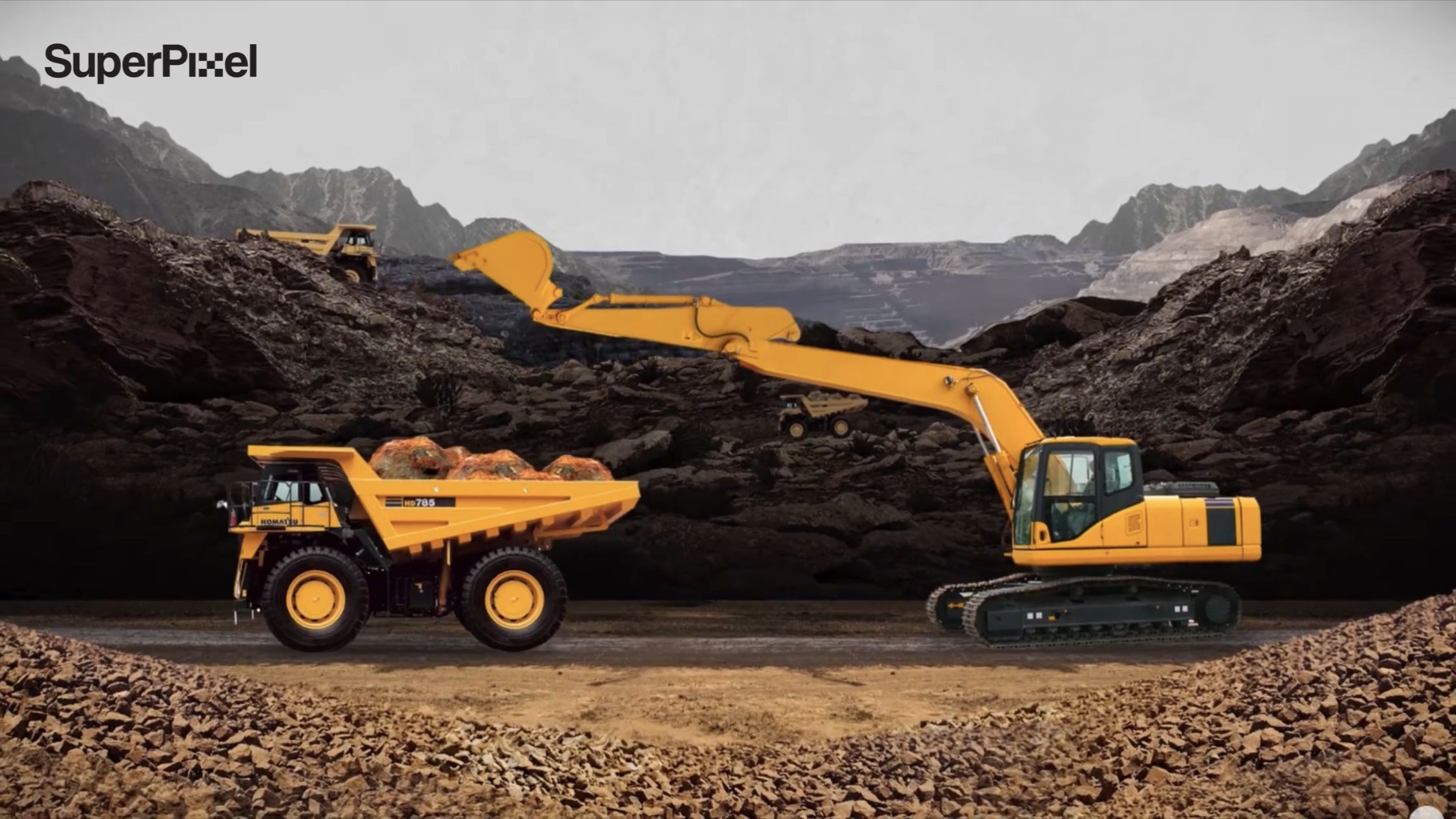
Industrial animation is transforming the way companies communicate complex processes and technical concepts.
By leveraging technical animation, businesses can break down intricate machinery, manufacturing processes, and internal components into clear, engaging visuals that resonate with a wide range of audiences.
Industrial animation services are designed to create immersive experiences that not only showcase intricate machinery and production lines but also highlight the various elements that make up a company’s operations.
Whether you’re looking to demonstrate how a complex machine works or explain the flow of a production process, industrial animation provides an effective solution for making complex concepts accessible and compelling.
This approach is now a cornerstone for companies across diverse industries, helping them effectively communicate, educate, and engage both internal teams and external stakeholders.
Also read: The Power of Pharmaceutical Animation Services in Singapore for Brands
Why 3D Industrial Animation Drives Faster Sales
The core challenge in B2B sales, especially for industrial products, is clarity. When a buyer understands a product’s value quickly, the sales cycle shortens. Static presentations and text-heavy documents just don’t cut it anymore.
In fact, research consistently shows that technical buyers overwhelmingly prefer video. According to Wyzowl’s data, 96% of people have watched an explainer video to learn more about a product or service.
This isn’t just a consumer trend; it’s a fundamental shift in how professionals process complex information.
Industrial 3D animation provides a comprehensive understanding of products and processes by presenting detailed visual information from multiple angles, making technical topics more accessible and driving faster sales.
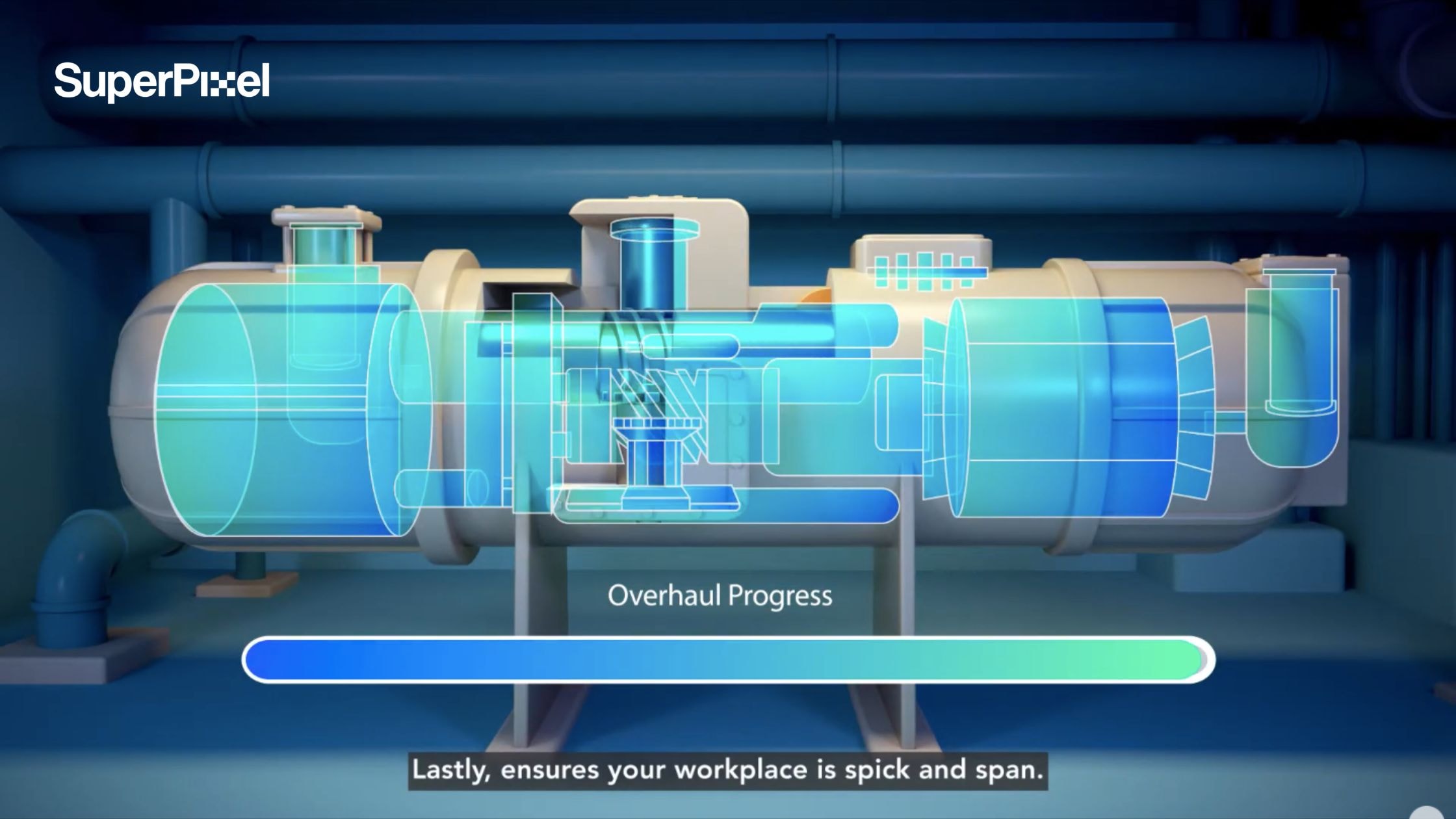
For product marketers: How animation shortens sales cycles by demystifying machinery or systems
Product marketers are tasked with bridging the gap between engineering and the customer. From my experience, a 3D animation is the most powerful tool in your arsenal.
You can make metal transparent, slow down high-speed processes, and visually demonstrate complex machinery to prospects, showing the inner workings of a machine in a way that no physical demonstration ever could.
This visual storytelling demystifies the product, allowing a prospect to grasp its benefits in minutes, not hours. It moves the conversation from “How does it work?” to “How can we implement it?”.
Also read: Transform Your Content Strategy with Corporate Animation Services
For engineers pitching solutions: Using motion to illustrate internal mechanics or flow without jargon
Running studios across three countries has taught me that engineers possess a unique brilliance, but often struggle to translate that for a non-technical audience. Animation becomes their universal language.
Instead of relying on jargon-filled explanations, an engineer can use a 3D animation to visually walk a client through fluid dynamics, stress simulations, or assembly sequences.
This builds confidence and trust, as the client feels they genuinely understand the solution they are buying into because it is clearly demonstrated through animation. It’s about showing, not just telling.
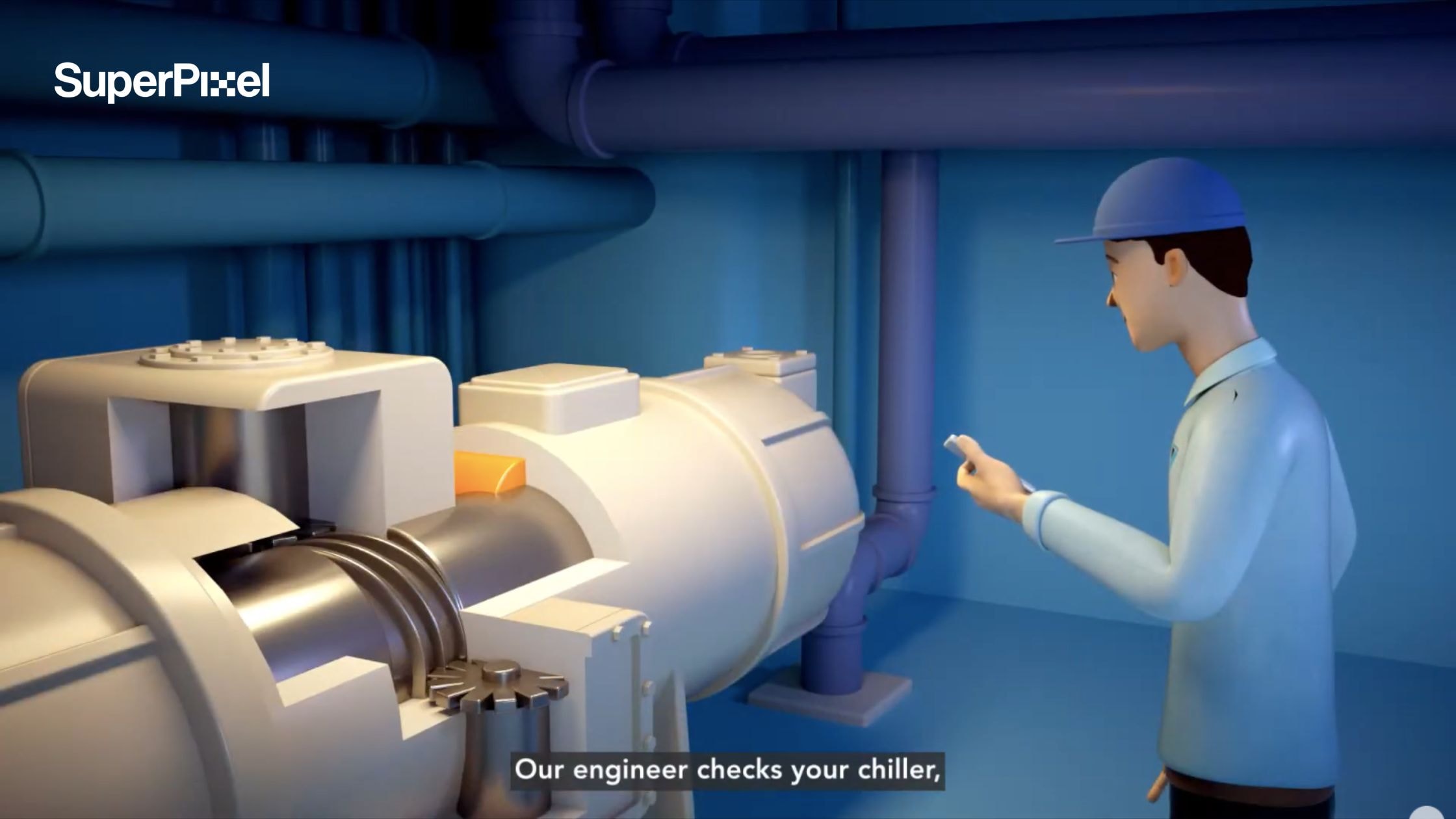
Technical Capabilities of Modern 3D Animation
Modern 3D animation brings a new level of sophistication to industrial communication. With the ability to create dynamic visuals and realistic simulations, 3D animation allows companies to demonstrate complex processes and internal mechanisms with unmatched clarity.
The technology enables the visualization of intricate details and innovative technology, making it possible to showcase product features, safety protocols, and internal workings in a way that’s both comprehensive and engaging.
These immersive experiences are invaluable for training employees, ensuring technical accuracy, and capturing the audience’s attention.
By harnessing the power of 3D animation, industries can effectively communicate complex concepts, streamline training, and highlight the unique features of their products and processes.
Use Cases That Boost Efficiency Across Industries
One of the biggest mistakes I see businesses make is treating animation as a one-off marketing expense.
A well-crafted industrial 3D animation is a reusable asset, and the final product of the industrial 3D animation process can drive efficiency across your entire organisation.
Think of it as a tool with multiple uses. One animation, planned from the start, can be a cornerstone for marketing, sales, training, and even investor relations. This multi-use approach offers the best possible return on investment.
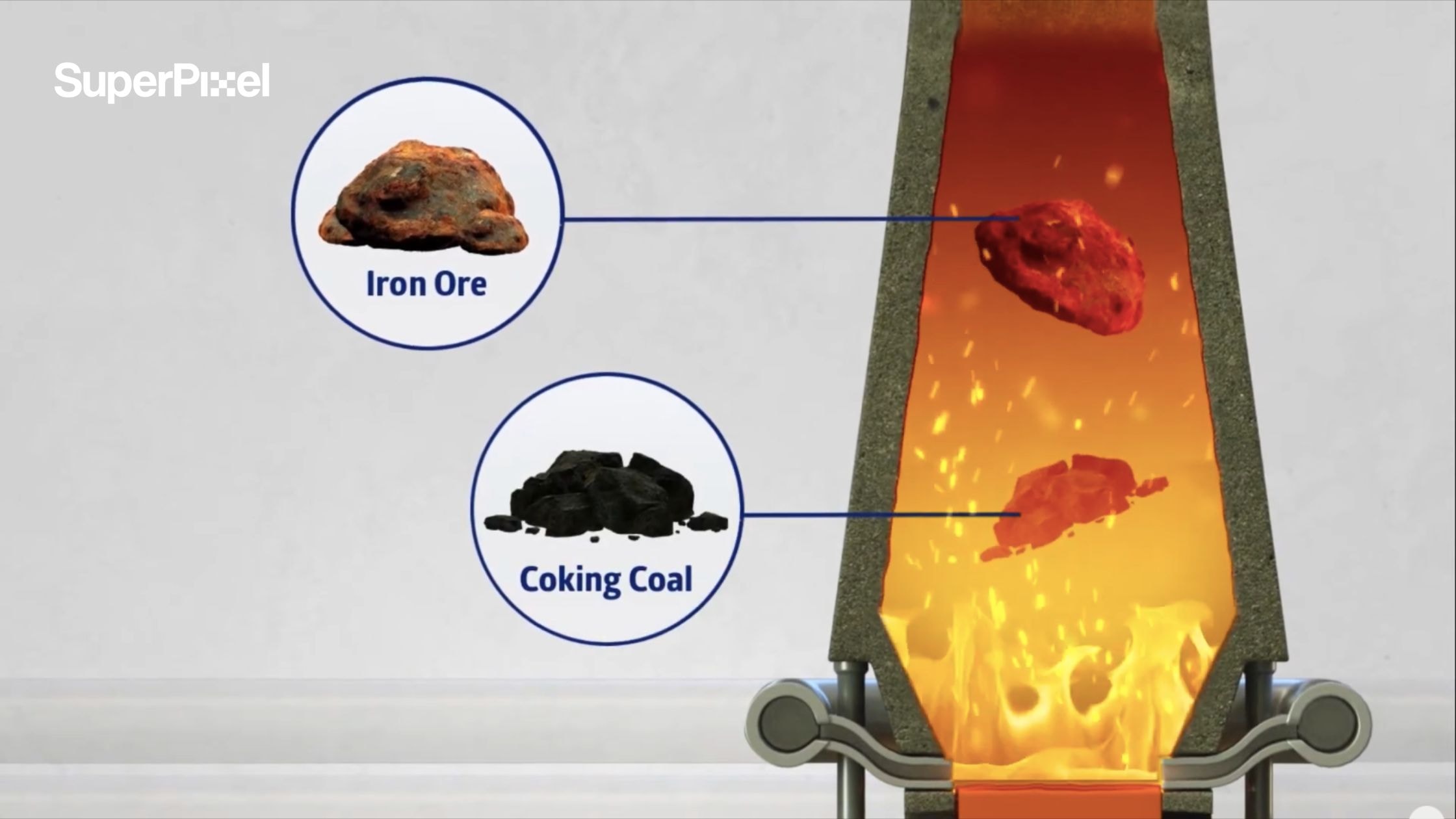
For manufacturing CEOs: Animations for trade shows, investor decks, and procurement demos
For a CEO, a powerful 3D animation is a strategic communication asset. At a noisy trade show, a dynamic animation of your flagship product can stop people in their tracks far more effectively than a static display by providing a clear visual representation of the product’s capabilities.
In an investor meeting, it can quickly convey your company’s innovation and market advantage. When dealing with procurement, it serves as a clear, unambiguous demonstration of your product’s capabilities, leaving no room for misinterpretation.
For training directors: Repurpose animations for new hire onboarding and SOP explanation
We’ve seen this work wonders for our clients. That same animation used to sell the product can be repurposed for internal training. Imagine onboarding new technicians. Instead of having them read dense manuals, you can show them a detailed 3D breakdown of the machinery.
These animations serve as powerful visual aids for new hires, improving knowledge retention and reducing training time. We saw a similar principle in action on a public health project.
For Singapore’s Health Promotion Board, we created the “Antibiotic Boy” campaign. The challenge was to explain the complex issue of antibiotic resistance to the general public. Our solution was a memorable 3D character that made the message unforgettable.
The result was a 78% message recall rate, proving that a single, well-designed animated asset can make a complex topic accessible and actionable for a huge audience.
For logistics teams: Showing process flows and supply chain stages to partners
Logistics and supply chain operations are all about process. We’ve found that 3D animation is incredibly effective for visualising these complex flows. You can illustrate an entire supply chain, from warehouse to final delivery, in a simple, coherent animation that helps partners understand how processes work from start to finish. This helps in aligning partners, training staff, and identifying potential bottlenecks in the system.
How We Applied Industrial Animation in Real Projects
1. MCI – “Making Each Day Better”
Why it works:
This project shows how we visualised huge, multi-layer systems like transport, utilities and national workflows basically the same complexity you see in factories, pipelines or production lines.
When we worked on the MCI project, the challenge was to take massive, interconnected systems and make them instantly understandable. That’s exactly what industrial animation is about. Whether it’s a refinery workflow or a manufacturing process, our job is to remove confusion and make the logic clear.
With MCI, we turned abstract systems into a clean, simple visual story people could grasp in seconds. Industrial teams appreciate this same clarity because it speeds up communication, reduces misunderstandings and helps everyone make decisions faster.
2. Pacific Place – 3D Anamorphic Claw Machine
Why it works:
Even though it’s retail, the project required precise mechanical motion, rigging and spatial simulation similar to animating machinery, robotic arms or mechanical systems.
The 3D claw machine for Pacific Place pushed our team to simulate mechanical movement with engineering-level accuracy. Every joint, slide and rotation had to feel real or the illusion would fall apart. That discipline is the same mindset we use in industrial animation.
Whether we’re showing a robotic arm or internal machine movement, precision matters. This project sharpened our ability to choreograph mechanical motion in a way that feels natural and technically believable which is exactly why industrial clients trust us to animate machinery with clarity and realism.”
3. Brother Inkjet Printer Series
Why it works:
We visualised internal mechanics such as ink flow, print head movement, and internal components.
Perfect for showing “what cameras can’t capture,” just like industrial equipment, automation, or mechanical systems.
For Brother, we brought the printer’s internal mechanics to life like ink flow, nozzle precision and how each component interacts. It’s a perfect example of how animation can show what a camera never could.
The same applies to industrial products. When marketers struggle to explain a mechanism, or engineers need to show internal logic without technical jargon, animation becomes the bridge.
This project strengthened our ability to explain mechanical behaviour clearly and visually, which is why industrial teams rely on us to communicate product value with confidence.
What Makes a High-Converting Industrial Animation
Successful industrial animations are rarely about artistic flash. They are about function. When we pitched the approach for the Pacific Place Aquarium LED screen, the goal wasn’t just to make something beautiful; it was to increase foot traffic.
The immersive underwater 3D experience we created provided a compelling visual experience for viewers and did just that, boosting foot traffic by 30%.
This project reinforced a core belief: a high-converting animation is one that is focused on a specific business outcome and is designed to be as frictionless as possible for the viewer.
For procurement leads: What questions to ask an animation studio
When you’re sourcing an animation studio, move beyond just the portfolio. Ask them how they will work to understand your business. Key questions should include:
- How do you plan to understand our product and our customers’ pain points?
- Can you show us examples of how you’ve handled projects with similar technical complexity?
- What is your process for integrating our team’s feedback and technical knowledge, and how has your team worked collaboratively to ensure project success?
- How do you measure the success of an animation against business goals?
Their answers will tell you if they are just artists or true business partners.
For business owners: How narrative structure affects viewer retention and CTA clicks
Every animation, no matter how technical, needs a story. A simple and effective structure we often use is Problem-Solution-Result. Start by showing the problem your customer faces. Then, introduce your product as the solution, clearly demonstrating how it solves that problem.
Finally, show the positive result or outcome. This narrative arc keeps viewers engaged and naturally leads them to your call-to-action (CTA). Without this structure, even the most visually impressive animation can fail to convert.
For marketers: Ideal animation length, voiceover vs. text, branding integration tips
For industrial animations, shorter is almost always better. Aim for 60-90 seconds to hold attention. There are different approaches to structuring and producing industrial animations, so consider which animation techniques best suit your message and audience.
Use a professional voiceover for complex explanations, as it allows the viewer to focus on the visuals, but reinforce key points with on-screen text. Finally, integrate your branding subtly.
A persistent logo in a corner and using your brand’s colour palette is often enough. The animation’s quality and clarity will do more for your brand than overt advertising ever could.
Measuring Success: KPIs and ROI of 3D Industrial Animation
To ensure that 3D industrial animation delivers real value, companies track key performance indicators such as engagement rates, lead generation, and return on investment.
By analyzing these metrics, businesses can assess how effectively their animations are demonstrating complex processes, showcasing intricate machinery, and creating immersive experiences for their target audience.
A well-executed 3D animation can lead to significant cost savings, faster training, and increased sales, all of which contribute to a strong ROI.
Companies that invest in 3D industrial animation often find that it not only enhances communication but also drives measurable improvements in efficiency and competitiveness, making it a smart investment for long-term growth.
Choosing the Right Animation Partner for Business Impact
As someone who’s spent the past decade building SuperPixel across Singapore, Indonesia and Canada, I’ve learned that choosing an animation partner is really choosing a thinking partner.
You don’t just need great artists. You need a team that understands why the animation exists in the first place and what business outcome it needs to drive.
A lot of studios jump straight into talking about render quality and software stacks. But in my experience, the studios that create real impact are the ones that understand the sales cycle, customer pain points and the internal pressures your team is dealing with. Tools matter, but mindset matters more.
When clients work with us, we always start with the same question: “What problem are we solving for your business?”
Not the storyboard. Not the visuals. Not the shaders. The business problem.
That clarity influences everything from the narrative structure to camera choices to how we design each moment of the animation to support your sales, training or investor conversations.
This is why many of our clients say working with us feels like adding a strategic arm to their team, not outsourcing production.
We see our job as blending three things:
- Creative intelligence — the craft, the art direction, the storytelling
- Technical precision — the modelling, simulation, rendering, pipeline
- Business fluency — understanding what the animation must achieve
That combination is what makes animation actually move the needle, not just look pretty.
For Time-Strapped Executives: What You Should Look For
From working with enterprise clients and government partners, here’s what I tell every executive:
- Choose a studio that asks about your business goals, not their creative process.
- Choose a team that understands your sales and engineering realities.
- Choose partners who can translate technical complexity into clarity.
- And choose people who can keep the project moving without hand-holding.
A great animation partner should feel like an extension of your marketing and engineering teams—someone who can think, not just execute.
For Brand Managers: Making Sure Your Animation Feels Like “You”
One thing we’ve learned at SuperPixel is that brand alignment is not optional. A technically perfect animation that doesn’t feel like your brand will still miss the mark.
So we always do this early on:
- Deep dive into your brand guidelines
- Map tone of voice to visual tone
- Present styleframes before production begins
- Ensure consistency across all platforms and devices
When animation reflects your brand’s personality, everything from recall to engagement increases dramatically.
Future Developments in Industrial Animation
The future of industrial animation is being shaped by rapid advancements in technologies like augmented reality and virtual reality.
These innovations are set to take 3D animation to the next level, enabling even more realistic simulations, interactive experiences, and immersive environments that bridge the gap between the digital and physical worlds.
As these technologies become more accessible, companies across industries will be able to create engaging experiences that demonstrate complex processes and showcase intricate machinery in ways that were previously unimaginable.
The continued evolution of industrial animation will empower businesses to communicate more effectively, streamline operations, and maintain a competitive edge in an increasingly visual and technology-driven marketplace.
Turn Technical into Tangible with the Right Animation
In today’s market, industrial 3d animation is not a luxury; it’s a revenue multiplier. It transforms your most complex products and processes into clear, compelling, and tangible stories that drive sales and improve efficiency.
When you get it right, it’s one of the smartest investments you can make in your business’s growth.
There is a growing demand for industrial 3d animation in the Asia Pacific region, as businesses seek to enhance communication, training, and marketing through advanced visualization.
Ready to simplify complexity and drive better business results? Let SuperPixel bring your process to life.
Frequently Asked Questions About Industrial Animation Services
1. How much does a 3D industrial animation usually cost?
Most industrial animation projects fall within a 10,000 to 50,000 range depending on complexity, machinery detail, and required visuals. Product demos, process animation and corporate videos with high technical accuracy usually sit on the higher end. The best approach is to plan around the business objective, allowing clients to invest where it truly matters.
2. How long does a typical animation project take?
A standard 60 to 90 second industrial animation takes 8 to 12 weeks. This includes scripting, storyboarding, modelling, animation and polishing. Smooth animation takes time because every movement, lighting setup and visual cue must support the message clearly. This timeline ensures a high quality final result without rushing essential steps.
3. Should I choose 2D or 3D for industrial workflows?
For machinery, engineering systems and maintenance processes, 3D animation is almost always the better choice. It shows depth, internal components and real motion more realistically. 2D animation works well for simpler explanatory content or high level ideas but 3D is essential when your audience needs accuracy.
4. Can industrial animation help with sales presentations?
Absolutely. Animation simplifies complex systems so potential clients understand your value instantly. A clear process animation or product demo often replaces pages of technical documentation. Many of our clients use the same animated content across sales presentations, marketing campaigns and investor decks.
5. Is animation useful for employee training and SOPs?
Yes, it has become an essential part of modern training. Animation helps teams visualise maintenance processes, step by step workflows and safety procedures without physical risk. It improves retention and reduces onboarding time because employees learn through visually compelling content rather than long manuals.
6. What makes a strong industrial animation?
Accuracy, clarity and smooth animation. Good industrial content is not just about beautiful images but about communicating the process clearly. Lighting, camera movement and pacing must all support the objective. Industrial animation succeeds when it transforms technical ideas into visuals people understand immediately.
7. Why partner with a specialised studio for industrial projects?
Industrial workflows require technical understanding. A skilled studio brings animators who know how machinery moves, how energy flows and how systems interact. This expertise ensures the animation is not only visually impressive but mechanically believable, a crucial factor when presenting to engineers or decision makers.