Claymation, or clay animation, is a century-old stop-motion animation technique that has captivated audiences for decades.
From classics like the Wallace and Gromit series and Chicken Run to more recent productions, claymation has proven to be a versatile and engaging medium for storytelling.
But what exactly is claymation, and how can it be used by businesses and brands? In this article, we will explore the history, techniques, and possibilities of claymation, and show how it can be used to create memorable and effective marketing campaigns.
What is Claymation?
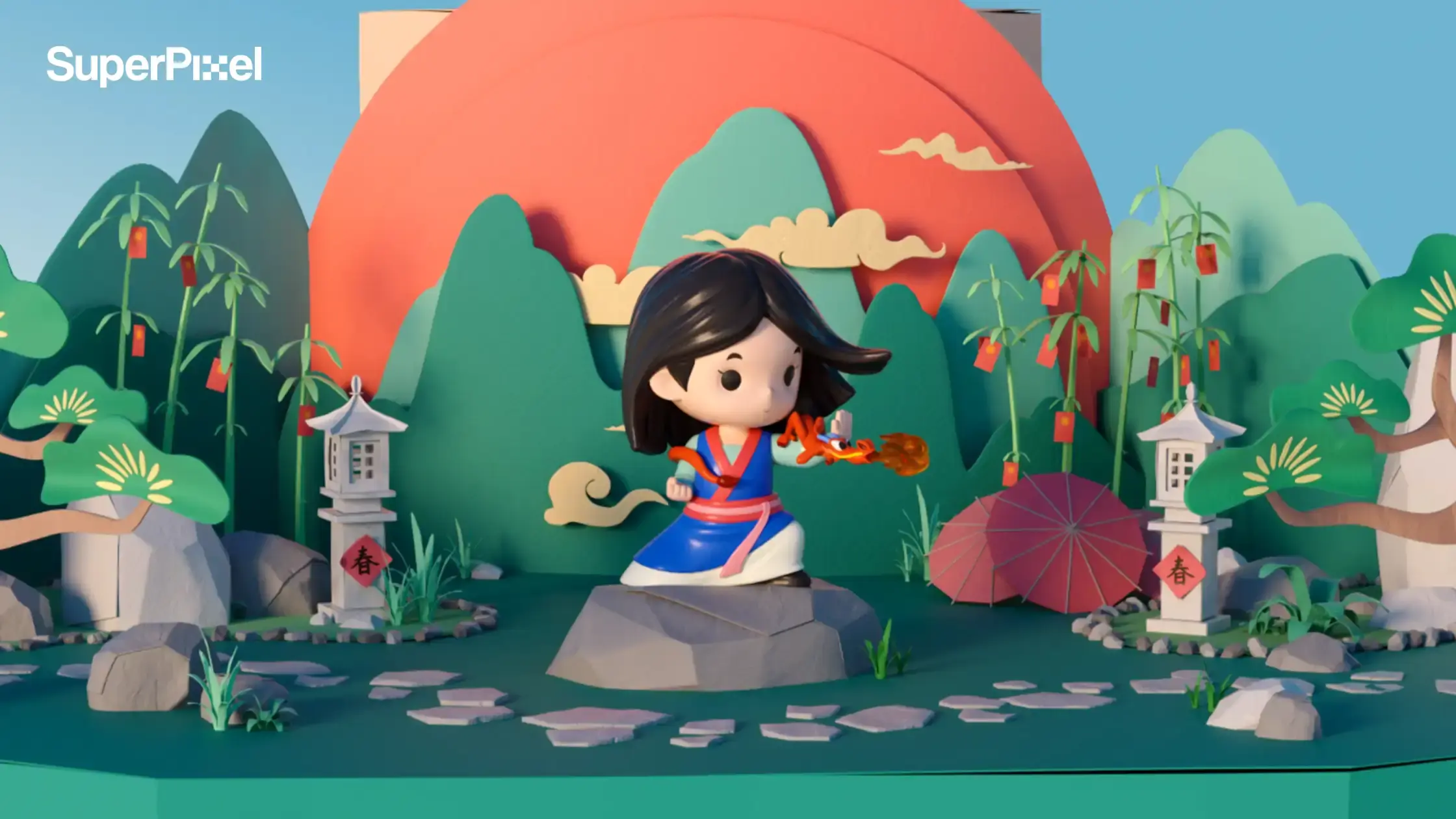
Claymation or clay animation is a form of stop-motion animation that uses movable clay figures. Some popular claymation movies and cartoons use this kind of animation.
In claymation, each animated piece is made out of a malleable substance, often plasticine clay. Each frame is recorded and played in quick succession to give the illusion of movement to its audience.
The clay models are wrapped around an armature or a wire skeleton for easier manipulation of their movements and forms. Once all the characters are set and ready to film, the creator then would shoot frame-by-frame with each shot slightly adjusted to create a sense of motion that tells a story of each piece.
Why Claymation Looks So Distinct
Claymation is known for its tactile, organic feel, with minor imperfections like fingerprints often remaining visible on characters.
Unlike digital CGI, claymation uses physical, malleable models which allow for exaggerated and fluid expressions and physical comedy.
This is one of the reasons claymation feels so charming and memorable. Because the characters are made and moved by hand, the final result often has a warmth and texture that digital animation does not always have.
How Clay Characters Are Animated
Clay characters can radically change shape, useful for morphing sequences, and animators often swap out pre-sculpted mouths for speech instead of manipulating a single puppet’s mouth.
Clay can ‘melt’ under hot studio lights, and keeping fingerprints and dirt off the clay during production can be difficult.
These details show how flexible yet demanding clay animation can be. While the material allows for very expressive movement, it also requires a careful production setup and a lot of patience during filming.
Why Claymation Is So Time-Intensive
Every second of finished claymation footage requires hours of painstaking work, resulting in a high level of detail in sets and character movements.
Claymation requires extreme patience, as feature-length films can take years to complete.
This is why claymation is often admired not only for its look, but also for the craftsmanship behind it. Even a short scene can take a long time to complete because every movement must be adjusted frame by frame.
Also read: Stop Motion Animation 101: The Best Way To Do It
A Look Back at the History of Claymation
Clay animation can be traced back to the late 19th century when plasticine was developed by William Harbutt. Plasticine was the go-to material in the early animation techniques in the early 20th century due to its easily modelled and slow dry properties.
At first, using clay methods is only limited to short sequences in larger animation production. And finally, the full claymation film was released in 1926 entitled Long Live the Bull. It is also the oldest known surviving clay animation film.
In the 1970s, animator Will Vinton led the modern claymation technique and in 1972, Aardman Animations was founded and later created Wallace and Gromit and the highest-grossing stop-motion animation film Chicken Run.
Early and Influential Claymation Examples
Gumby is a pioneering example of claymation, featuring a simple, bright green design that set the foundation for the medium.
Claymation has been used in Academy Award-winning short films such as Closed Mondays and The Sand Castle.
These early and influential works helped shape the way people saw clay animation. They showed that claymation could be playful, expressive, and artistically powerful even in short-form storytelling.
Famous Claymation Works in Popular Culture
Wallace & Gromit, created by Nick Park of Aardman Animations, is one of the most famous claymation series known for its British humor and meticulous animation.
The California Raisins commercials are significant for using clay characters to create a famous musical act and brand mascot.
Mary and Max showcases how claymation can handle sophisticated, adult themes.
These examples show how wide the creative range of claymation can be. It can be funny, emotional, commercial, or even deeply mature depending on the story and direction.
Claymation in Television and Family Entertainment
Claymation has been popularized on television in children’s shows such as Mio Mao, The Red and the Blue, and Pingu.
Claymation is often seen in children’s films and cartoons, making it a popular animation technique.
Because of its handmade look and playful movement, claymation has remained especially appealing in family-friendly content. At the same time, its flexibility also allows creators to use it for more sophisticated storytelling and branded content.
Types of Clay Animation
Clay animators use a variety of styles, with each having its benefits and production techniques. Let’s now look at the different types of clay animation below.
1. Freeform Animation
Freeform animation is a common technique for clay animators as they are allowed to think creatively and involves clay character changes throughout the animation in almost any form. The idea is those creators are free to create characters and can change them immediately whatever their direction will take them. For example, a clay sphere transforms into a vase and later on changes into a human form or animal is how the method works.
2. Character Animation
This clay animation technique uses a wireframe skeleton to make the movements of each clay character. This allows characters to move based on the story set out by their creators, ensuring a more realistic movement. Wallace and Gromit, a popular stop-motion animation series made by Nick Park, is one of the best examples of this method.
3. Strata-Cut Animation
With this technique, a block or layer of clay in various colours is divided into thin sheets. Each cut is recorded and replayed to eventually show the movement of the internal images within and produce fluid animation.
Strata-cut animation involves slicing a loaf of clay into thin sheets to reveal internal imagery, capturing each cut frame by frame.
This technique creates a very distinctive visual effect because the movement comes from what is hidden inside the clay block. As each slice is removed and photographed, the internal design gradually appears and transforms on screen.
4. Clay Painting
In clay painting, the clay is moulded and moved around a canvas, like a portrait photo to animate and create a sense that a painting is moving.
Clay painting involves moving clay on a flat surface to create images that resemble traditional paintings.
This makes clay painting one of the more artistic forms of clay animation. Instead of focusing on fully built characters, the animator works with texture, color, and composition to create a moving image that feels painterly and expressive.
5. Clay melting
This technique uses any heat source to melt clay characters while being captured through a time-lapse camera creating a sense of the character dissolving. This technique was used in the film Raiders of the Lost Ark where the climax scene showed the faces of the antagonists “melt.”
The Possibilities of Claymation for Businesses and Brands
Claymation offers a range of possibilities for businesses looking to create engaging and memorable campaigns. Its versatility allows for a wide range of creative options, from product demonstrations and explainer videos to whimsical commercials and social media content.
Claymation can also be used to create unique and eye-catching packaging designs, with the potential to increase brand awareness and drive sales.
The Unique Visual Appeal of Claymation: How Handmade Animation Can Grab the Attention of Your Target Audience
The unique visual appeal of claymation comes from the fact that it is a handmade animation technique. Instead of using digital tools to create animation, claymation uses physical clay figures that are manipulated frame by frame to create movement. This handmade quality gives the animation a distinct tactile and organic feel that can make it stand out in a sea of digital content.
As a result, businesses can use the unique visual appeal of claymation to grab the attention of their target audience. The handmade aesthetic can help a video stand out in a crowded online space, making it more likely that viewers will stop and watch. It may also evoke emotions and memories that can connect with the viewer on a deeper level.
Lastly, the use of clay as a medium for animation allows for more creativity, as it is a malleable material that can be shaped into different forms and characters. This enables animators to create unique and memorable visuals that can be challenging to achieve with traditional digital animation techniques.
Also read: Unleashing the Power of Cut Out Animation for Businesses

How To Do Clay Animation?
It can be useful for businesses to know how to do clay animation, as it can give you a better understanding of the animation process and the effort it takes to create a claymation video. This allows you to plan and execute your campaigns, and also in communicating your ideas and requirements to an animation production studio.
Creating a claymation project involves meticulous stages including storyboarding, building armatures and puppets, setting the scene, and frame-by-frame shooting.
Develop story > Storyboard/shot list > Prepare tools/scene > Create characters > Start filming > Combine frames
Let’s go over the steps on how to do clay animation.
1. Develop a Story
Before you start producing a clay animation film, you will first need to develop a story. Identify your goals, brainstorm creative ideas you have for your story, come up with a plot and design the cast of characters you want in your clay animation film. Once you have a storyline, start writing, refining and arranging the sequence of events in your story.
2. Create a storyboard or shot list
Much like any other form of stop-motion, the clay animation process takes long hours too. Hence, creating a storyboard or shot list of the scenes would be helpful in saving time in your production. This can easily be done by drawing out the storyline in a rough sketch. Having a storyboard allows you to visualise what is coming up in the scene and how the clay characters move to tell the story.
3. Prepare all your tools and materials
Once you have a story for your clay animation film, you can then move on to preparing all the materials and tools needed to shoot your film such as:
- Modelling clay for fixes and new models or characters.
- Backdrop which can be made from clay or other materials.
- A table or flat board where you want to base your scenes.
- Lighting equipment to illuminate the characters that will also be used to create shadows and depth.
- Shaping tools as there are certain movements to your clay characters that fingers can’t accomplish.
Plastilina is the most widely used clay for animation purposes due to its malleability.
This is one of the reasons it is often preferred for clay animation. Since it stays soft and flexible, it makes frame-by-frame adjustments much easier during filming.
4. Prepare your scene
It is now time to set up the background and scenery. Take note that this will depend on where the story is set. You might also need to create backgrounds made out of clay to suit the overall look you want to portray.
5. Character Creation
Once you have all your materials prepared, it is finally time for you to create your characters. You’re going to need strong, malleable clay to do this. It is recommended to use moulding clay as it does not dry quickly to make the readjustments between frames easier – you should refrain from using play doh to create your characters.
It’s good to have several identical copies of your figures for claymation.
In addition, it also pays to have different copies of clay figures in case one of them gets damaged during filming. This will save you time later on so you don’t need to create a new one from scratch.
6. Start filming
You can now start setting up your camera and lighting equipment and play around with your characters’ positions until you are satisfied with the framing and lighting.
Choose a stable camera setup and keep the camera settings static during filming for claymation.
Take note that claymation film requires a slower frame rate than traditional films. The goal is to shoot between 12 and 24 frames per second (fps).
A stable setup is especially important here because even the smallest shift in camera position or settings can make the final animation look inconsistent.
7. Shoot frame-by-frame
To achieve the illusion of movement and create a narrative, you will need to shoot frame-by-frame to adjust the character poses per shot. The main goal is to make minor adjustments to the character for each frame. These small adjustments will look more realistic and smoother once they are combined to create your story.
To create smooth movement, animators typically need 24 frames for one second of film, often using a technique called ‘twos’ to reduce the number of movements required.
A typical film runs at 24 frames per second. Therefore, a 30-minute claymation film would require roughly 21,600 stops to change the figures for each frame, while a full feature-length film may need about 64,800 or even more depending on the shots required to complete a scene.
This is also why clay animation takes so much time and patience. Even a short sequence can involve hundreds of tiny adjustments before it feels smooth on screen.
8. Practice. Practice. Practice.
It takes long hours for almost any stop-motion animation, like claymation. This is why continuous practice will help in making your first claymation animation film look much better. After giving it a few tries, you will start to get a good feel on how you will animate your characters to create a story that you want to convey to your audience.
9. Combine the frames
After everything has been set and all the shots have been taken, it is now time to combine the photos to create a film.
Post-production involves stitching your film together using video editing software for claymation.
You can use a video editing software to edit single frames into a continuous scene. You will also need to incorporate additional factors such as lighting adjustments, background music, voice-overs, sound effects, colour grading and colour correction for each frame, and credits.
Understanding the animation process can help you to better evaluate the work of animation studios so you can make an informed decision when it comes to working with a team of animators later on.
Popular Claymation Examples
Claymation has been captivating audiences for decades, with its unique visual appeal and relatable stories. Businesses can use the inspiration from claymation films to create engaging and relatable content that connects with their target audience and achieves their marketing goals.
In this section, we’ll explore popular claymation films such as Wallace and Gromit, California Raisins, and Chicken Run, and show how the stories, humour, and animation techniques used in these films can be applied to marketing and advertising campaigns. From creating relatable stories to building memorable brand identities, we’ll show how businesses can use the inspiration from claymation films to achieve their marketing goals.
1. California Raisins
This award-winning commercial produced by Will Vinton used the claymation technique and became a hit that opened opportunities in other media. The commercials were highly popular, and the California Raisins even had a hit song “I Heard it Through the Grapevine” and merchandise like t-shirts, toys and other items.
The California Raisins campaign was successful because it used claymation in a fun and memorable way to promote the product. By creating relatable and entertaining characters, the commercials were able to grab the audience’s attention and make them more likely to purchase the product. The use of music and humour in the commercials also helped to create a positive association with the brand.
2. Wallace and Gromit
Wallace and Gromit is a beloved claymation film series created by Nick Park. The series follows the antics of the inventing duo, Wallace and his loyal canine companion, Gromit. The films are known for their relatable stories and clever use of humour.
For businesses, the relatable stories of Wallace and Gromit can be used as inspiration for creating content that connects with their target audience. Businesses can use this element of claymation to create fun and engaging content that connects with their target audience.
3. Chicken Run
Another popular example of claymation is the film “Chicken Run” directed by Peter Lord and Nick Park. The movie tells the story of a group of chickens who are determined to escape their farm before they become the next batch of pies. The film uses claymation to create a comedic and action-packed story that appeals to both children and adults.
Businesses can draw inspiration from “Chicken Run” to create content that is both entertaining and relatable.
The Future of Claymation
It is still worth noting that claymation is still here to stay even with the birth of computer animation. Clay animators may even incorporate modern animation techniques to make the process faster and more efficient.
But if you are looking for other styles of animated films or short ads for your business, then working with an animation production company like SuperPixel can help.
Here at SuperPixel, we know how different animation styles can play a role to make stories more compelling and engaging to the audience. We take pride in producing animated short films, digital ads, and more for our clients that produce results based on the business’s needs and goals.
Talk to us today and SuperPixel may turn your ideas into a reality.