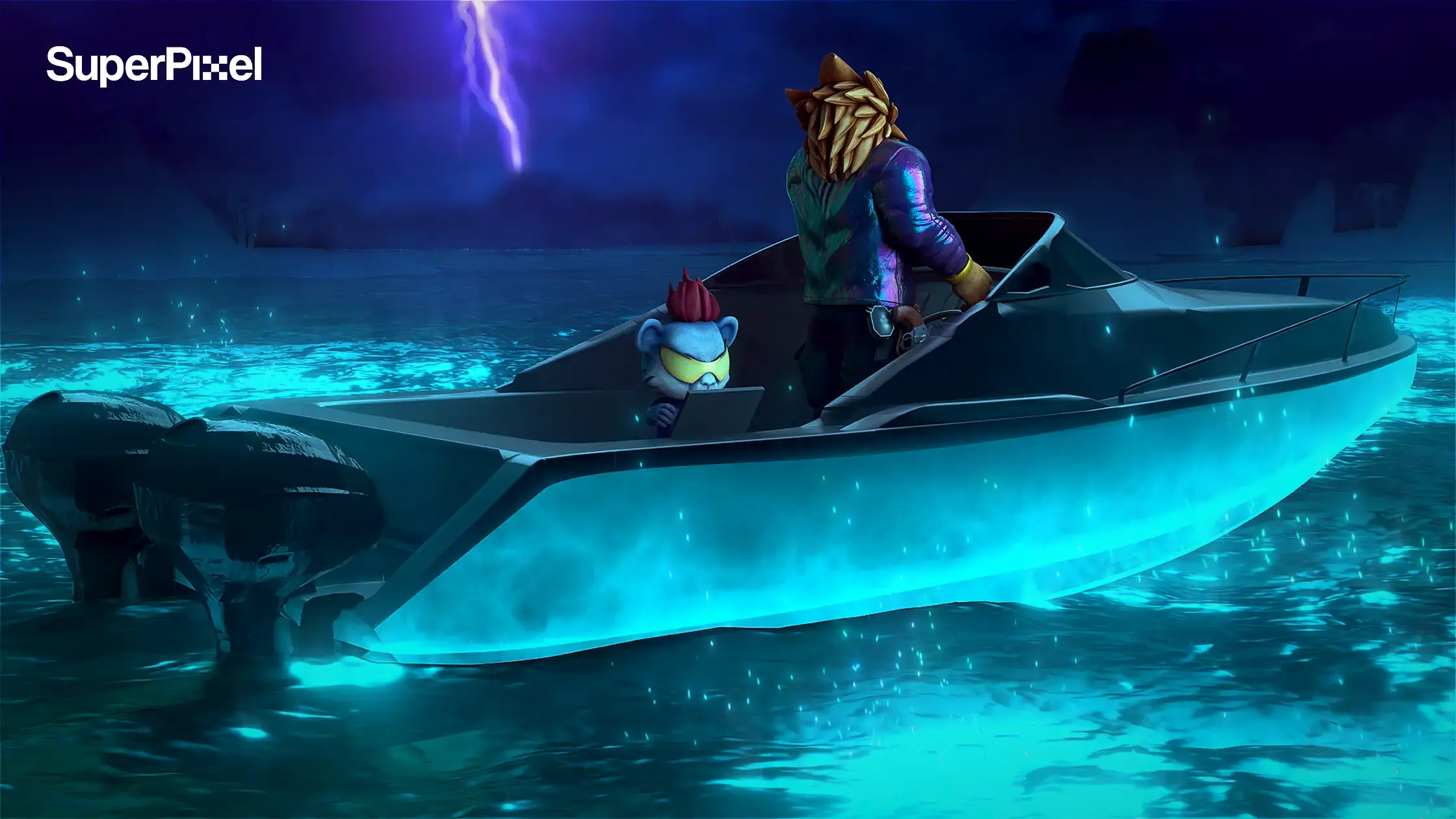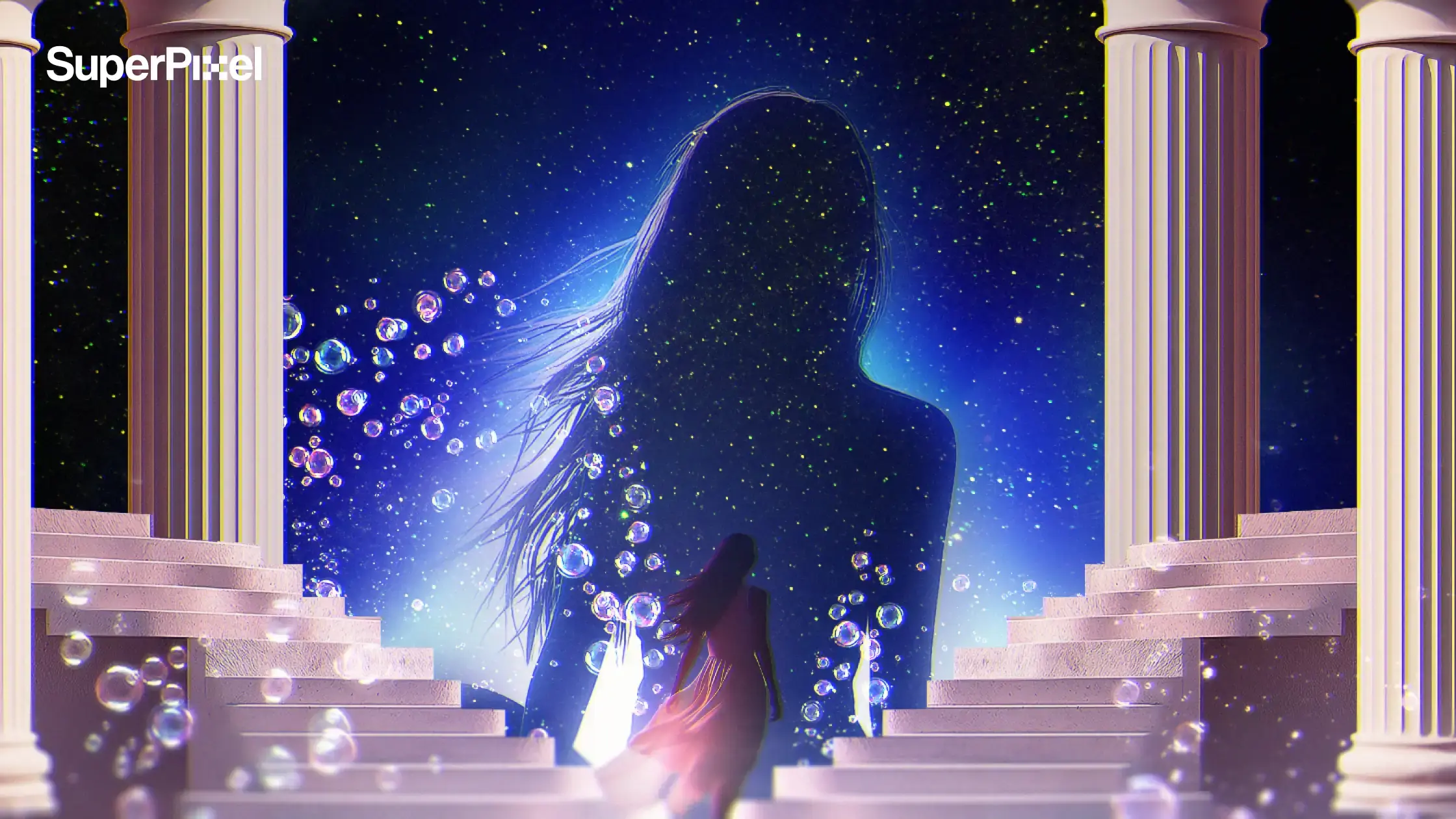
AI animation cartoon is getting a lot of attention because it looks like a faster, easier way to create animated videos for marketing, training videos, and social media.
From what I’ve seen at SuperPixel, that promise is real, but only to a point. Many businesses can now use an ai animation generator, ai animation maker, or ai animation tool to move from ideas to visuals quickly.
The bigger question is whether the output can maintain brand consistency, visual style, and stakeholder approval once the project becomes more complex.
Key takeaways:
- AI animation can speed up early content creation and lower production barriers.
- Tools can help teams create animated videos faster for explainers, training, and social media.
- Speed does not always guarantee brand consistency or strong storytelling.
- AI output often becomes harder to manage once more stakeholders are involved.
- Businesses should evaluate whether the final result is usable, not just easy to generate.
- For higher-stakes projects, guided human direction usually leads to better outcomes.
How AI animation cartoon sells
The reason this space keeps growing is easy to understand. AI animation can be used in marketing to create promotional videos, ads, and social media content that capture attention and communicate messages clearly.
Content creators can utilize AI animation to turn scripts and ideas into engaging animated videos for explainers, tutorials, and social media. Users can create animated videos from text using AI animation generators.
That pitch works because it speaks to real demand. Marketing teams want fast turnaround. Founders want to create videos without waiting months. A content creator wants an animation maker that can turn text descriptions into visuals.
A small team may want an ai cartoon maker or ai cartoon generator that can help them create animated assets without needing a full production pipeline.
I understand the appeal. In early ideation, these tools can be useful. They can help teams test ideas, visualize characters, experiment with style, and build draft scenes before making a bigger investment. For low-stakes work, that can be enough.
But business buyers usually are not just searching for motion. They are searching for communication that works.

Why create animated videos carefully
This is the part many teams underestimate. AI improves speed, cost-efficiency, and accessibility in animated cartoon production compared to traditional methods. AI animation tools allow users to create animated videos from text descriptions.
That all sounds great. And in the right context, it is great.
But when a company wants professional quality animations, the standard changes. A fast draft is one thing. A business-ready asset is another. The difference often comes down to whether the visuals, characters, voice, pacing, and messaging all feel aligned.
A team may use ai tools to create animated drafts, combine ai voiceover with background music, and test different animation styles from text descriptions. They may upload a script, choose a video tag, add visuals, and generate multiple scenes in minutes. That can save time. It can even spark stronger ideas.
Still, the faster the workflow becomes, the more careful you need to be about what the output is actually saying. A cartoon that looks polished at first glance can still feel generic.
A video that is technically complete can still miss the tone. A fast ai generated result can still weaken brand consistency if the visual style shifts between scenes.
What business buyers really need
In many client projects, we’ve found that speed gets attention, but control wins approval. AI animation can help startups and entrepreneurs create animated explainer videos, product demos, and pitch-ready visuals quickly and affordably.
That is valuable. Startups especially need flexible tools. They often want to create animated videos before they have large budgets. They may rely on an ai animation maker, animation tool, or ai powered workflow to create early visuals, short videos, and product narratives.
But once the work represents the brand in public, the need changes. Business buyers need consistency. They need message clarity. They need characters that feel intentional, not random.
They need visuals that reflect the company’s life, audience, and standards. They need a process that makes it easier to create, review, refine, download, and publish without endless rework.

Why AI animation generator fails
This is where many teams run into trouble. AI animation generators allow users to customize animations to match their message, tone, and audience. Many AI animation generators do not require prior animation skills to use effectively.
AI animation tools can generate animated content quickly, saving time and budget for users. AI animation generators often include a library of ready-made scenes and templates for users to choose from.
All of that is true. It also explains why adoption is growing so quickly.
But from a business perspective, those same strengths can create hidden weaknesses. Templates can make output feel familiar, but also repetitive. Low animation skills required sounds helpful, but it can also mean users miss structural issues in pacing, storytelling, or visual hierarchy.
A tool may let you create animation fast, but that does not mean it can build a full narrative with the judgment a brand campaign often needs.
That is why an ai animation generator can fail even when the interface feels smooth. It solves production speed. It does not always solve communication quality.
How AI generated output drifts
One of the most common issues is drift. AI can generate animated content quickly from text prompts or visual inputs. Users can create animations without needing advanced technical skills or prior animation experience. AI animation tools allow for customization of characters, scenes, and overall animation style.
The process of creating AI animations typically involves describing your idea, generating the animation, and refining it to match your vision. Users can preview and refine their AI-generated animations in real time before finalizing them.
AI animation generators allow users to create animations from text descriptions without requiring advanced technical skills.
Customization options in AI animation generators include the ability to adjust colors, backgrounds, animation styles, voiceovers, and music. Many AI animation generators feature real-time preview capabilities, allowing users to see updates as they make changes to their animations.
Ease of use is a common feature of AI animation generators, with intuitive interfaces designed for both beginners and experienced users.
That sounds efficient, and in some cases it is.
But the same system that helps you generate fast can also lead to inconsistency. Characters can shift. Backgrounds can stop feeling related. Scenes can lose narrative continuity.
Text prompts can produce visuals that are interesting but not strategically useful. You may get plenty of ideas, but not enough coherence. You may get lots of motion, but not enough meaning.
This is where generative ai can feel deceptively strong. It is good at giving you options. It is not always good at protecting intent.
Why approval chaos gets expensive
This is the hidden cost many teams only notice later. Users can preview and refine their animations in real time as they make changes.
That sounds efficient until multiple stakeholders enter the room.
Once brand, legal, marketing, product, or leadership teams start commenting, “real time” can become a loop. Someone wants different visuals. Someone else wants new backgrounds. Another person wants the ai voiceover changed.
Then the music feels wrong. Then the characters need to look closer to the brand. Then the scenes no longer connect. Then someone says the whole piece looks too much like something a free tool would produce.
At that point, the issue is no longer whether the software can create. The issue is whether the workflow can absorb revisions without collapsing into waste.
When training videos work best
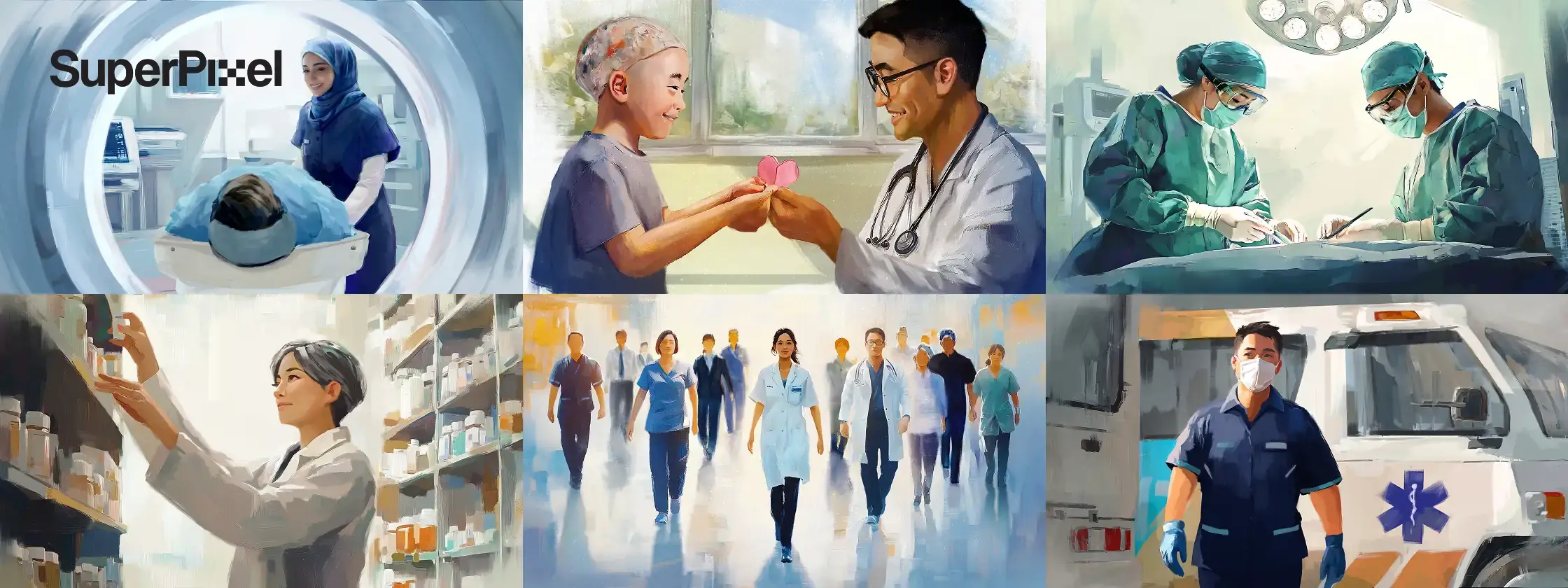
There are use cases where AI-only production can still make sense. AI animations can enhance educational content by transforming written policies, guides, and onboarding scripts into clear animated videos that improve understanding and retention. AI animation generators can be used for various applications, including educational content and internal communications.
I think this matters because it keeps the conversation honest.
Not every brief needs a studio-heavy approach. Training videos, onboarding walkthroughs, and internal explainers often benefit more from clarity and speed than from high-end polish.
If the content is low risk, has a short shelf life, and does not carry heavy brand expectations, an ai animation tool can do useful work.
Where speed matters over polish
This is one of the strongest arguments for using ai powered tools in the first place. AI animation tools can help save time and budget by streamlining the animation creation process.
For internal teams, that can be enough. If the goal is to explain a process, train staff, or turn a policy document into something more visual, then a lightweight workflow may be the right fit.
In those cases, it can make sense to create animated content quickly, use simple text prompt inputs, generate supporting visuals, and move on.
Not every project needs cinematic polish. Some just need to be clear.
How to spot low-risk briefs
A low-risk brief usually has three traits. It does not define the public face of the brand. It does not require unique characters or a very specific visual style. And it does not need deep emotional storytelling.
That is why this exact point matters: AI animation generators can produce content in various formats suitable for different platforms, such as social media or presentations.
If the brief is mainly functional, speed becomes more valuable. If the brief is brand-defining, the stakes change.
Why social media output drifts
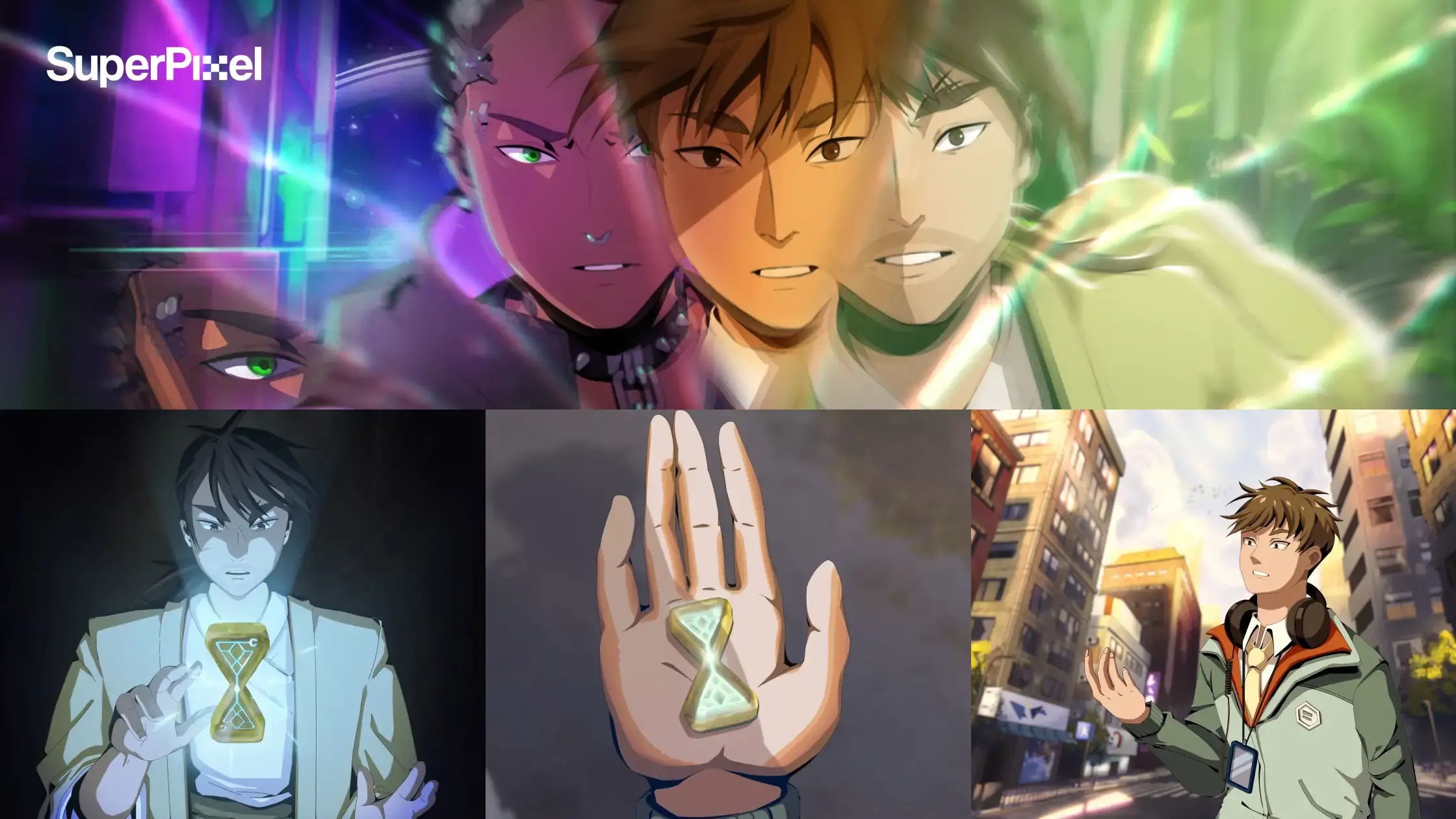
Social media is where a lot of teams first experiment with AI animation, and I understand why. AI animation can be integrated into various platforms, allowing for seamless content production tailored for different formats like TikTok, Reels, and YouTube.
AI animation generators can produce content tailored for various platforms without manual resizing or reformatting. AI animation generators can produce content tailored for various platforms like TikTok, Reels, and YouTube.
That convenience is useful. Social media content moves fast. Teams need volume. They need variety. They need ways to create without slowing down the whole business.
But this is also where generic output becomes very visible. When every brand has access to similar ai tools, similar templates, similar animation maker workflows, and similar prompts, the risk is sameness. The content may look active, but not distinctive. It may move, but not persuade.
How create animated assets weaken
AI animation tools can help marketing teams create promotional videos and social media content.
That is helpful up to a point.
The problem starts when repeated fast production weakens a brand’s own identity. If every post relies on similar visuals, similar motion, similar backgrounds, and similar generated scenes, the output can lose its edge. The team may keep creating, but the audience stops remembering.
This is where brand consistency becomes more than a design preference. It becomes a commercial advantage.
What users love versus need
Users do not need prior animation skills to use AI animation tools, as they are designed to be user-friendly.
That is a real strength. It lowers the barrier for beginners. It lets more people create. It helps teams explore ideas quickly. It gives a content creator, marketer, or founder more control than they had before.
Still, what users love and what businesses need are not always the same thing.
Users love speed, novelty, and ease. Businesses need trust, coherence, and repeatability. Those are different standards.
How AI powered workflows help
This is where I think the conversation becomes more useful. AI reduces time-consuming tasks by over 60%, enabling smaller studios to produce high-quality animation previously only possible for big studios.
Generative AI acts as a creative partner, providing diverse imagery, character designs, and background concepts quickly. AI tools lower barriers to entry, allowing independent creators and small studios to produce high-quality animation.
Automating technical tasks reduces the need for large production teams and expensive equipment, making animation more viable for independents. By automating tasks like rigging, rotoscoping, and rendering, studios can shorten production timelines and reduce costs.
AI is transforming animated cartoon production by acting as a collaborative, “super-creative assistant” that automates repetitive tasks and enables new visual styles. AI automates technical, repetitive tasks to free up artists for creative storytelling, applied across every stage of the animation pipeline.
AI automates tedious tasks such as in-betweening, character rigging, and rotoscoping, allowing artists to focus on creative storytelling.
By 2026, AI is deeply integrated into animation workflows, accelerating production by up to 50%. AI tools are used across all stages of production, from initial design to final rendering, for both 2D and 3D animation.
That is why I do not see this as a simple choice between “traditional” and “AI.”
The better question is who is directing the system. AI powered animations become far more useful when they sit inside a guided workflow. In that model, ai powered tools help with speed, ideation, draft generation, and production support. Human teams protect the message, the pacing, the style, and the final decision-making.
How human direction keeps consistency
This part matters more than most people think. The role of the animator is evolving from a technical draftsman to a “curator” or “director,” focusing on storytelling, character acting, and artistic direction.
Animators are shifting focus from technical execution to creative orchestration, enhancing character performance and emotional depth. Challenges remain in maintaining the human touch and authenticity in AI-generated animations.
That is exactly why human direction still matters.
At SuperPixel, we’ve seen how a structured process helps keep characters stable, visuals aligned, and scenes emotionally coherent. AI can help create. But people still need to judge what fits the brand, what strengthens the story, and what should be changed before anything goes live.
Where create animated videos improve
AI-powered software simplifies the animation process, empowering individuals with less technical expertise to create professional-quality content.
That is the upside. And it is a real one.
The best results usually come when teams use ai powered animations to move faster in the early phases, then apply stronger creative judgment as the work develops. That balance can improve speed without sacrificing quality.
What animation generator buyers ask
If you are evaluating an animation generator or a studio that uses one, the smartest question is not “What can it do?” The smarter question is “What happens after it creates the first draft?”
AI animation tools can transform sketches, photos, or text into animated content. AI animation tools often include customization options for colors, styles, and voiceovers. AI animation tools can generate characters in both 2D and 3D styles.
AI animation generators can quickly create animated concepts without complex rigs or frame-by-frame drawing. AI animation generators can generate characters in both 2D and 3D styles, allowing for a variety of artistic expressions.
Those are useful features. They can help teams create early material quickly. But buyers should also ask how the system handles revisions, how it protects brand consistency, and how it supports a distinct visual style rather than a generic one.
How to test studio consistency
AI animation generators often include voice integration, providing realistic AI voiceovers in multiple languages to enhance the animated content.
That is useful. But the real test is whether the voice, visuals, pacing, and characters all feel like they belong together.
A studio should be able to explain how it refines scenes, how it fine tune processes across rounds, and how it keeps the final output aligned with the brief rather than just technically complete.
What good revision control means
Good revision control is not just about speed. It is about protecting direction.
That means documenting choices, controlling style drift, keeping feedback structured, and making sure each round actually improves the work. It also means being realistic about what the tools can and cannot do.
Why video generator costs rise
On paper, a video generator looks efficient. AI automatically fills in the intermediate frames between two key drawings, a process that historically took 90% of an animator’s time.
AI can automatically generate intermediate frames between keyframes, ensuring smooth motion without manual drawing. AI-powered rendering allows creators to see final results instantly, reducing the wait times associated with traditional rendering.
Real-time engines like Unreal Engine and Unity allow creators to see final lighting and animation instantly, reducing feedback loops. AI tools allow for rapid iteration on visual styles in pre-production, shortening the timeline from months to days.
That can absolutely save time.
But the cost question changes once revisions begin. A faster first pass does not always mean a faster approved outcome. If the first output creates confusion, then the business pays for that confusion in time, rework, and internal effort.
How stakeholder changes slow delivery
AI tools can automatically align character mouth movements with voice-over audio, saving hours of manual animation. AI captures subtle emotional nuances in lip-sync and facial animation by analyzing audio and synchronizing mouth movements.
Those are meaningful improvements. But stakeholders still change priorities. A voice that felt fine in draft one may feel off in context. A polished scene may still not reflect the brand. A technically strong output can still miss the intent of the project.
That is why delivery slows down. The delays usually do not come from the software alone. They come from misalignment between the generated output and what the business actually needs.
Why cheapest options cost more
AI speeds up the process of building 3D models and creating rigs for characters. AI tools can create skeletal structures for character models in minutes, saving weeks of manual labor.
AI-powered motion capture converts 2D video footage of a human actor into 3D animation, eliminating the need for expensive, traditional marker-based studios. Automated rigging tools can take 2D character images and convert them into rigged 3D models in minutes.
That sounds like a clear win on cost.
But the cheapest route can become expensive if it creates unclear messaging, weak storytelling, or off-brand visuals. What looks affordable at the beginning can cost more once teams spend extra time correcting, reviewing, re-briefing, and rebuilding trust in the output.
How to create animation wisely
AI animation tools allow for the quick generation of animated concepts, making them ideal for pitching ideas or testing creative directions. AI-powered software can generate 3D character skeletons and perform auto-rigging in minutes.
That is why I think the smartest approach is not to reject AI. It is to use it with judgment.
If the work is exploratory, internal, or low risk, an ai animation tool may be enough. If the work needs stronger storytelling, tighter brand control, or higher commercial impact, the project usually benefits from a guided process with real creative oversight.
When create animated content fits
Generative AI tools like Midjourney and DALL-E rapidly generate concept art, character designs, and background landscapes from text descriptions.
That makes them useful for concepting, pitching, and creative exploration. They can help teams create animated directions faster, compare ideas, and shape a visual path early on.
But once the brief carries brand weight, the work usually needs more than generation. It needs authorship, editing, and clear direction.
What to prepare before quoting
AI animation can be integrated into various platforms, allowing for seamless content production tailored for different formats like TikTok, Reels, and YouTube.
Before asking for a quote, I usually suggest getting clear on four things:
- What is the real purpose of the video?
- Where will it be used?
- How much brand consistency does it need?
- How many stakeholders will review it?
Those answers matter more than the tool list.
FAQ
Is AI generated animation enough?
Sometimes, yes. For training videos, internal explainers, early concepts, and low-risk social media content, ai generated output can be enough. For brand-critical work, it usually needs stronger direction and review.
When should brands create animated videos?
Brands should create animated videos when motion helps explain something better than static visuals or plain text. That includes explainers, product stories, internal education, and campaign content.
Can studios use AI powered workflows?
Yes. In many cases, that is the most practical model. AI can help save time, generate ideas, and speed up certain production tasks, while a studio protects storytelling, quality, and brand consistency.
Why do users love animation tools?
Users love speed, accessibility, and experimentation. A user friendly platform that helps beginners create, generate, upload, watch, download, and test different ideas quickly is always going to be attractive.
How do I create animation safely?
Start by matching the process to the risk level of the brief. If the project is public, brand-defining, or high-stakes, make sure there is a clear review process, stronger creative control, and someone responsible for quality at the end.
Conclusion
From what we’ve seen at SuperPixel, ai animation cartoon can be a useful way to move faster, especially for early ideas, short videos, and lower-risk content.
It gives teams more room to test concepts, explore visuals, and create momentum without the long timelines that traditional production often requires.
But for brands, speed alone is rarely enough. The real value comes from having a process that keeps the work clear, consistent, and aligned with the brief.
At SuperPixel, we believe the strongest results usually come from combining the efficiency of AI with human direction, so the final output is not just fast to make, but actually ready to use.